

Central Banks' Timing Dilemma: Why Acting Too Late Costs More
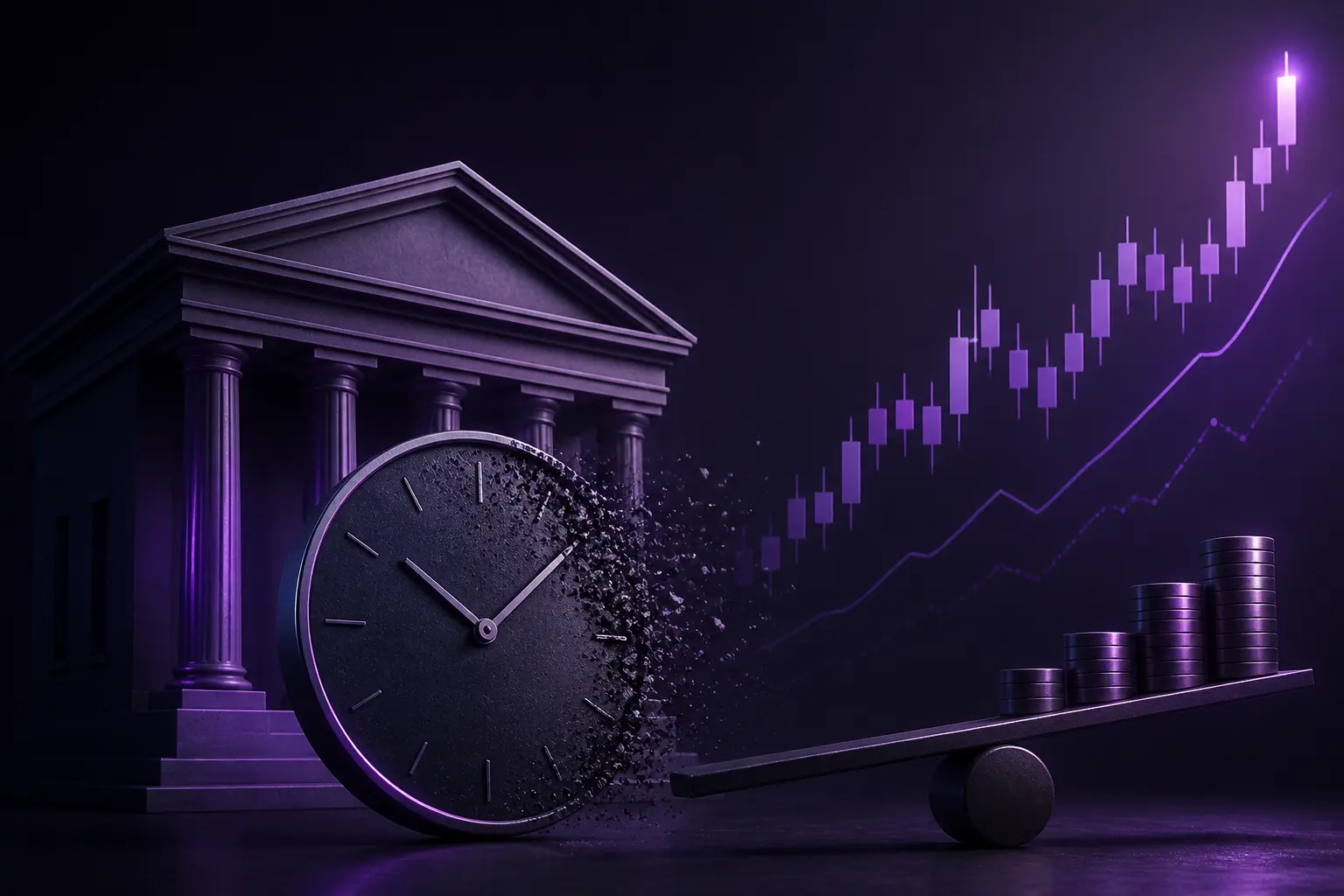
Central banks face a delicate balance between acting too early and too late. We explore why timely policy action matters for markets and traders.
VNIX Quick Take
- Central banks must weigh the risks of premature versus delayed policy moves, with both carrying significant market consequences.
- Historical episodes show that waiting too long to adjust rates often forces larger, more disruptive actions later.
- Traders should monitor forward guidance and data dependency for clues on policy timing, as surprises drive volatility.
Central Banks and the Perils of Policy Timing
The challenge of acting in time is a recurring theme for central banks worldwide. Whether tightening to combat inflation or easing to support growth, the timing of policy decisions is critical. Acting too early can stifle economic momentum, while acting too late may allow imbalances to build, necessitating more aggressive measures down the line.
Recent commentary from central bank officials underscores this dilemma. With inflation persisting in some regions and growth slowing in others, policymakers are walking a tightrope. The cost of misjudging the timing can be high, as markets react swiftly to any perceived misstep.
For traders, understanding this dynamic is essential. Policy decisions influence asset prices across the board, from currencies and commodities to equities and bonds. Being able to anticipate shifts in central bank stance can provide a significant edge.
Why Timing Matters: Lessons from Recent Cycles
The Risk of Moving Too Soon
Central banks that tighten policy prematurely risk derailing economic recoveries. For instance, if rates are raised before inflationary pressures are firmly under control, growth could falter, leading to a reversal that damages credibility. Similarly, easing too early might reignite inflation, forcing a painful course correction.
Historical examples include the European Central Bank's rate hikes in 2011, which were followed by cuts as the eurozone crisis deepened. Such episodes highlight the importance of data-dependent decision-making.
The Cost of Waiting Too Long
Conversely, delaying action can allow inflation to become entrenched or financial imbalances to grow. The Federal Reserve's experience in the 1970s, when it was slow to respond to rising inflation, is a classic cautionary tale. More recently, the Fed's initial characterization of inflation as "transitory" led to a faster pace of tightening later.
For traders, the key takeaway is that central banks often learn from past mistakes. Monitoring their communication for hints of concern about being "behind the curve" can signal upcoming policy shifts.
Key Indicators and Levels to Watch
Traders should keep an eye on several indicators that reflect policy timing. Inflation data, employment reports, and GDP figures are primary inputs for central bank decisions. Additionally, yield curves and technical indicators on major currency pairs can provide early signals of market expectations.
For example, a steepening yield curve might suggest that markets anticipate faster tightening, while an inversion could signal concerns about overtightening. Watching these levels can help traders position ahead of policy announcements.
Navigating Policy Uncertainty: A Trader's Guide
In an environment where central banks are highly data-dependent, traders must remain agile. Diversification across asset classes and the use of risk management tools are essential. Moreover, engaging with community insights can provide diverse perspectives on policy timing.
It's also crucial to differentiate between market noise and genuine shifts in policy stance. Central bank speeches, meeting minutes, and projections are valuable sources of information. By staying informed, traders can better anticipate moves and avoid being caught off guard.
Finally, remember that no central bank has perfect foresight. The goal is not to predict every move but to manage risk effectively. For those new to trading, finding your style and understanding your risk tolerance is a good starting point.
In VNIX's view
The art of central banking lies in acting neither too early nor too late, but precisely when needed. This balance is inherently challenging, and missteps are inevitable. Traders who appreciate this complexity can better navigate the resulting volatility.
Rather than trying to outguess policymakers, focus on the data and market reactions. A disciplined approach to risk management and continuous education is your best defense.
Educational analysis, not financial advice. Trading involves risk.
Not sure which tool fits you?
Take the 2-minute quiz and get a personalized recommendation.