

Bangladesh Per Capita GDP Forecast to Surpass India: What It Means for Markets
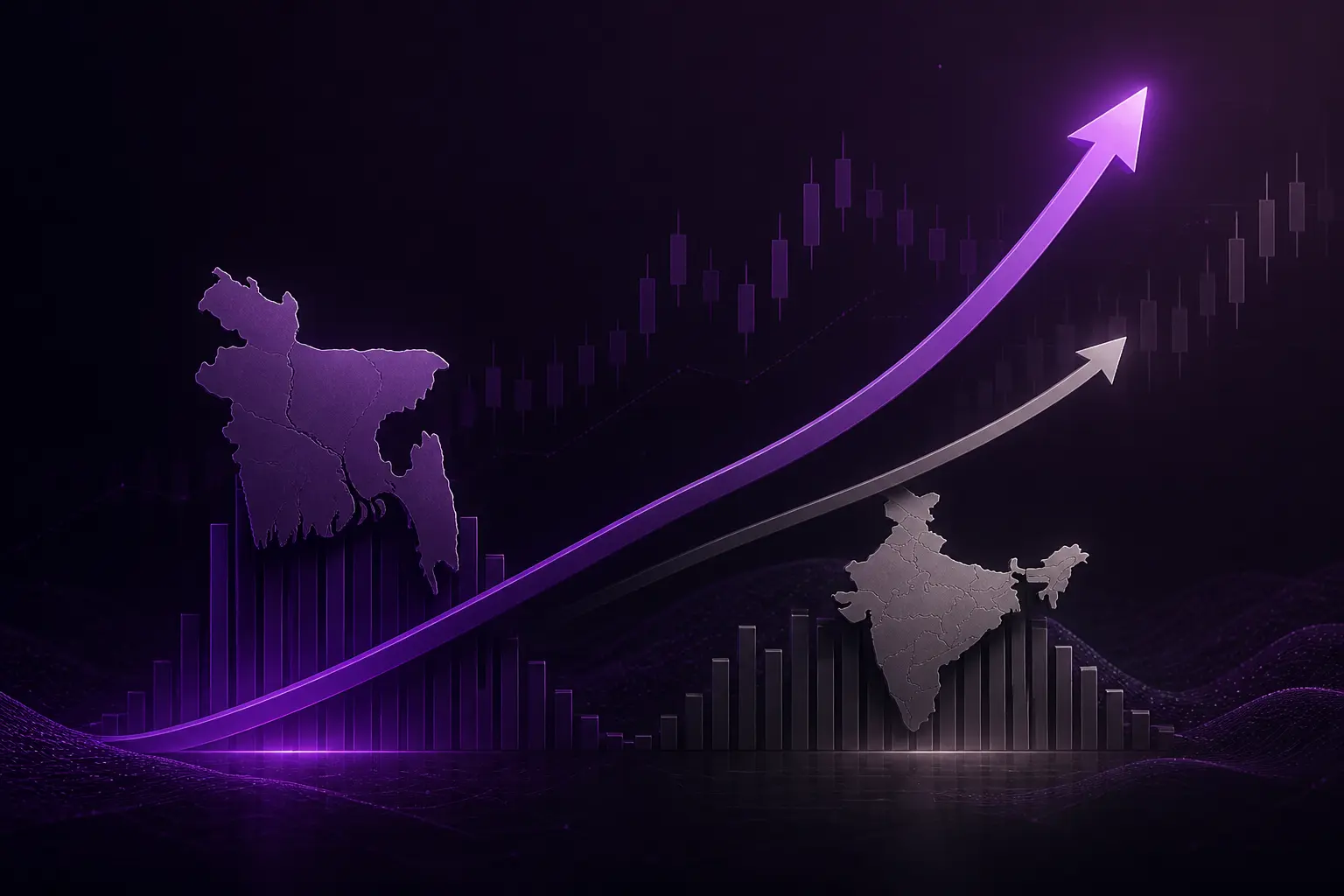
Bangladesh is projected to overtake India in per capita GDP, a shift with implications for South Asian economies and traders. We break down the drivers and what to watch.
VNIX Quick Take
- Bangladesh is forecast to outpace India in per capita GDP, highlighting divergent economic trajectories in South Asia.
- The milestone reflects Bangladesh's sustained growth and India's relatively slower per capita expansion, with implications for currency and equity markets.
- Traders should monitor policy responses and sector-specific opportunities as this shift unfolds.
Bangladesh's Per Capita GDP Set to Eclipse India's: A Landmark Shift
Bangladesh is on track to surpass India in per capita GDP, according to recent forecasts. This development marks a significant turnaround for a country that was once among the poorest in the region. The projection underscores Bangladesh's steady economic progress over the past decade, driven by robust export growth and domestic consumption.
India, despite being a much larger economy, has seen per capita income growth lag due to population size and uneven development. The forecast, if realized, would place Bangladesh ahead of its neighbor in this key metric, signaling a shift in the region's economic hierarchy.
For traders, this milestone is more than a statistical curiosity; it reflects underlying changes in productivity, investment, and policy that could influence asset prices and capital flows in South Asia.
Drivers Behind Bangladesh's Ascent and India's Relative Slowdown
Ready-Made Garments and Remittances Fuel Bangladesh's Growth
Bangladesh's economic engine has been powered by its ready-made garment (RMG) industry, which accounts for a large share of exports. The sector has benefited from low labor costs and preferential trade access, creating jobs and driving income growth. Additionally, remittances from overseas workers provide a steady inflow of foreign currency, supporting consumption and investment.
These factors have contributed to consistent GDP growth, often exceeding 6% annually. The COVID-19 pandemic caused a temporary setback, but the economy has shown resilience, with exports rebounding strongly.
India's Per Capita Challenge: Population Size and Structural Hurdles
India's per capita GDP growth has been constrained by its large population, which dilutes aggregate gains. While India's overall GDP growth has been impressive, the benefits have not always translated into higher per capita income due to inequality and regional disparities.
Structural issues such as low female labor force participation and a skills gap also weigh on productivity. However, India's economy remains diverse and dynamic, with a growing services sector and a large domestic market that offer long-term potential.
Key Metrics and Market Indicators to Watch
Traders should keep an eye on several indicators that could signal how this economic shift plays out. The Bangladeshi taka (BDT) and Indian rupee (INR) exchange rates will reflect relative economic strength and capital flows. A stronger per capita GDP outlook could support the taka, while the rupee may face pressure if India's growth disappoints.
Equity markets in both countries offer exposure to different sectors. Bangladesh's stock market, though smaller and less liquid, is heavily weighted toward financials and pharmaceuticals. India's market is more diversified, with IT and consumer goods playing major roles. For those looking to trade these markets, monitoring price action and using technical indicators can help identify trends.
Additionally, policy responses from both governments—such as fiscal stimulus, trade agreements, and central bank actions—will be crucial. Any signs of accelerated reforms in Bangladesh or renewed growth momentum in India could alter the trajectory.
Implications for Traders: Navigating South Asia's Shifting Landscape
For traders, the per capita GDP milestone serves as a reminder that economic fundamentals matter. While the headline may not directly move markets, it highlights the importance of tracking relative growth rates and their impact on currencies and equities. A sustained outperformance by Bangladesh could attract foreign direct investment and portfolio flows, potentially boosting its asset markets.
However, risks abound. Bangladesh's reliance on the RMG sector makes it vulnerable to global demand shocks and trade policy changes. Political instability and infrastructure bottlenecks could also hinder growth. India, on the other hand, has a more resilient economy but faces challenges in generating enough jobs for its young population.
Traders might consider diversifying exposure across South Asian markets or using trade ideas from community experts to navigate these nuances. For those new to emerging markets, understanding the risk profile is essential before committing capital.
Moreover, this shift could influence broader emerging market sentiment. If Bangladesh continues to outperform, it may be seen as a model for other low-income countries, potentially attracting more attention from global investors. Conversely, if India struggles to lift per capita income, it could raise questions about its long-term growth story.
How to Position for a Changing South Asian Economy
While this forecast is not a trading signal in itself, it provides context for longer-term strategies. Traders should monitor upcoming GDP releases, central bank meetings, and trade data for both countries. Any upward revision to Bangladesh's growth outlook or downward revision to India's could reinforce the trend.
Additionally, watch for currency fluctuations and bond yields. A rising per capita GDP often correlates with higher savings and investment, which can drive demand for financial assets. However, liquidity and market accessibility vary, so using a reliable broker with access to these markets is crucial.
Educational resources like our classroom can help traders understand the macroeconomic drivers behind such shifts and how to incorporate them into a broader analysis.
In VNIX's view
The forecast that Bangladesh will surpass India in per capita GDP is a notable milestone that underscores the importance of looking beyond aggregate GDP. For traders, it signals a need to monitor relative economic performance and policy responses, as these can create opportunities and risks in currency and equity markets. While the shift is gradual, it may herald a new phase of competition and cooperation in South Asia.
Educational analysis, not financial advice. Trading involves risk.
Trade smarter with VNIX indicators
Clear entry, exit and risk signals right on your TradingView chart.