

Crude Oil Futures Diverge From Asia Physical Market as Demand Falters
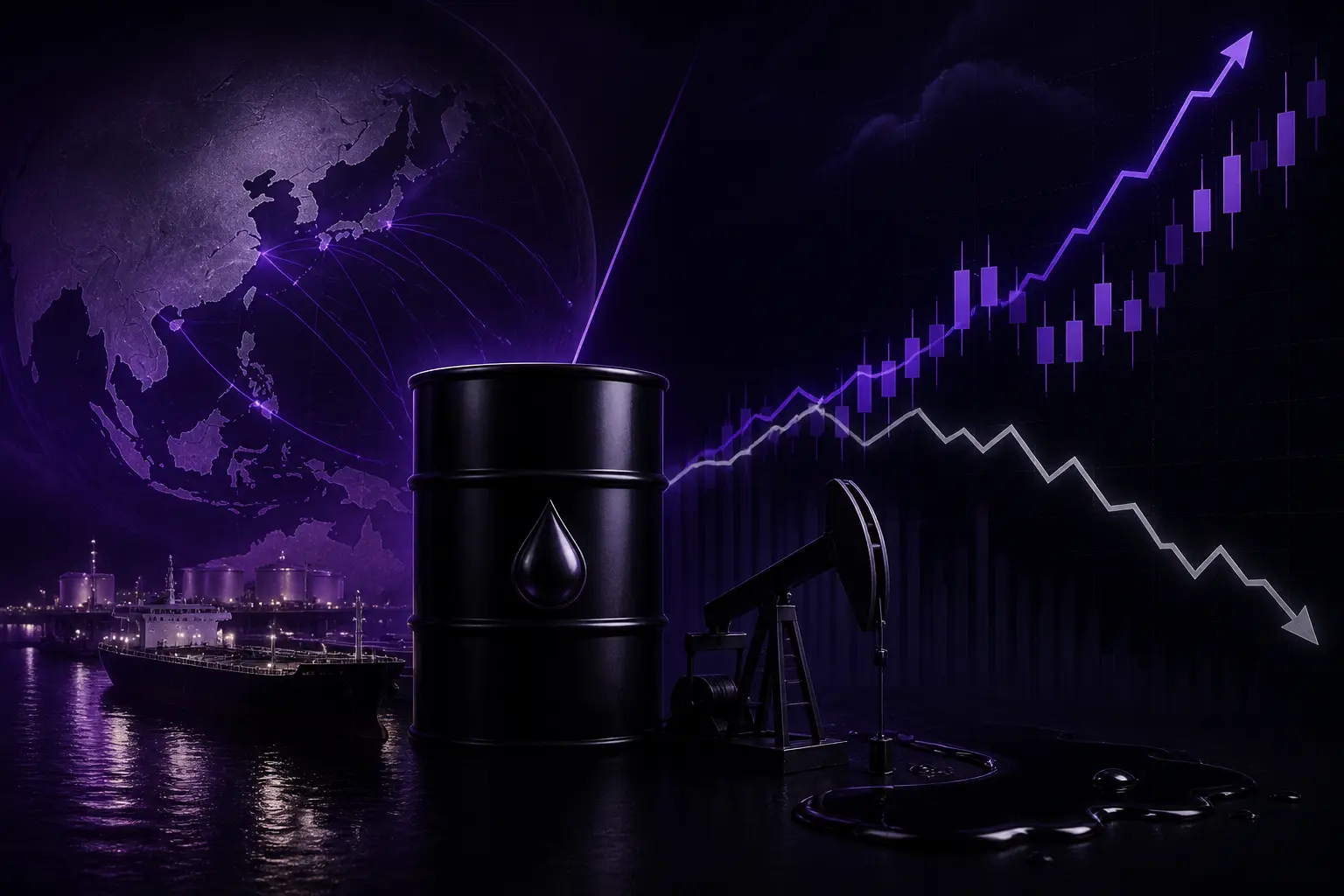
Oil futures detach from physical reality as Asia's spot market weakens, with refinery margins and demand signals flashing caution for traders.
VNIX Quick Take
- Crude oil futures are diverging from the physical market in Asia, where spot prices and refinery margins are under pressure.
- The disconnect highlights the risks of relying solely on futures charts when underlying supply-demand fundamentals are deteriorating.
- Traders should watch physical benchmarks like Dubai and Oman, plus refinery run cuts, for clues on the next move.
Crude Oil Futures Detach From Asia Physical Market as Spot Prices Buckle
Crude oil futures have recently shown resilience, but the physical market in Asia tells a different story. According to a Reuters column by Clyde Russell, the region's spot market is weakening, with physical prices for cargoes like Dubai and Oman falling relative to futures. This divergence suggests that the paper market may be overlooking a deteriorating demand picture in the world's largest oil-consuming region.
The physical market is where actual barrels change hands, and it often provides a more accurate reflection of supply and demand than futures, which can be swayed by financial flows and sentiment. In Asia, refiners are reportedly cutting runs due to weak margins, and spot premiums have slumped. This is a classic sign of oversupply or lackluster demand, yet futures have not fully priced in this weakness.
The disconnect is not unprecedented, but it raises questions about the sustainability of current futures prices. If the physical market continues to weaken, futures may eventually have to play catch-up, potentially leading to a sharp correction. For traders, this is a reminder to monitor both paper and physical indicators.
Why Asia's Physical Weakness Isn't Reflected in Futures
Refinery Margins Under Pressure as Demand Stalls
Asian refiners are facing squeezed margins as product cracks—the difference between crude costs and refined product prices—have narrowed. This has led some plants to reduce throughput, which in turn lowers demand for crude. The source notes that physical cargoes are struggling to find buyers, with spot premiums in key markets like Singapore and China falling. Such conditions typically weigh on futures, but the market has been supported by factors like geopolitical tensions and supply curbs from OPEC+.
Additionally, the physical market is often the first to react to changes in demand. When refiners cut runs, they buy less crude, leading to lower spot prices. Futures, however, can be influenced by macroeconomic factors, such as expectations for interest rate cuts or economic stimulus, which may not immediately impact physical flows. This lag can create a temporary disconnect.
Futures Supported by Geopolitical Risk and Supply Discipline
On the other hand, crude futures have found support from ongoing geopolitical risks, including tensions in the Middle East and the Russia-Ukraine conflict, which raise the specter of supply disruptions. Additionally, OPEC+ has maintained production cuts, limiting the availability of heavier sour crudes that Asia typically imports. These factors have kept futures elevated even as physical markets weaken.
Moreover, financial traders may be more focused on forward-looking indicators such as inventory data and macroeconomic forecasts, while physical traders are dealing with immediate supply-demand balances. This can lead to divergent trends, especially when the two groups have different time horizons.
Key Physical Benchmarks and Spreads to Watch
Traders should keep an eye on key physical benchmarks such as Dubai and Oman crude, which are widely used in Asian refining. The spread between these physical grades and futures (like Brent or WTI) can provide valuable signals. A widening discount of physical to futures suggests weakening spot demand, while a narrowing discount indicates tightening supply.
Also watch refinery run rates in China and India, as these are major drivers of Asian crude demand. Any further cuts could exacerbate the physical glut. Additionally, monitor product cracks for gasoline and diesel; a recovery in cracks could signal improved refining margins and renewed crude demand. For those tracking these metrics, our technical indicators page offers tools to analyze spreads and momentum.
What This Divergence Means for Traders
For traders, the divergence between futures and physical markets is a cautionary signal. While futures may continue to trade on sentiment and macro factors, the underlying physical weakness could eventually drag prices down. It's essential to incorporate physical market data into your analysis, as it provides a reality check on supply-demand fundamentals.
One approach is to use the physical market as a leading indicator. If physical prices continue to fall while futures remain stable, it may be a sign that the futures market is overpriced and due for a correction. Conversely, if physical prices stabilize or rebound, it could confirm a bullish case for futures.
Another consideration is the impact on different crude grades. Light sweet crudes like WTI may be less affected by Asian physical weakness, while medium sour grades like Dubai are more directly tied to the region. Traders should be aware of these nuances when positioning. For those looking to trade oil, having a broker account with access to both futures and physical markets is essential.
Risk management is also crucial. The disconnect can persist for longer than expected, so avoid over-leveraging based on a single signal. Use stop-losses and diversify across assets. For more on risk management, check our classroom resources.
Finally, keep an eye on upcoming data releases and OPEC+ meetings, as these can shift the balance. The market's reaction to inventory reports and demand forecasts will be key in determining whether futures eventually converge with physical reality.
In VNIX's view
The divergence between crude futures and Asia's physical market is a classic reminder that paper markets don't always reflect immediate fundamentals. Traders should monitor physical benchmarks and refinery margins closely, as these often lead futures. While geopolitical risks may support prices in the short term, the weakening physical market suggests downside risk for crude if demand doesn't recover.
Educational analysis, not financial advice. Trading involves risk.
Get real-time trade signals
Entry, target and stop-loss for gold, crypto and forex — curated by our team.