

EUR/USD Slides Toward Yearly Low as Daily RSI Hits Oversold
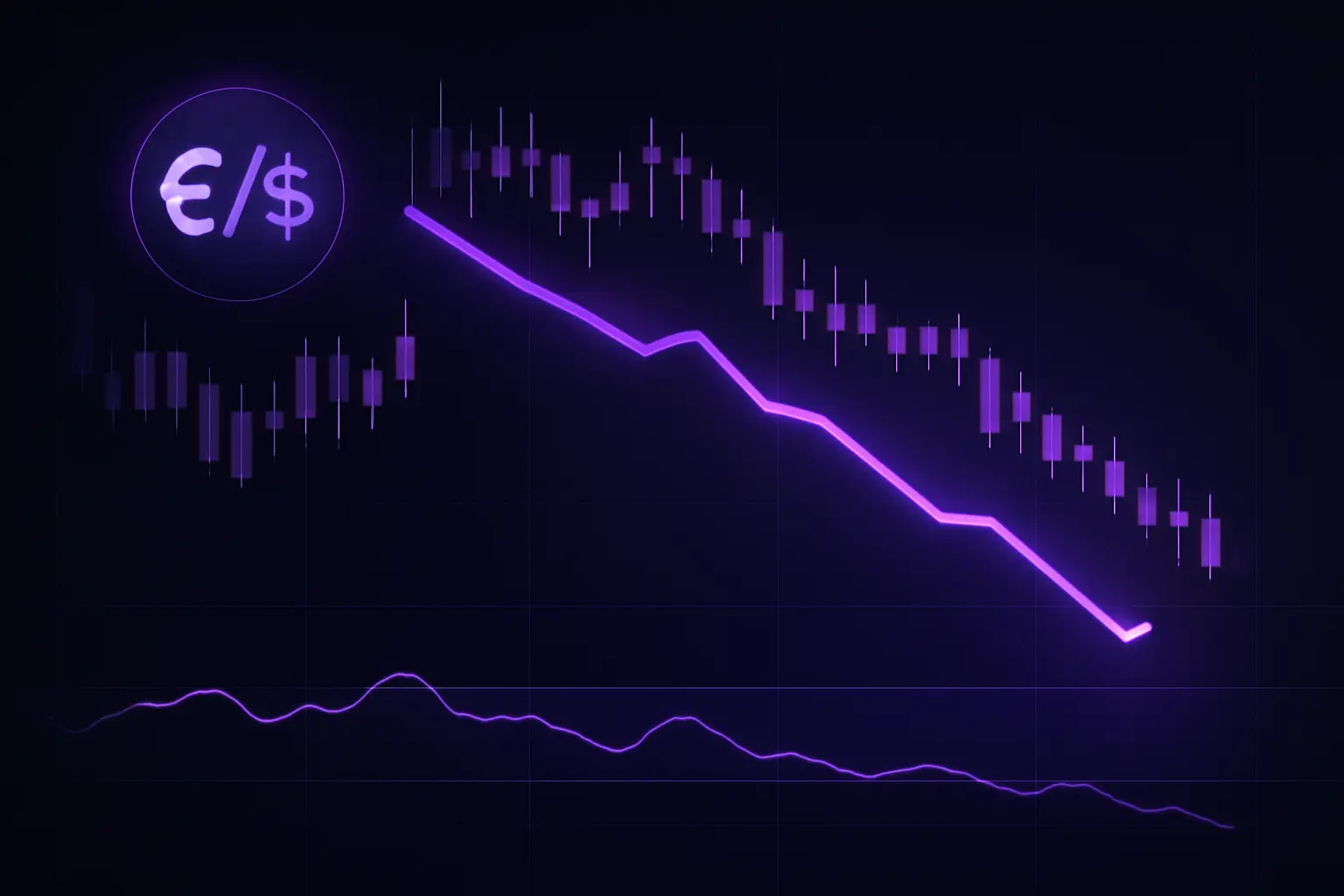
EUR/USD tumbles toward its yearly low, with the daily RSI entering oversold territory. We examine the drivers and key levels to watch.
VNIX Quick Take
- EUR/USD extends losses, approaching the yearly low as selling pressure intensifies.
- Daily RSI drops into oversold territory, signaling stretched bearish momentum.
- Traders watch key support levels and upcoming economic data for direction.
EUR/USD Tumbles Toward Yearly Low as Daily RSI Goes Oversold
EUR/USD has continued its downward trajectory, moving closer to the yearly low as bearish momentum accelerates. The daily Relative Strength Index (RSI) has fallen into oversold territory, a condition that often precedes a potential bounce but can also persist in strong trends. This development comes amid a broader strengthening of the US dollar, which has been pressuring major currency pairs.
The pair's decline reflects ongoing divergence in economic outlooks between the Eurozone and the United States. Recent data from the Eurozone has shown signs of weakness, while US economic indicators have remained relatively resilient, supporting the greenback. As a result, traders are closely monitoring whether the euro can find support near the yearly low or if further losses are ahead.
From a technical perspective, the move into oversold RSI territory suggests that the selling may be overextended in the short term. However, in trending markets, RSI can remain oversold for extended periods, so it is not a standalone signal for a reversal. Price action and key levels will be crucial in determining the next move. For those looking to track real-time price movements, our price now page provides up-to-date quotes.
Drivers Behind the Euro's Slide
US Dollar Strength Weighs on EUR/USD
The primary driver of the euro's decline is the broad-based strength of the US dollar. The Dollar Index (DXY) has been climbing, driven by expectations that the Federal Reserve will maintain a hawkish stance relative to other major central banks. Higher US Treasury yields have increased the appeal of dollar-denominated assets, drawing capital away from the euro.
Additionally, safe-haven flows into the dollar have been evident amid global economic uncertainties. Traders should note that the dollar's trajectory often hinges on US economic data and Fed communications. Upcoming releases such as the Non-Farm Payrolls (NFP) and Consumer Price Index (CPI) could significantly influence the dollar's next move. For a deeper understanding of how economic indicators affect currencies, explore our indicators section.
Eurozone Economic Concerns Linger
On the euro side, recent economic data has painted a less optimistic picture. Manufacturing activity in the Eurozone has contracted, and inflation has shown signs of cooling, which could prompt the European Central Bank (ECB) to adopt a more dovish tone. This contrasts with the Fed's relatively hawkish stance, widening the policy divergence and weighing on the euro.
Furthermore, political uncertainties within the Eurozone, including fiscal challenges in some member states, have added to the euro's woes. Traders should keep an eye on ECB speeches and upcoming Eurozone data, such as GDP and inflation figures, for further clues on the currency's direction. Our signal rooms offer a space to discuss such developments with fellow traders.
Key Levels to Watch for EUR/USD
As EUR/USD approaches its yearly low, several technical levels come into focus. The yearly low itself serves as a critical support zone; a break below it could open the door for further declines toward the next psychological level. On the upside, any rebound would likely face resistance at recent swing highs and the 20-day moving average.
Traders should also monitor the daily RSI for signs of bullish divergence, where price makes a lower low but RSI makes a higher low. Such a pattern could indicate waning selling pressure and a potential reversal. However, confirmation from price action, such as a bullish candlestick pattern, is essential. For those new to technical analysis, our classroom provides foundational resources.
What This Means for Traders
The oversold RSI reading may tempt some traders to look for long positions, but it is important to remember that oversold conditions can persist in strong downtrends. A prudent approach would be to wait for signs of stabilization, such as a break above a short-term resistance level or a bullish reversal pattern, before considering counter-trend trades. Risk management is paramount, as volatility could increase around key economic releases.
For those looking to trade EUR/USD, having a broker with tight spreads and reliable execution is crucial. You can compare brokers on our brokers page. Additionally, understanding your trading style and risk tolerance is key; our quiz can help you identify your strengths.
From a broader perspective, the euro's decline is part of a larger trend of dollar strength. Traders should consider how other currency pairs and asset classes are reacting. For instance, a strong dollar often pressures commodities like gold, which are priced in dollars. Monitoring intermarket correlations can provide valuable context for trading decisions.
Ultimately, the direction of EUR/USD will depend on the interplay of economic data, central bank policies, and market sentiment. Staying informed and adaptable is essential in these dynamic markets. Remember that no indicator is infallible, and combining technical analysis with fundamental awareness can improve decision-making.
In VNIX's view
The euro's slide toward its yearly low reflects a confluence of dollar strength and eurozone weakness. While the oversold RSI suggests a potential pause, the trend remains bearish until proven otherwise. Traders should focus on price action and key levels rather than relying solely on the RSI.
Educational analysis, not financial advice. Trading involves risk.
Track every market in one place
Live prices for gold, crypto, forex and US stocks with a heatmap view.