

Warsh Steps In as Acting Fed Chair, Aims to Cool Inflation Jitters
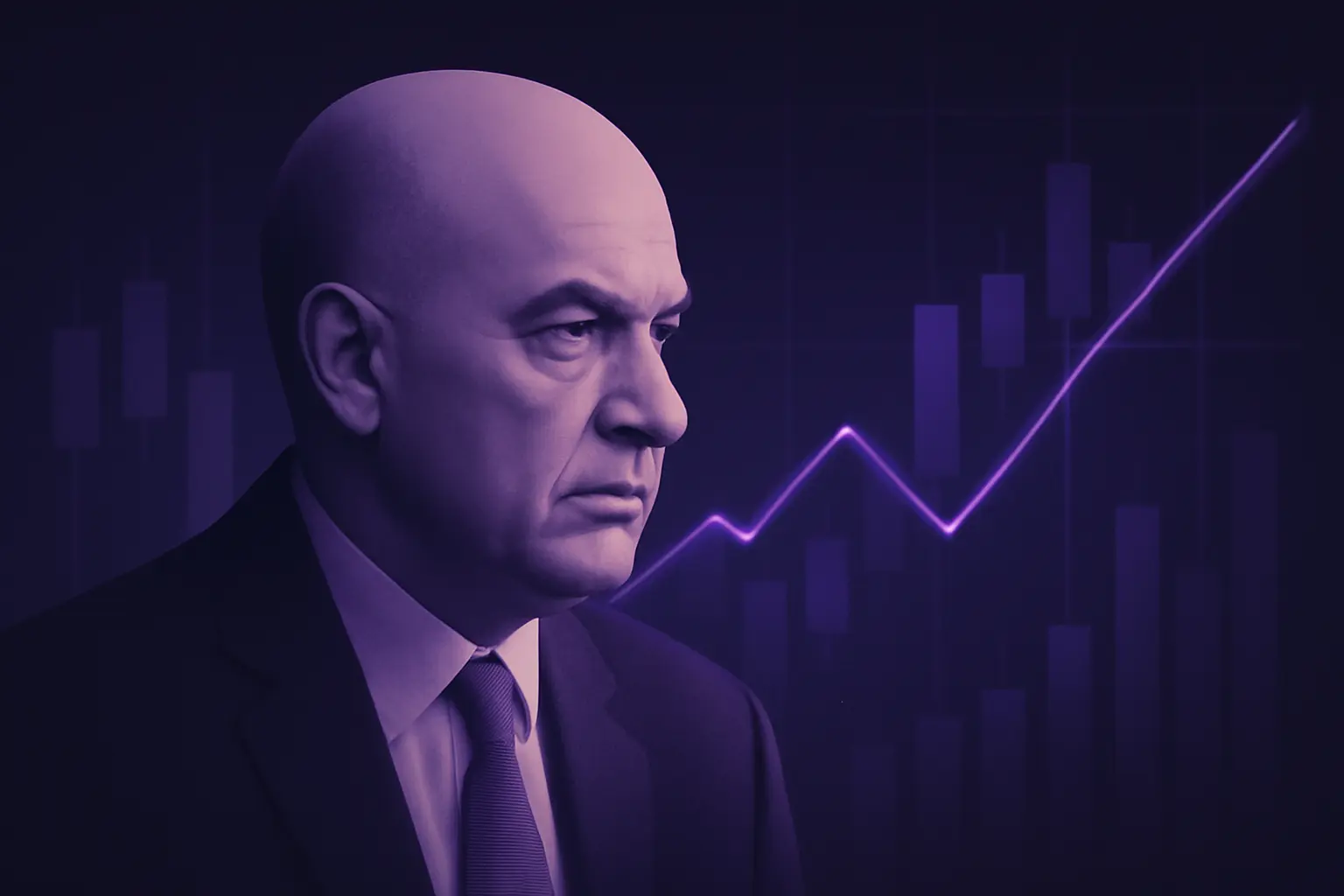
Kevin Warsh, acting Fed Chair, addresses market concerns over sticky inflation, signaling a steady policy approach while markets weigh rate cut odds.
Fed pause / no change
Typical directional bias by asset when this plays out — from the VNIX macro impact model. Educational, not financial advice.
VNIX Quick Take
- Kevin Warsh, acting Fed Chair, reassures markets on inflation, hinting at data-driven policy.
- Elevated inflation expectations have pressured rate cut bets, with futures pricing fewer cuts for 2025.
- Treasury yields remain elevated, while equity and crypto markets show mixed reactions to Warsh's comments.
Warsh's Debut as Acting Fed Chair: A Push to Steady Inflation Expectations
Kevin Warsh, now serving as acting Federal Reserve Chair, stepped into the spotlight this week with a clear mission: temper the market's growing anxiety over inflation. In his first major public remarks since assuming the role, Warsh acknowledged that price pressures remain above the Fed's 2% target but framed the recent uptick as part of a broader disinflationary trend that he expects to resume.
His comments come at a critical juncture. The latest Consumer Price Index (CPI) reading showed a 0.3% monthly increase, with core CPI still hovering around 3.8% year-over-year, well above the Fed's comfort zone. Markets had begun to price in a more hawkish Fed, with some traders even speculating about a possible rate hike later this year. Warsh's tone, however, suggests a more patient approach, leaning on data rather than reacting to short-term noise.
Warsh also emphasized the Fed's independence, a subtle nod to political pressures surrounding rate decisions. He stressed that monetary policy will remain guided by economic indicators, not political calendars, a reassurance that resonated with bond traders who had been wary of interference.
What's Driving the Inflation Narrative: Supply Chains, Energy, and Wage Pressures
Supply Chain Snarls and Energy Costs Keep Inflation Sticky
Despite progress over the past year, supply chain disruptions—particularly in semiconductors and auto parts—continue to exert upward pressure on goods prices. Energy costs, while off their peaks, remain volatile, with crude oil trading near $85 a barrel. These factors, combined with still-elevated services inflation, have kept the disinflation path bumpy.
Warsh pointed to these supply-side issues as transitory but acknowledged that they could persist longer than initially expected. He noted that the Fed's preferred measure, the core PCE index, has been slow to cool, running at 2.9% in the latest reading, still above the 2% target.
Wage Growth and Labor Market Tightness Add to the Mix
A resilient labor market, with unemployment at 3.7% and average hourly earnings rising 4.2% year-over-year, has kept domestic demand firm. This wage growth, while supporting consumer spending, complicates the Fed's fight against inflation, as businesses may pass higher labor costs onto prices.
Warsh, however, sees this as a sign of economic strength rather than overheating. He argued that productivity gains could offset wage pressures, a view that diverges from some of his more hawkish colleagues who worry about a wage-price spiral.
Key Levels to Watch: Yields, Dollar, and Rate Expectations
Traders should keep a close eye on the 10-year Treasury yield, which has been hovering near 4.6%—a level not seen since November. A break above 4.8% could signal that investors are demanding a higher term premium amid inflation uncertainty, potentially weighing on equities and gold. Conversely, a drop below 4.4% might indicate that the market is buying Warsh's reassurance.
The U.S. dollar index (DXY) is also at a pivotal juncture, trading around 105.5. A stronger dollar could put pressure on commodity prices and emerging market currencies, while a weaker dollar might offer a tailwind for gold and other hard assets. For those trading gold prices, the interplay between yields and the dollar will be crucial.
Rate futures are currently pricing in only two quarter-point cuts for 2025, down from four expected at the start of the year. The next CPI release, due in three weeks, will be the key catalyst. If it shows a continued slowdown, those cut expectations could quickly reprice higher, offering a potential boost to risk assets.
What This Means for Traders: Navigating a Data-Dependent Fed
Warsh's leadership style appears to be one of cautious pragmatism, but traders should not interpret his calm demeanor as a signal of imminent easing. The Fed remains in a holding pattern, and every economic release will be scrutinized for clues. This environment favors a nimble approach, using technical indicators to time entries and exits rather than relying on a single directional bet.
For those trading rate-sensitive assets like Bitcoin, the correlation with real yields remains negative. As long as inflation expectations stay anchored, any dip in yields could provide a tailwind for crypto. However, a surprise hot CPI print could trigger a sharp sell-off, so position sizing and risk management are paramount.
In the signal rooms, traders are already debating the odds of a May rate move. While Warsh's comments have reduced the probability of an immediate hike, the risk of a hawkish surprise remains. The Fed's dot plot, due at the next FOMC meeting, will be the ultimate guide.
For newcomers, this is a classic lesson in how central bank communication moves markets. Understanding the nuances of Fed speak can be more valuable than any single economic indicator. If you're just starting out, our quiz can help you find your trading style, and the classroom offers modules on macro fundamentals.
Ultimately, Warsh's message is one of patience—both on the part of the Fed and for traders. The path to 2% inflation will be uneven, and the market's reaction to each data point will likely be volatile. Staying informed and flexible is the best strategy in such an environment.
In VNIX's view
Warsh's measured tone suggests the Fed is in no rush to adjust rates, but the market's inflation anxiety won't dissipate overnight. Traders should brace for headline-driven swings, especially around CPI and PCE releases. A data-dependent Fed means opportunities for those who can read the tea leaves, but also risks for the overleveraged.
Educational analysis, not financial advice. Trading involves risk.
Track every market in one place
Live prices for gold, crypto, forex and US stocks with a heatmap view.