

BofA Sees Two More Fed Hikes in 2026 as US and ECB Paths Split
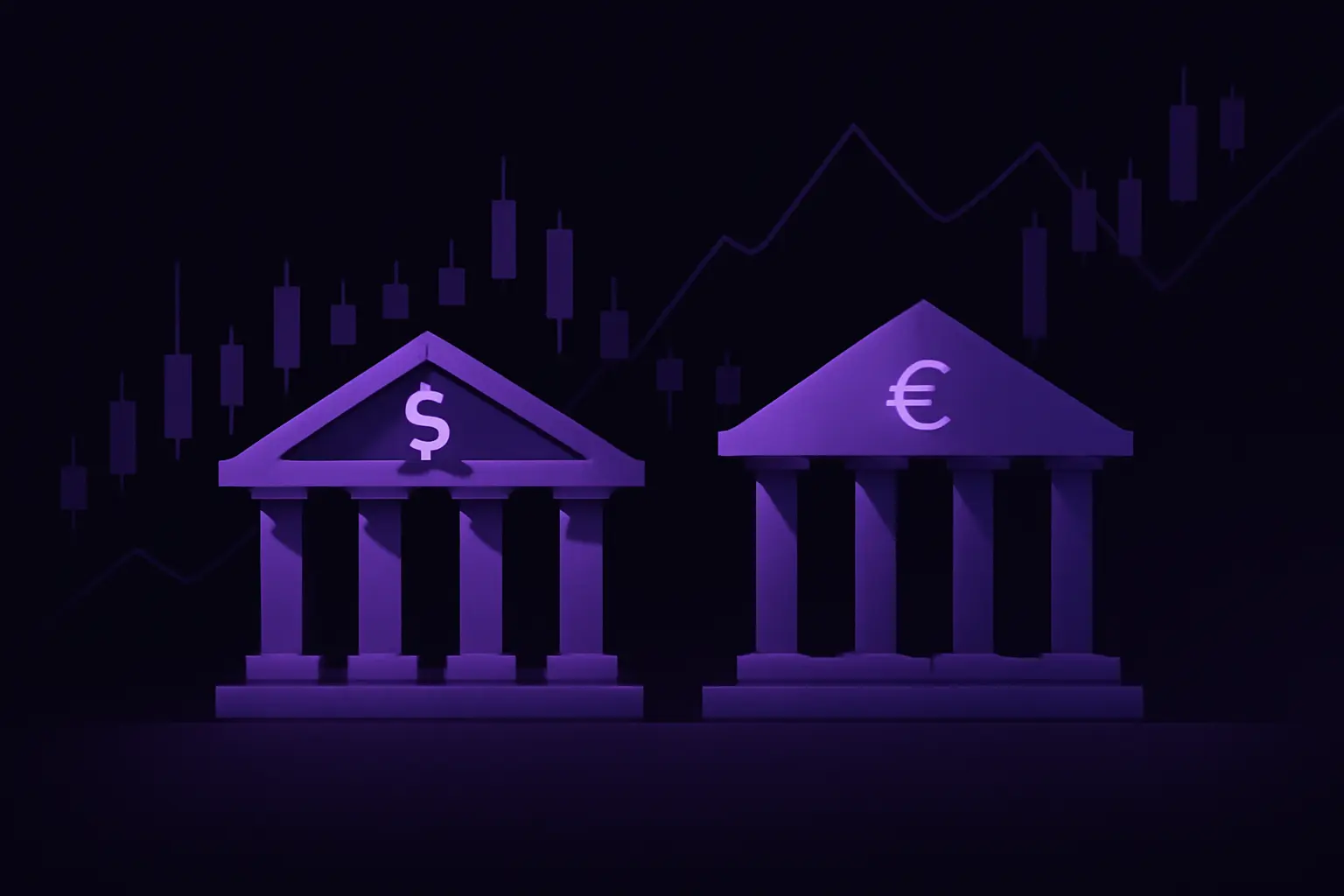
Bank of America expects two additional Fed rate hikes in 2026 while the ECB diverges, setting up a widening US-Europe policy gap for traders to watch.
FOMC — Hawkish / rate hike
Typical directional bias by asset when this plays out — from the VNIX macro impact model. Educational, not financial advice.
VNIX Quick Take
- Bank of America forecasts two more Federal Reserve rate hikes in 2026, signaling a higher-for-longer US policy path.
- The bank sees the European Central Bank diverging from the Fed, widening the US–eurozone policy gap.
- Rate differentials and the dollar are the key transmission channels for traders across FX, bonds and equities.
BofA's Call for Two More Fed Hikes in 2026 Sets Up a US–ECB Split
Bank of America expects the Federal Reserve to deliver two additional interest-rate increases in 2026, according to the bank's latest outlook. That projection places US monetary policy on a tighter trajectory than many market participants had assumed and stands in contrast to the European Central Bank, which BofA sees following a different path. The headline takeaway is straightforward: the world's two most important central banks are expected to diverge further, not converge.
The call matters because it challenges the broad market narrative that the Fed's next move would be a cut. If BofA is right, US borrowing costs stay elevated for longer, which ripples through Treasury yields, the dollar and risk assets. For traders, the forecast is less a prediction to trade blindly and more a scenario to stress-test against current positioning. The source material does not specify the timing, size or exact rationale for the two hikes, so the practical focus should be on the directional message: tighter US policy relative to Europe.
Policy divergence between the Fed and ECB has historically been a powerful driver of currency markets. When one central bank raises rates while another holds or cuts, the interest-rate differential tends to attract capital toward the higher-yielding currency. That mechanism is central to how FX traders read headlines like this one. You can track live moves across major pairs on our price now page.
What Is Driving the Fed–ECB Divergence Story
Why BofA Sees the Fed Staying on a Tightening Path
The core logic behind a hawkish Fed call usually rests on persistent inflation or resilient growth that keeps policymakers uncomfortable with loosening too soon. While the source summary does not detail BofA's specific reasoning, the forecast implies the bank believes US price pressures or demand conditions will not cool enough to justify a pause or cuts. A Fed that hikes twice more in 2026 would be signaling that its inflation fight is not finished.
For traders, the lesson is to separate the forecast from the data. A call for two hikes is a view about the future; it only becomes reality if incoming data supports it. That is why monitoring inflation prints, labor-market readings and Fed communication is essential. Our indicators section explains how traders use economic releases and technical signals to frame these expectations.
The ECB's Separate Path and What It Means for the Euro
BofA's view that the ECB will diverge implies the eurozone central bank is seen as less likely to tighten, or more likely to ease, than the Fed. That could reflect softer eurozone growth or different inflation dynamics. The result is a widening rate gap that tends to weigh on the euro against the dollar, all else equal. However, currency markets rarely move on rate differentials alone; growth expectations, risk sentiment and political factors also matter.
Traders watching EUR/USD should treat divergence as one input among several. A hawkish Fed and a softer ECB is a classic recipe for dollar strength, but positioning, valuation and surprise data can override the narrative. Our signal rooms are a place to see how other traders are framing these cross-currents.
Key Levels and Assets to Watch as the Divergence Plays Out
The most direct expression of a Fed–ECB split is the US dollar index and EUR/USD. A sustained move higher in the dollar would suggest markets are pricing in the BofA view; a failure to break higher could mean the forecast is already partly priced or that other forces are dominating. US Treasury yields, especially the 10-year, are another key gauge: a hawkish Fed call should, in theory, support higher yields, but the bond market's reaction depends on inflation expectations and growth fears.
Equities are more nuanced. Higher US rates can pressure long-duration growth stocks and rate-sensitive sectors like real estate, while a stronger dollar can hurt multinational earnings. Gold, which often moves inversely to real yields and the dollar, is another asset to monitor. You can follow gold and other key markets on our price now page. The source does not provide specific price levels, so traders should identify their own reference points based on recent ranges and volatility.
How Traders Can Think About the Two-Hike Scenario
The first step is to assess whether the market is already pricing in two Fed hikes. If futures markets fully reflect that outcome, the surprise potential is limited and the dollar may not rally much further on confirmation. If the market is skeptical, a shift in pricing could trigger sharp moves. Traders can gauge this by watching rate-futures implied probabilities and comparing them with BofA's call.
The second step is to consider what would invalidate the scenario. A sudden deterioration in US growth, a cooling in inflation or a financial-stability shock could force the Fed to pause or cut, undermining the two-hike forecast. Conversely, stronger-than-expected data would reinforce it. This is why a disciplined approach to risk management matters: forecasts are probabilistic, not certainties. Newer traders can explore different styles in our quiz to find an approach that suits their risk tolerance.
Finally, remember that divergence trades can be crowded. When a theme like 'hawkish Fed versus dovish ECB' becomes consensus, positioning can become stretched, and the market may react violently to any data that challenges the narrative. Keeping an eye on sentiment and positioning indicators can help traders avoid being caught offside. Our classroom offers educational resources on these concepts, and if you are ready to trade, you can compare brokers on our brokers page.
In VNIX's view
BofA's call for two more Fed hikes in 2026 is a meaningful hawkish signal that contrasts with the market's prevailing expectation of easing. The forecast reinforces the idea that US rates may stay higher for longer, which could keep the dollar supported and add volatility to rate-sensitive assets. However, traders should treat this as one scenario among many and watch incoming data closely, as the gap between forecast and reality is where risk and opportunity live.
Educational analysis, not financial advice. Trading involves risk.
Not sure which tool fits you?
Take the 2-minute quiz and get a personalized recommendation.