

Fed's Listening Tour: Why Good Monetary Policy Starts With Hearing the Economy
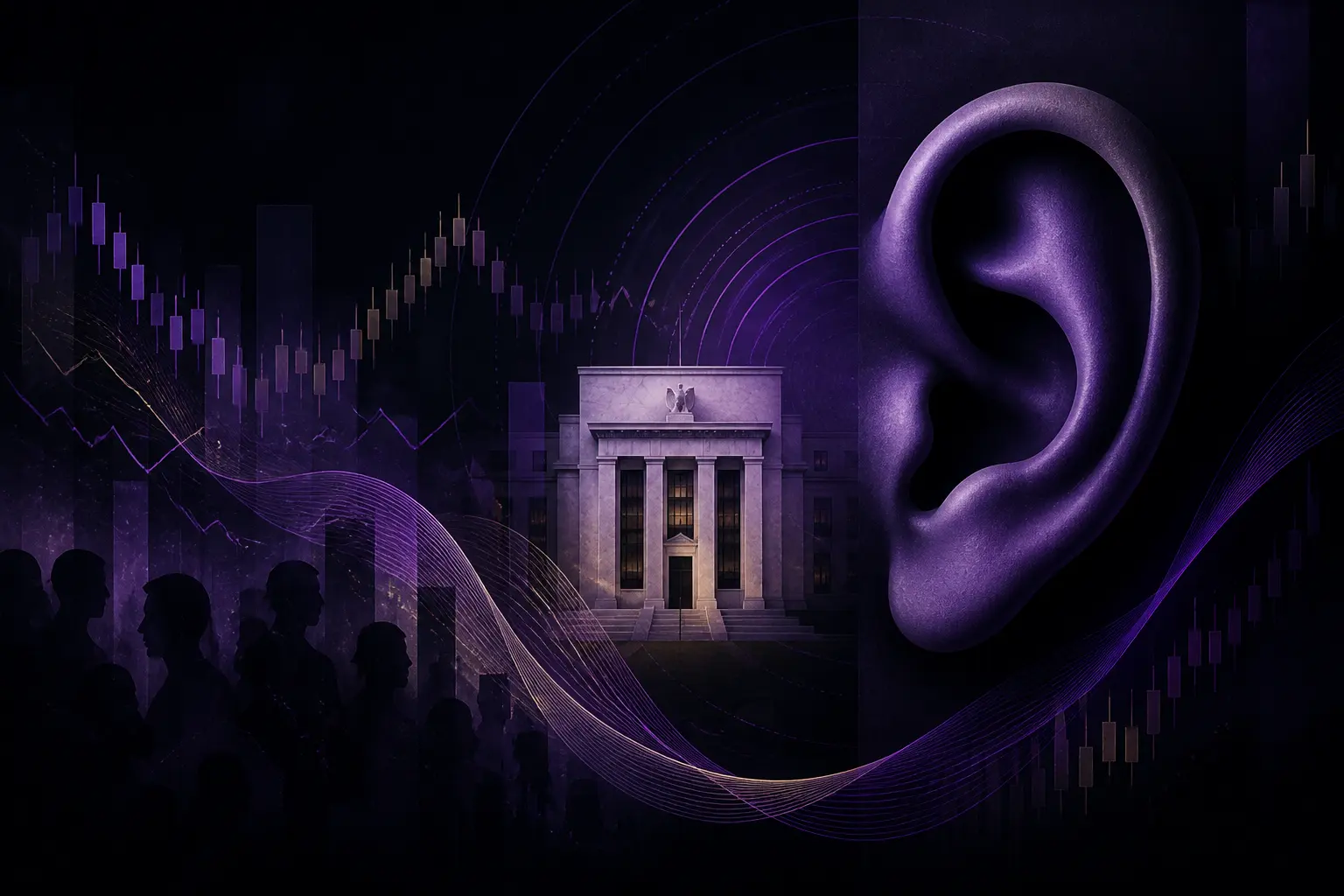
The Fed's approach to monetary policy hinges on extensive listening—to data, markets, and the public. We explore why this matters for traders navigating rate decisions.
VNIX Quick Take
- Effective monetary policy requires the Fed to listen broadly—to economic data, financial markets, and the public—not just rely on models.
- This listening approach helps the Fed avoid policy errors by incorporating real-time feedback and diverse perspectives.
- For traders, understanding the Fed's information-gathering process can provide clues about future policy moves and market reactions.
Fed's Listening Tour: How the Central Bank Gathers Economic Intelligence
The Federal Reserve's policymaking is often viewed through the lens of interest rate decisions and economic projections. But behind every FOMC meeting lies a massive information-gathering operation. The Fed doesn't just crunch numbers; it actively listens—to businesses, community leaders, economists, and financial markets. This "listening tour" approach is central to formulating good monetary policy, as it helps policymakers understand the real-world impact of their decisions and identify emerging risks early.
In recent years, the Fed has expanded its outreach efforts, including the Fed Listens initiative, which brings together diverse groups to discuss how monetary policy affects their lives. These conversations provide valuable context that quantitative data alone cannot capture. For instance, while employment reports show job gains, they may not reveal the quality of jobs or the struggles of specific communities. By listening, the Fed can better assess the true state of the labor market and adjust policy accordingly.
Moreover, the Fed pays close attention to financial markets, which act as a real-time barometer of economic expectations. Market pricing of interest rates, inflation expectations, and risk premiums all feed into the Fed's deliberations. This two-way communication—with the public and the markets—helps the Fed avoid surprises and build credibility. As a result, traders who understand this process can better anticipate policy shifts and position themselves accordingly.
Why the Fed Listens: Data, Markets, and Public Feedback
The Role of Economic Data in Shaping Policy
Economic data is the backbone of monetary policy, but it's not infallible. Data revisions, reporting delays, and measurement issues mean the Fed must interpret numbers with caution. Listening to a range of indicators—from employment and inflation to surveys of business sentiment—helps build a more complete picture. For example, if GDP growth is strong but employment growth is slowing, the Fed might probe further to understand the discrepancy. This holistic approach reduces the risk of policy errors based on incomplete information.
Traders can benefit from monitoring the same data the Fed watches. Key releases like the nonfarm payrolls report, CPI, and PMIs often move markets. But understanding how the Fed interprets these figures—and what might prompt a policy response—can give traders an edge. For instance, a single month of weak jobs data might not sway the Fed if other indicators remain solid, but a sustained trend could.
Market Signals and Public Input as Policy Guides
Financial markets are not just passive observers; they actively shape monetary policy. The Fed monitors market-based inflation expectations, yield curves, and credit spreads to gauge economic health. A sharp rise in Treasury yields, for example, can signal tighter financial conditions, which might lead the Fed to reconsider its rate path. Similarly, equity market volatility can affect consumer and business confidence, influencing spending and investment.
Public feedback, gathered through surveys and community engagements, adds another layer. The Fed's regional banks conduct regular surveys of businesses and households, providing granular insights into local economic conditions. This grassroots intelligence can highlight trends before they appear in national data. For traders, staying attuned to these surveys—such as the Beige Book—can offer early signals of economic shifts.
Key Indicators the Fed Monitors: A Trader's Cheat Sheet
While the Fed's listening process is broad, certain indicators carry more weight. Inflation remains a top priority, with the PCE price index being the Fed's preferred measure. Employment data, particularly payrolls and the unemployment rate, are crucial for assessing maximum employment. Additionally, the Fed watches financial conditions closely, including stock prices, credit spreads, and the dollar's value. These indicators often appear in our economic calendar and can be tracked in real-time.
For traders, understanding which data points matter most to the Fed can help anticipate market reactions. For example, a hotter-than-expected CPI reading might increase the odds of a rate hike, boosting the dollar and weighing on gold. Conversely, weak GDP growth could fuel expectations of rate cuts, supporting bonds and growth stocks. By keeping an eye on these key metrics, traders can better position their portfolios around Fed communication and decisions.
How Traders Can Use the Fed's Listening Framework
The Fed's emphasis on listening suggests that policy decisions are not made in a vacuum. Traders should therefore pay attention to the full spectrum of inputs the Fed considers—not just the latest headline number. This means monitoring speeches by Fed officials, regional Fed surveys, and market pricing of rate expectations. The VNIX signal rooms provide a platform to discuss these interconnections and share trade ideas with peers.
Another key takeaway is that the Fed's communication strategy is deliberate. By listening to the public and markets, the Fed aims to guide expectations and avoid abrupt policy shifts. Traders who understand this can anticipate a gradual approach to policy changes, reducing the risk of being caught off guard by sudden moves. However, the Fed's listening process also means that unexpected developments—such as a geopolitical crisis or a financial market shock—can quickly alter the policy outlook. Staying flexible and informed is essential.
Finally, the Fed's listening tour underscores the importance of a long-term perspective. While short-term data can be noisy, the Fed focuses on trends. Traders might benefit from adopting a similar mindset, using tools like technical analysis to filter out noise and identify meaningful signals. For those new to trading, our trading style quiz can help determine an approach that aligns with their risk tolerance and goals.
In VNIX's view
The Fed's commitment to listening is more than a feel-good exercise; it's a risk-management strategy. By incorporating diverse perspectives, the Fed reduces the chance of policy missteps that could destabilize markets. For traders, this means that Fed watching requires a multi-faceted approach—monitoring data, markets, and communication. While no one can predict the Fed's every move, understanding its listening framework can improve the odds of anticipating policy shifts and managing risk.
Educational analysis, not financial advice. Trading involves risk.
Trade smarter with VNIX indicators
Clear entry, exit and risk signals right on your TradingView chart.