

Central Banks Face Stagflationary Squeeze as Inflation Stays Hot, Growth Cools
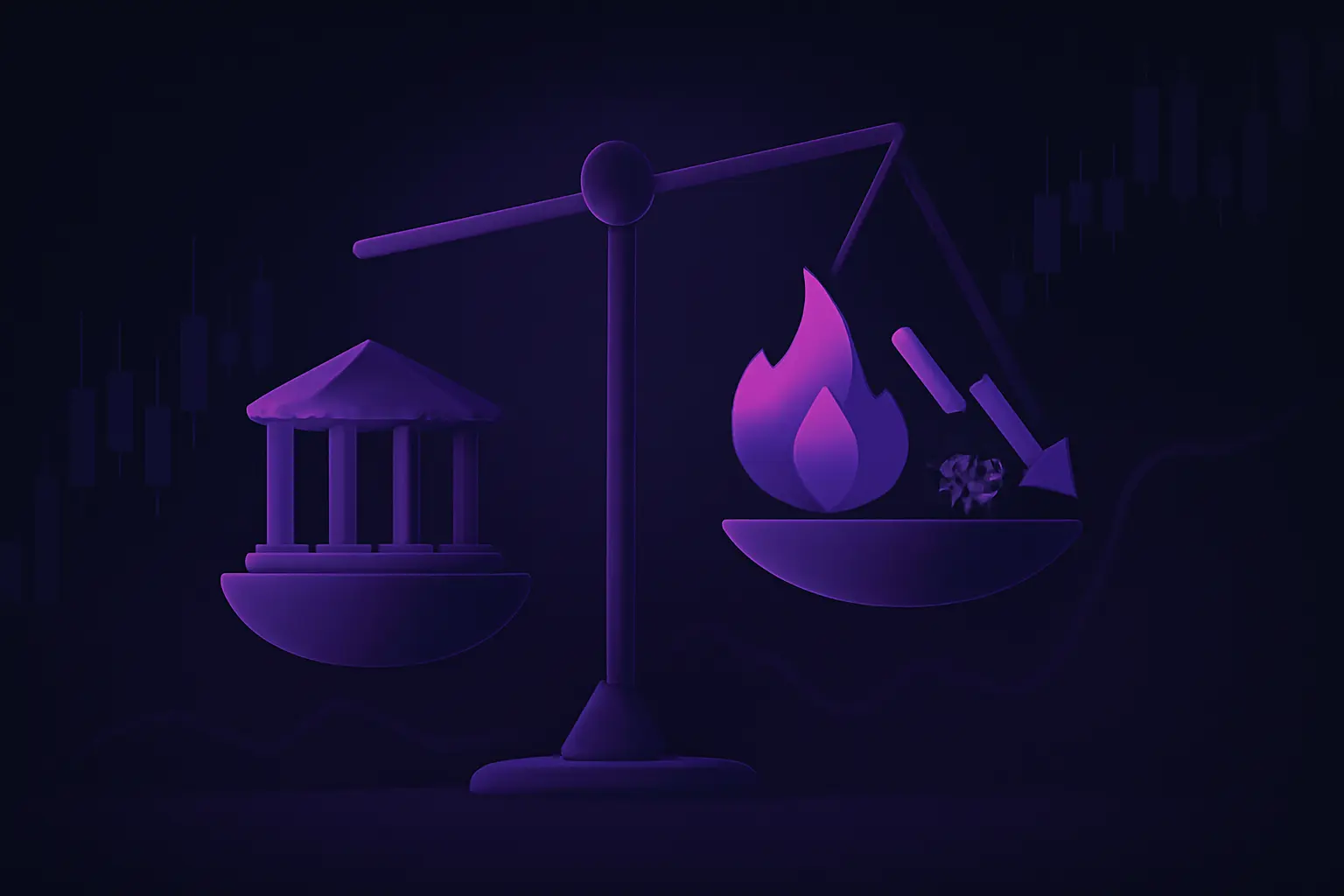
Rising inflation and slowing growth put central banks in a policy bind. We break down the dilemma and what it means for traders.
VNIX Quick Take
- Central banks are caught between persistent inflation and softening economic momentum.
- Rate hikes to fight inflation risk deepening a slowdown; cuts to support growth could reignite price pressures.
- Traders should watch inflation data and central bank communication for directional cues.
Stagflation Fears Resurface as Inflation Overshoots While GDP Momentum Fades
The latest economic data paint a conflicting picture: inflation remains above target while growth is losing steam. This classic stagflationary setup is forcing central banks to weigh two undesirable outcomes — tightening policy into a slowdown or easing into sticky price pressures.
Officials at major central banks have acknowledged the dilemma, but no clear path has emerged. Markets are pricing in a higher probability of policy errors, leading to increased volatility across asset classes.
What's Driving the Central Bank Policy Dilemma
Inflation Persistence Keeps Hawks Alert
Inflation readings have consistently come in hotter than expected, driven by supply-side shocks and wage growth that remains elevated. Core measures that strip out volatile food and energy are still running well above the 2% targets, suggesting that price pressures are becoming entrenched.
This persistence keeps the hawkish faction at central banks vocal, arguing that the credibility of inflation targeting is at stake. Premature easing, they warn, could undo years of policy tightening.
Growth Deceleration Complicates the Calculus
At the same time, leading indicators point to a sharp slowdown. Manufacturing activity is contracting in several major economies, and consumer confidence is slipping as higher borrowing costs bite. Some regions are already flirting with recession.
Dovish policymakers emphasize that the lagged effects of past rate hikes are still working through the system. They argue that over-tightening now could trigger an unnecessary downturn, especially if inflation is already on a downward trajectory.
Key Levels and Economic Releases to Watch
Traders should keep a close eye on upcoming inflation prints (CPI, PCE) and GDP revisions, as these will heavily influence the next policy move. A surprise upside in inflation would likely reinforce hawkish bets, while a significant growth miss could sway the doves. Key technical levels on major indices and currencies will hinge on these outcomes.
For a real-time view of how markets are pricing these scenarios, check the live price charts for major FX pairs and equity indices.
How Traders Can Navigate the Central Bank Crosscurrents
In such an uncertain environment, the best approach is to focus on data dependency rather than predicting a single outcome. The risk-reward for directional bets is skewed, so traders might consider using technical indicators to time entries and exits, while keeping an eye on the macro calendar.
Volatility is likely to remain elevated, offering opportunities but also increasing risk. Joining community signal rooms can provide real-time insights from other traders who are navigating the same crosscurrents.
For those new to trading, understanding how central bank policy impacts markets is crucial. The education hub has resources to help you build a solid foundation. And if you're ready to act on your analysis, you'll need a reliable broker to execute trades.
In VNIX's view
The stagflationary squeeze is a genuine policy bind, but history suggests that central banks will ultimately prioritize inflation fighting, even at the cost of growth. Traders should not assume an early pivot; instead, they should brace for a prolonged period of high rates and market volatility. The key is to stay nimble and data-driven, as the narrative can shift quickly.
Educational analysis, not financial advice. Trading involves risk.
Get real-time trade signals
Entry, target and stop-loss for gold, crypto and forex — curated by our team.