

Oil Retreats From Six-Month Peak as Traders Weigh Easing Iran Hostilities
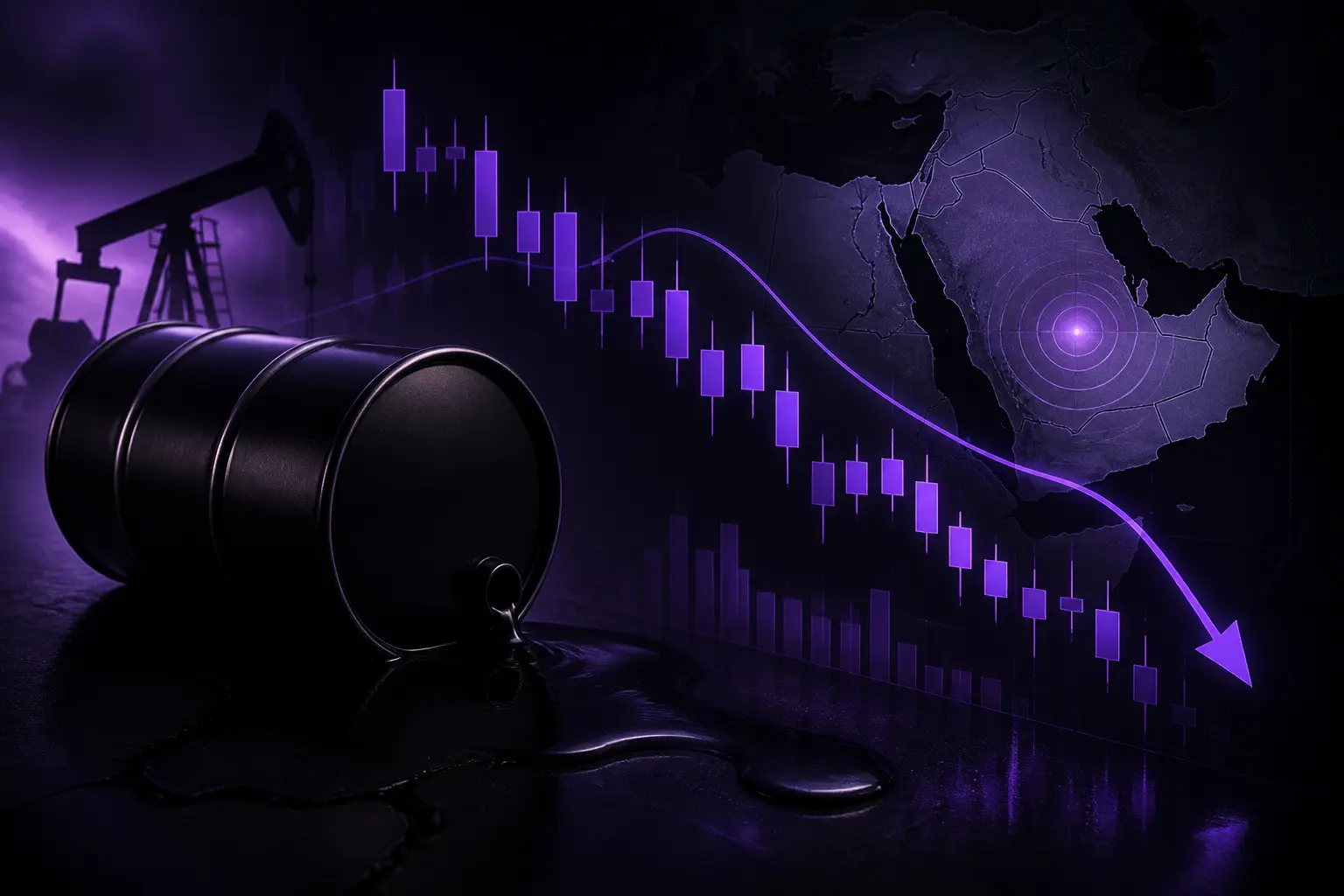
Crude pulls back from near six-month highs on hopes that Iran-related hostilities may de-escalate, shifting the focus to risk premium unwinding and key price levels.
VNIX Quick Take
- Crude oil slipped from near six-month highs as markets priced in the possibility that Iran-related hostilities could cool.
- The move reflects a partial unwinding of the geopolitical risk premium that had built up in recent sessions.
- Traders now watch whether de-escalation headlines persist or fade, which will determine if the pullback extends.
Crude Slips From Six-Month Peak as Iran Tensions Seen Cooling
Oil prices retreated from levels close to their highest in roughly six months, with the pullback tied to growing hopes that hostilities involving Iran may ease. The shift in sentiment marks a pause in the rally that had been driven by concerns over supply disruption in a key producing region.
The headline move is essentially a sentiment repricing. When markets perceive that a geopolitical flashpoint is cooling, the extra compensation traders demand for holding crude — the so-called risk premium — tends to compress. That compression shows up as a lower price even if physical supply and demand have not materially changed.
For readers tracking the energy complex alongside other assets, it helps to view crude within the broader commodity picture rather than in isolation. Oil, like gold and other risk-sensitive instruments, reacts to the same macro backdrop of rates, the dollar and risk appetite — so a single geopolitical headline is rarely the whole story.
Why the Geopolitical Risk Premium Is Doing the Heavy Lifting
Crude benchmarks had climbed toward six-month highs largely on fears that an escalation involving Iran could threaten supply routes and regional output. When those fears ease, the reverse logic applies: some of the premium that was added gets taken back out.
It is important to separate two forces. The first is the fear premium, which is fast-moving and headline-driven. The second is the underlying balance of supply and demand, which moves slowly. This pullback is primarily a story about the first force easing, not necessarily a change in the second.
How Headline-Driven Fear Inflates Crude Prices
Geopolitical risk premia are notoriously unstable. They can inflate quickly on a single escalation and deflate just as fast when tensions appear to cool. That asymmetry is why oil can post sharp moves around conflict news without a corresponding change in inventories or refinery activity.
For traders, the lesson is that headline-driven rallies can be fragile. Understanding volatility and momentum signals — the kind of tools covered in our technical indicators guide — helps frame whether a move is being driven by durable fundamentals or by sentiment that may reverse.
Easing Fears Versus a Genuine Supply Shift
A de-escalation narrative lowers the probability the market assigns to a supply shock. That is different from an actual increase in barrels reaching the market. Unless physical flows change, the fundamental backdrop remains broadly what it was before the headline cycle began.
This distinction matters for positioning. Traders who confuse a sentiment pullback with a fundamental reversal can be caught out if the geopolitical situation re-intensifies. Watching how the market reacts to the next round of headlines is often more informative than reacting to the first.
Price Levels and Benchmarks to Watch as Crude Cools
With oil stepping back from near six-month highs, attention turns to whether the retreat is a shallow pause or the start of a deeper correction. Traders typically watch whether prior support zones hold and whether each rally attempt is met with fresh selling. The behavior around recent highs can reveal whether buyers remain in control or whether momentum is fading.
It also pays to monitor correlated signals: the US dollar, which often moves inversely to crude, and the tone across the energy complex. Cross-asset confirmation can help distinguish a genuine shift in trend from a single-session wobble. Community discussion and shared chart ideas in our signal rooms can be a useful way to pressure-test a read before committing capital.
What This Oil Pullback Means for Traders
The core takeaway is that this is a sentiment-driven move, and sentiment-driven moves demand discipline. Because the catalyst is a change in expectations about hostilities rather than a change in physical supply, the picture can flip quickly if headlines evolve. Position sizing and risk limits matter more than conviction when the driver is geopolitics.
It also helps to think in scenarios. If de-escalation hopes persist, the risk premium may continue to bleed out and pressure crude further. If tensions re-intensify, the premium could rebuild rapidly. Rather than predicting which path unfolds, a trader can define what would confirm each scenario and act on evidence rather than anticipation.
Finally, remember that oil sits inside a web of macro relationships. Rate expectations, the dollar and broader risk appetite all influence crude, so a single geopolitical story is one input among many. Newer traders building a framework for this kind of cross-asset thinking may find structured grounding in our classroom resources, and those ready to act on a plan should ensure they have a suitable broker account in place.
In VNIX's view
This pullback looks like a classic unwinding of geopolitical risk premium rather than a fundamental reassessment of oil supply and demand. That makes the move inherently headline-sensitive, so traders should treat further de-escalation news as the key variable rather than assuming a durable downtrend. Discipline around risk and confirmation beats reacting to the first headline.
Educational analysis, not financial advice. Trading involves risk.
Track every market in one place
Live prices for gold, crypto, forex and US stocks with a heatmap view.