

Inflation Election: Voters Weigh Rising Prices as a Ballot Issue
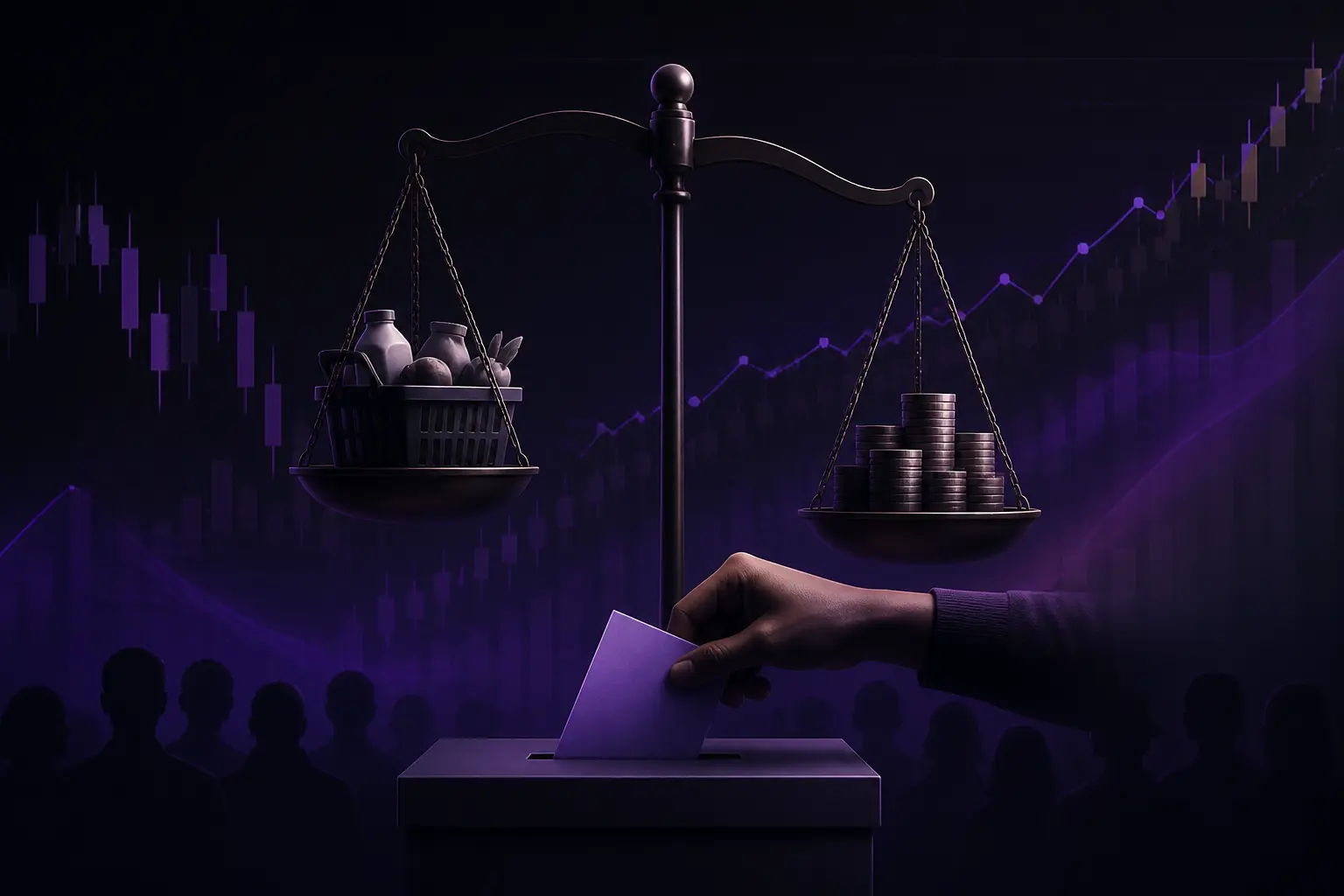
A new opinion piece argues inflation could shape election outcomes, with cost-of-living pressures dominating voter sentiment and market expectations.
VNIX Quick Take
- The source opinion argues inflation has become a central election issue, not just an economic data point.
- Cost-of-living pressures are shaping voter sentiment, which can influence fiscal and monetary expectations.
- Traders should watch how political narratives around inflation feed into policy risk and market volatility.
Inflation Moves From the Data Calendar to the Ballot Box
The source opinion piece, titled “The inflation election,” makes the case that rising prices have become a political force in their own right. Rather than being confined to monthly CPI prints or central bank meetings, inflation is now framed as a ballot-box issue that could influence election outcomes and, by extension, the policy environment that markets must navigate.
The article’s core argument is that voters are experiencing inflation directly through higher costs for everyday goods and services, and that this lived experience carries political weight. For traders, this matters because elections can reshape fiscal priorities, regulatory approaches, and even expectations around central bank independence. When inflation becomes an election issue, the feedback loop between politics and policy tightens.
While the source does not provide specific polling numbers or election forecasts, the framing itself is significant. It suggests that inflation is no longer just a lagging indicator to be monitored on a data calendar; it is an active variable that can drive political change and, in turn, market volatility. Understanding this shift is essential for anyone trading currencies, bonds, or equities in an environment where economic data and political sentiment are increasingly intertwined.
Why Inflation Became a Political Flashpoint
Cost-of-Living Pressures and Voter Perception
The opinion piece highlights that inflation is felt most acutely through the cost of essentials such as food, energy, and housing. These are not abstract statistics; they are recurring household expenses that shape how people view their economic well-being. When prices rise faster than wages, the perception of financial strain can intensify, making inflation a visceral issue rather than a technical one.
This perception gap is important for traders because it can influence consumer confidence, spending behavior, and ultimately economic growth. If voters feel worse off, they may support policies that prioritize immediate relief over long-term fiscal discipline. Such policies could include price controls, subsidies, or tax cuts, all of which have market implications. The source does not specify which policies are being debated, but the general point is clear: inflation as a political issue can lead to interventionist measures that markets may not have priced in.
Policy Responses and Market Expectations
When inflation becomes an election issue, politicians are incentivized to respond. This can take the form of fiscal support, regulatory pressure on certain industries, or criticism of central bank policy. The source opinion suggests that such responses can complicate the inflation outlook, as fiscal expansion might counteract monetary tightening.
For traders, this creates a dual risk: on one hand, political pressure could lead to looser fiscal policy, which might support demand and keep inflation elevated; on the other hand, it could lead to measures that distort price signals and reduce market efficiency. Monitoring political rhetoric around inflation can therefore provide early clues about potential policy shifts. The source does not offer specific examples, but the framework is useful for anticipating how election cycles might affect asset prices, from government bonds to currencies.
Key Levels and Assets to Watch as Inflation Politics Intensify
The source does not provide specific price levels or asset targets, but it implies that inflation-related political developments will be reflected in traditional inflation hedges and policy-sensitive assets. Traders often watch gold as a store of value when inflation expectations rise, though its performance can vary based on real yields and dollar strength. Similarly, bond markets, particularly inflation-protected securities, can signal how the market perceives future inflation and policy responses.
Currency markets may also react to political uncertainty. If inflation politics lead to fiscal expansion or pressure on the central bank, the domestic currency could weaken as investors reassess the country's inflation trajectory. Conversely, if political responses are seen as credible and disciplined, the currency might strengthen. The key is to monitor how political narratives translate into actual policy proposals and how those proposals are received by markets. Tools like moving averages and RSI can help traders gauge momentum in these assets as news unfolds.
How Traders Can Navigate an Inflation-Focused Election Cycle
First, recognize that inflation is not just a data series; it is a narrative that can drive political outcomes. This means that even if inflation data begins to cool, the political salience of past price increases may persist. Traders should therefore pay attention to polling, campaign rhetoric, and policy proposals, not just economic releases. The source opinion underscores that inflation is an election issue, which implies that its influence may outlast the actual inflation cycle.
Second, consider the feedback loop between politics and monetary policy. If politicians pressure central banks to keep rates low or to ease policy prematurely, inflation expectations could become unanchored. This scenario is often bearish for bonds and bullish for inflation hedges. On the other hand, if political pressure leads to tighter fiscal policy or supply-side reforms that lower costs, the inflation outlook could improve. Traders can use community discussions to gauge how others are interpreting these dynamics and to share ideas.
Third, manage risk around event risk. Elections and political announcements can cause sharp moves in asset prices. Using stop-loss orders and position sizing is essential, especially if you are trading on short-term political headlines. For those new to trading, understanding your risk tolerance through tools like our trader personality quiz can help you choose an approach that suits your style. And if you are ready to act on your views, ensure you have a broker account set up to execute trades efficiently.
In VNIX's view
The opinion piece correctly identifies that inflation has transcended economics to become a political force. For traders, this means incorporating political analysis into their macro toolkit, as election outcomes can reshape fiscal and monetary policy in ways that standard economic models may not capture. The key is to stay flexible and avoid overcommitting to a single narrative, because political responses to inflation can be unpredictable and market-moving.
Educational analysis, not financial advice. Trading involves risk.
Trade smarter with VNIX indicators
Clear entry, exit and risk signals right on your TradingView chart.