

Trump vs Fed: Collision Course Over Interest Rates
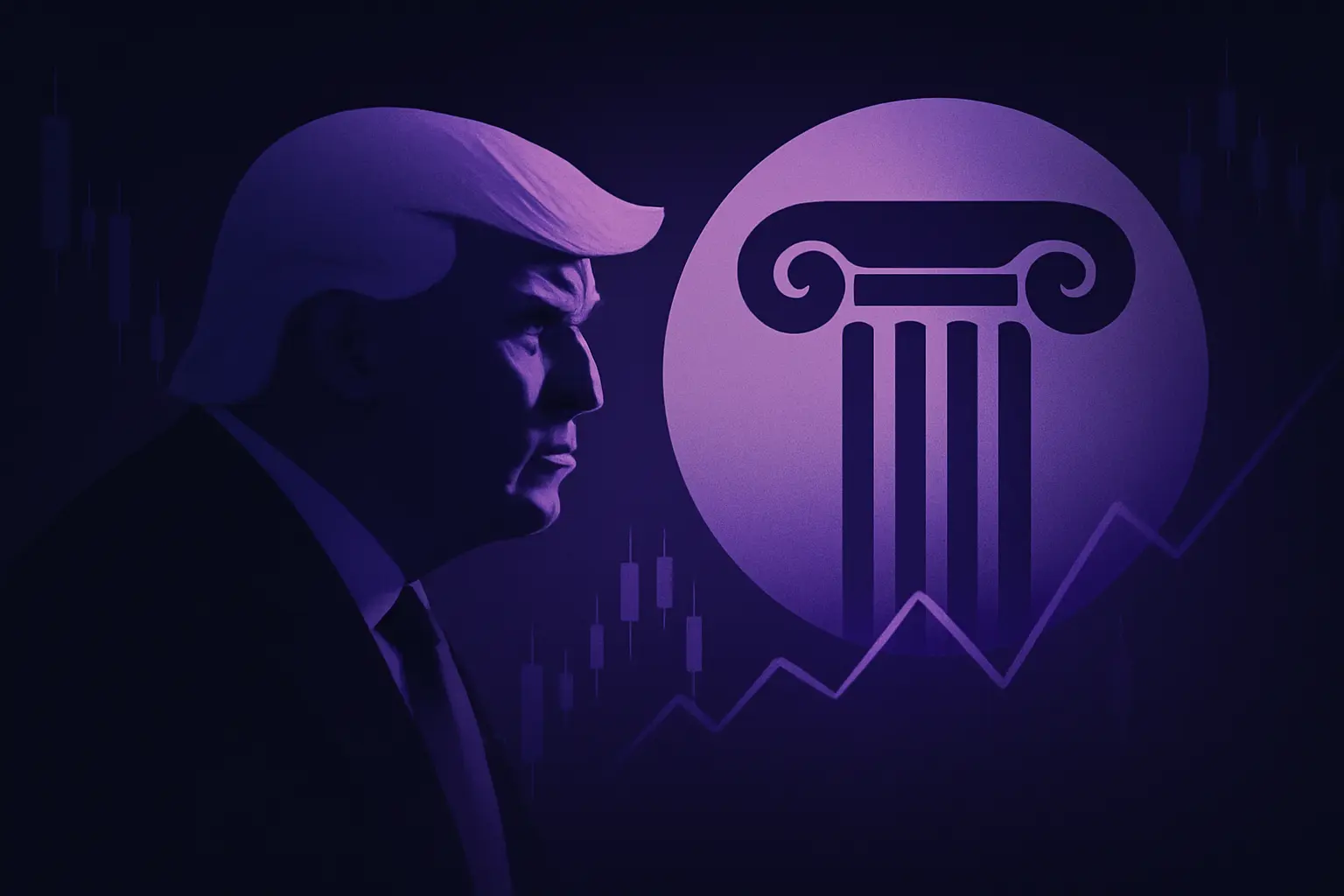
Political pressure on the Federal Reserve is mounting as Trump pushes for lower rates, setting up a potential clash over monetary policy independence.
Fed pause / no change
Typical directional bias by asset when this plays out — from the VNIX macro impact model. Educational, not financial advice.
VNIX Quick Take
- President Trump and the Federal Reserve are on a collision course over interest rate policy.
- The Fed's dual mandate of price stability and maximum employment may conflict with political pressure for lower rates.
- Traders should monitor FOMC communications and economic data for signs of policy shifts.
Trump and the Fed: A Looming Clash Over Interest Rates
President Donald Trump and the Federal Reserve appear to be on a collision course regarding the direction of interest rates. Trump has publicly called for lower rates, while the Fed has maintained a data-dependent approach, keeping rates steady in recent meetings. This tension raises questions about the central bank's independence and the potential for political interference in monetary policy.
The Fed's current target range for the federal funds rate remains unchanged, as policymakers assess economic conditions. The central bank has emphasized its commitment to its dual mandate: promoting maximum employment and stabilizing prices. However, political pressure from the White House could complicate the Fed's decision-making process.
Historically, the Fed operates independently of political influence, but presidents have occasionally criticized Fed policy. The current situation is notable because Trump's comments come amid a backdrop of mixed economic signals, including a strong labor market and moderating inflation. The Fed's next moves will be closely watched by traders for any signs of a shift in policy stance.
Drivers Behind the Fed-Trump Tension
Political Pressure and the Fed's Independence
President Trump has repeatedly urged the Federal Reserve to cut interest rates, arguing that lower rates would boost economic growth. This pressure challenges the Fed's traditional independence, as the central bank is designed to make decisions based on economic data rather than political considerations. The Fed's leadership has stressed that policy decisions are made without political influence, but the ongoing criticism could create uncertainty in markets.
Political interference in monetary policy can undermine confidence in the central bank's ability to control inflation and support employment. If markets perceive that the Fed is yielding to political pressure, it could lead to higher inflation expectations and volatility in bond markets. Traders often monitor the Fed's independence as a key factor in long-term economic stability.
Economic Data and the Fed's Dual Mandate
The Fed's policy decisions are guided by its dual mandate: achieving maximum employment and keeping inflation around 2%. Recent economic reports show a resilient labor market, with unemployment near historic lows, while inflation has shown signs of cooling but remains above the Fed's target. This mixed picture gives the Fed reason to maintain a cautious approach, as cutting rates too soon could reignite inflation.
Fed officials have indicated that future rate adjustments will depend on incoming data. Key indicators such as the Consumer Price Index (CPI), Nonfarm Payrolls (NFP), and GDP growth will influence the Fed's next steps. Traders can use tools like our economic calendar to track these releases and anticipate policy changes.
Key Levels and Assets to Watch
As the tension between Trump and the Fed unfolds, traders should keep an eye on several key assets. The US 10-year Treasury yield is a critical gauge of market expectations for interest rates; a spike above 4.8% could signal concerns about inflation or Fed policy. Meanwhile, the US dollar often reacts to rate expectations, with a stronger dollar typically reflecting higher rate prospects. Gold, which is sensitive to interest rates, may also see increased volatility.
For those trading forex or commodities, monitoring the Fed's communications and economic data releases is essential. Our live price charts can help you track real-time movements in these assets. Additionally, the Fed's dot plot, which shows policymakers' rate projections, will be a key focus at upcoming FOMC meetings.
Navigating the Fed-Trump Standoff: What Traders Need to Know
The collision course between Trump and the Fed introduces a layer of political risk into monetary policy expectations. Traders should consider how political pressure might influence the Fed's decisions, but also recognize that the central bank has historically guarded its independence. Any signs that the Fed is adjusting policy due to political pressure could lead to market turbulence.
To manage risk, traders might diversify across assets and use stop-loss orders. It's also important to stay informed about the Fed's official communications and economic data. Our trade ideas community can provide insights from other traders navigating these conditions. For those new to trading, understanding the interplay between politics and central banks is crucial; our beginner's quiz can help you assess your knowledge.
Ultimately, the Fed's decisions will be data-driven, but political noise can create short-term volatility. Traders should focus on the fundamentals and avoid overreacting to headlines. As always, risk management is key, and having a reliable broker can ensure smooth execution during volatile periods.
In VNIX's view
The standoff between President Trump and the Federal Reserve highlights the delicate balance between political influence and central bank independence. While Trump's calls for lower rates may resonate with some market participants, the Fed is likely to stick to its data-dependent approach unless economic conditions deteriorate significantly. Traders should prepare for increased volatility around Fed meetings and economic releases, and consider how political developments might impact market sentiment. Staying informed and disciplined will be essential in this environment.
Educational analysis, not financial advice. Trading involves risk.
Trade smarter with VNIX indicators
Clear entry, exit and risk signals right on your TradingView chart.