

Treasury and European Yields Slide as Fed and ECB Both Stand Pat
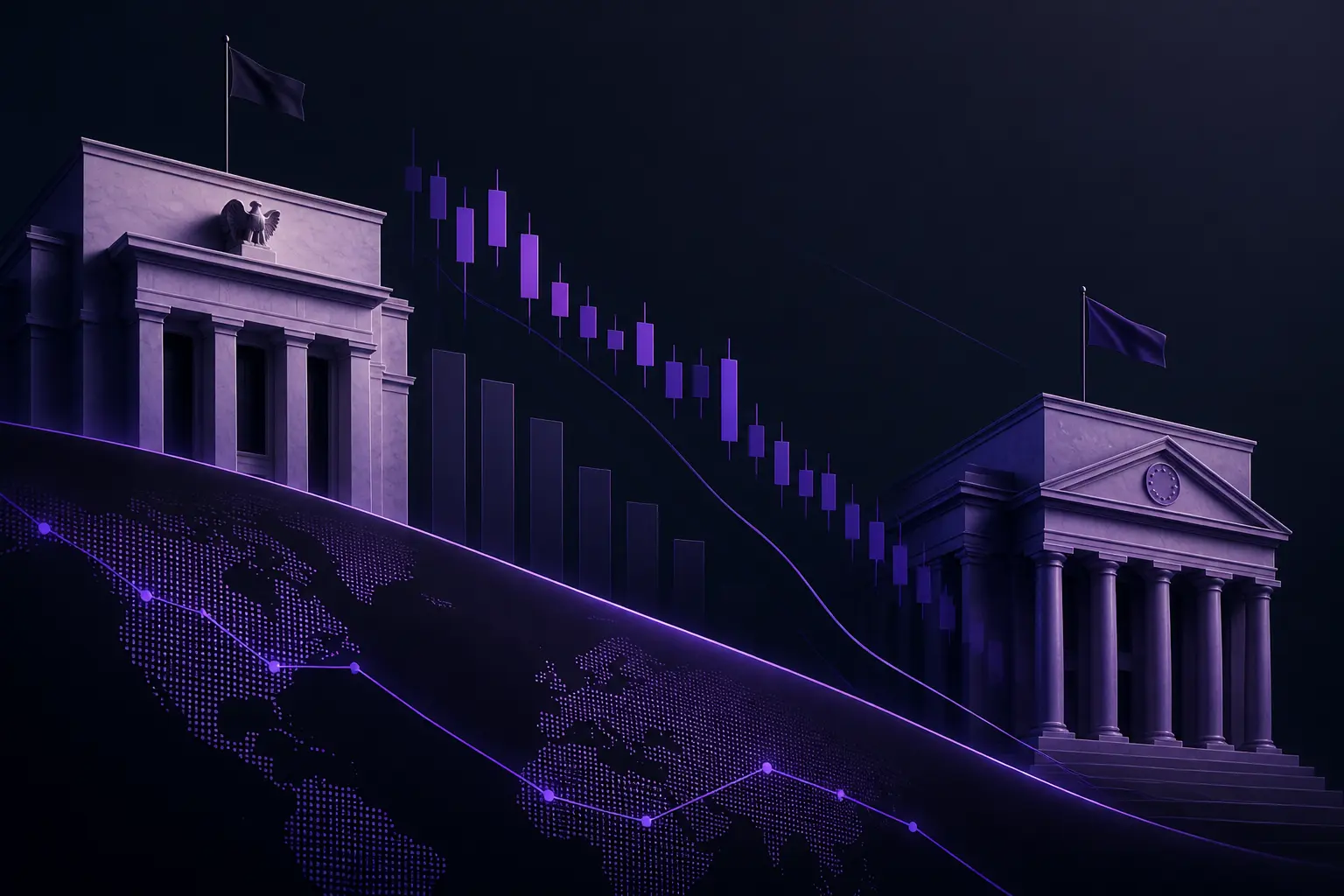
US Treasury and euro-area bond yields fell after the Fed and ECB held rates steady, as traders reassess the path for policy easing.
Fed pause / no change
Typical directional bias by asset when this plays out — from the VNIX macro impact model. Educational, not financial advice.
VNIX Quick Take
- US Treasury yields moved lower after the Federal Reserve left rates unchanged, with European government bond yields following the same direction.
- The ECB also held policy steady, reinforcing a synchronized pause across the two major central banks.
- Falling yields across both regions signal that bond markets are repricing the timing and pace of any future rate moves.
Treasury and Euro-Area Yields Retreat After Twin Central Bank Holds
US Treasury yields declined after the Federal Reserve opted to keep its policy rate unchanged, and European government bond yields moved in the same direction after the European Central Bank also stood pat. The synchronized holds from the world's two most closely watched central banks gave fixed-income markets a clear signal: neither institution is in a hurry to shift its stance right now.
When yields fall, bond prices rise, so the move reflects buyers stepping into government debt across both sides of the Atlantic. The parallel reaction in Treasuries and euro-area sovereigns is notable because these markets are usually driven by different domestic forces — US data and Fed communication on one side, euro-area inflation and ECB guidance on the other. A shared directional move suggests a common driver: investors recalibrating how long rates are likely to stay elevated.
For traders, the takeaway is that the "higher for longer" narrative is being tested. Yields are the price of money across the entire financial system, so a broad decline feeds into everything from mortgage rates to equity valuations to currency differentials. You can track how these cross-asset moves are playing out in real time on our live prices page.
What Drove the Yield Decline Across Both Regions
Fed Hold Resets Treasury Expectations
The Federal Reserve's decision to leave rates unchanged removed, at least for now, the risk of an immediate additional hike. Treasury yields had been supported by the possibility that policymakers would tighten further; once that near-term risk faded, the yield on US government debt drifted lower as holders adjusted their expectations for the policy path ahead.
It is worth remembering that a "hold" is not the same as a pivot. The Fed can keep rates steady while still signaling vigilance on inflation, and the bond market's reaction often hinges less on the decision itself and more on the tone surrounding it. Traders watching the technical indicators on yield charts will want to see whether this decline is a brief pullback or the start of a sustained downtrend.
ECB Pause Reinforces the Synchronized Tone
The European Central Bank's parallel decision to hold rates steady amplified the move in euro-area bonds. When both major central banks pause at the same time, the global bond complex tends to trade as one, and yields across core European issuers such as Germany and France ease alongside Treasuries.
This synchronization matters for currency traders in particular. If both the Fed and ECB are on hold, the interest-rate differential between the dollar and the euro becomes more stable, which can reduce the volatility that typically fuels big FX swings. That said, relative expectations still shift day to day, so pairs like EUR/USD can react sharply to any divergence in forward guidance.
Key Levels and Assets to Watch After the Dual Pause
The most important gauge in the days ahead is the trajectory of the US 10-year Treasury yield. This benchmark anchors borrowing costs worldwide, and its direction often sets the tone for risk assets. A continued slide can support equities and growth-sensitive sectors, while a rebound would suggest the market is second-guessing the pause.
On the European side, watch core sovereign yields and the spread between them and their US counterparts. The euro's reaction is equally instructive: a stable or firmer euro alongside falling yields would suggest markets read the ECB hold as relatively hawkish compared with the Fed. Keeping an eye on these intermarket relationships is a core skill, and our classroom resources break down how bond yields, currencies, and equities connect.
How Traders Can Frame the Fed-ECB Pause
First, treat a hold as information rather than a conclusion. Central banks pause to gather data, and the next round of inflation and employment figures will carry outsized weight. A single soft inflation print can accelerate yield declines; a hot one can reverse them quickly. Position sizing and risk management matter more than directional conviction in this kind of environment.
Second, recognize that falling yields are not automatically bullish for every asset. Lower yields can lift rate-sensitive stocks and reduce pressure on borrowers, but they can also reflect weaker growth expectations. The reason behind the move — easing inflation versus slowing activity — determines whether the market treats it as good or bad news. This is why traders often wait for confirmation from economic data before committing.
Third, use the pause as a moment to review your framework rather than chase the headline. Bond markets tend to lead other assets, so yield direction can serve as a useful filter for equity and FX ideas. Sharing setups and stress-testing your thesis with other traders in our signal rooms can help you separate genuine regime shifts from noise. And if you are new to trading rate-sensitive instruments, our style quiz can point you toward an approach that fits how you like to trade.
In VNIX's view
The simultaneous Fed and ECB holds have given bond markets permission to breathe, and the resulting yield decline is a textbook repricing of near-term policy risk rather than a declaration of victory over inflation. Traders should treat this as a window of lower conviction, where data releases matter more than central bank rhetoric. The cleanest signal will come from whether the 10-year yield holds its decline or snaps back once the next inflation reading lands.
Educational analysis, not financial advice. Trading involves risk.
Not sure which tool fits you?
Take the 2-minute quiz and get a personalized recommendation.