

USD Exhaustion Sparks Bearish Engulf on EUR/USD, GBP/USD, USD/JPY
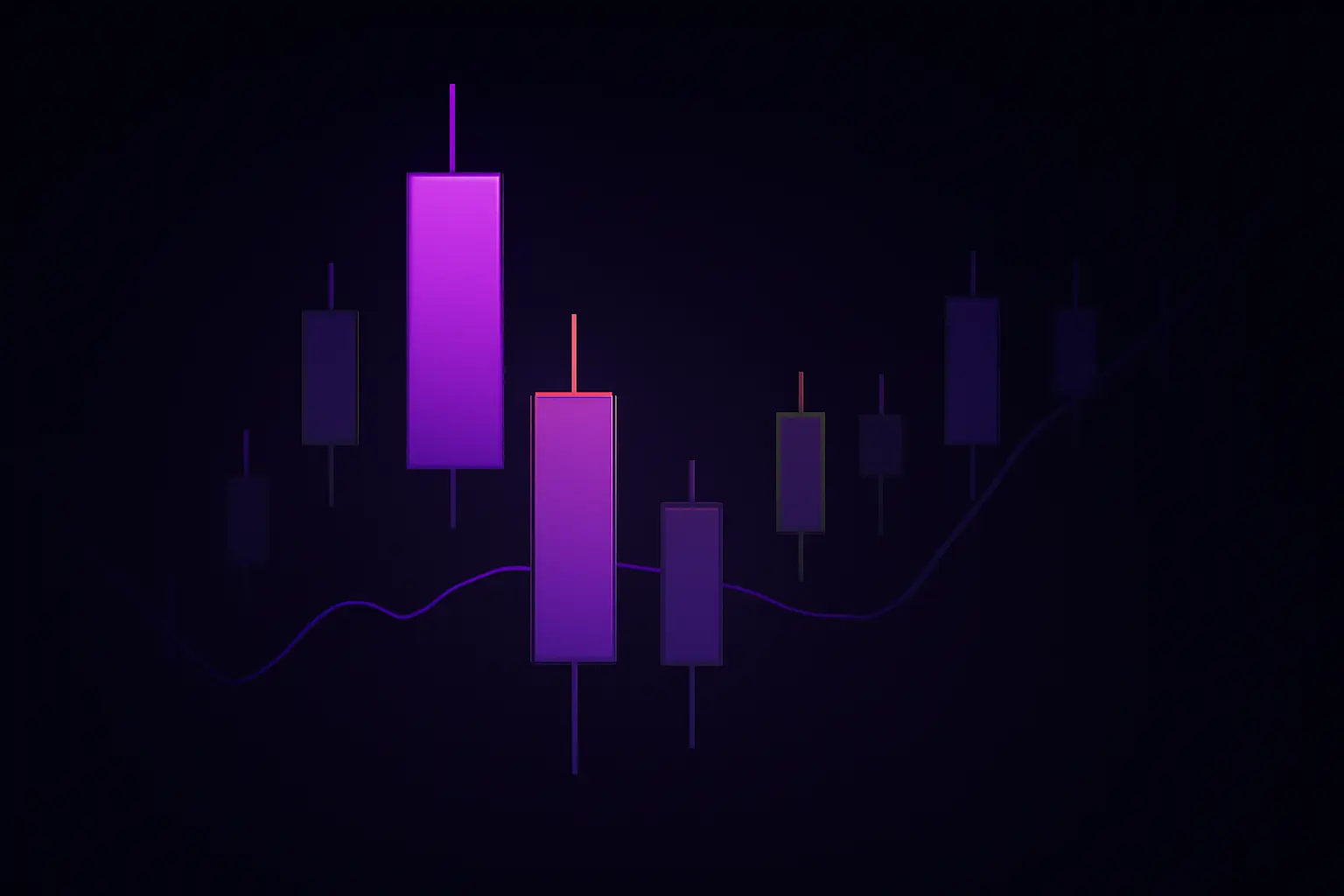
Dollar exhaustion triggers bearish engulfing patterns across major pairs. EUR/USD and GBP/USD rebound while USD/JPY slips, signaling a potential shift in momentum.
Fed pause / no change
Typical directional bias by asset when this plays out — from the VNIX macro impact model. Educational, not financial advice.
VNIX Quick Take
- US dollar shows signs of exhaustion after recent rally, forming bearish engulfing patterns on major pairs.
- EUR/USD and GBP/USD rebound as dollar weakness emerges, while USD/JPY slips from highs.
- Traders watch key technical levels for confirmation of a potential trend reversal in the dollar.
Dollar Index Retreats as Bearish Engulfing Patterns Emerge on EUR/USD, GBP/USD, USD/JPY
The US dollar is showing signs of fatigue after a sustained rally, with bearish engulfing patterns forming on major currency pairs including EUR/USD, GBP/USD, and USD/JPY. This technical development suggests that the greenback's upward momentum may be waning, prompting traders to reassess their positions. A bearish engulfing pattern occurs when a larger bearish candlestick completely engulfs the previous bullish candlestick, often signaling a potential reversal from an uptrend to a downtrend.
On the EUR/USD pair, the dollar's retreat allowed the euro to recover from recent lows, with the pair forming a bullish engulfing pattern—the mirror image of the bearish engulfing seen on the dollar index. Similarly, GBP/USD rebounded as the pound capitalized on dollar weakness. Meanwhile, USD/JPY slipped from its highs, reflecting a broader shift in sentiment against the dollar. These patterns are particularly noteworthy as they appear on daily charts, which are closely monitored by swing traders and institutional investors.
The dollar's exhaustion comes after a period of strength driven by expectations of tighter monetary policy from the Federal Reserve. However, with much of the hawkish stance already priced in, the dollar may be vulnerable to profit-taking and a potential correction. Traders are now looking for confirmation from upcoming economic data and Fed commentary to gauge the next direction for the greenback.
What's Driving the Dollar's Exhaustion: Technical and Fundamental Factors
Technical Overextension: Bearish Engulfing Patterns Signal Potential Reversal
The bearish engulfing patterns on major dollar pairs are a classic technical signal that the prevailing trend may be losing steam. After a prolonged rally, the dollar index (DXY) has encountered resistance, and the formation of these patterns suggests that sellers are gaining control. The engulfing pattern is particularly significant because it reflects a shift in market psychology: the initial bullish sentiment is overwhelmed by bearish forces, often leading to a reversal. Traders using technical indicators such as candlestick patterns and momentum oscillators may see this as a cue to tighten stops or consider counter-trend positions.
Moreover, the dollar's rally had become stretched, with the Relative Strength Index (RSI) on the DXY approaching overbought territory. When combined with bearish engulfing patterns, this technical setup reinforces the case for a pullback. However, it's essential to note that patterns are not foolproof; they require confirmation from subsequent price action and volume. A close below the engulfing pattern's low would strengthen the bearish signal, while a break above the pattern's high would invalidate it.
Fundamental Triggers: Fed Policy Expectations and Global Risk Sentiment
On the fundamental side, the dollar's exhaustion aligns with a reassessment of Federal Reserve policy expectations. While the Fed has signaled a hawkish stance, markets are increasingly questioning whether the central bank can maintain such a aggressive tightening path given mixed economic data. Recent comments from Fed officials have been less hawkish than anticipated, leading to a slight easing in rate hike expectations. Additionally, global risk sentiment has improved, reducing demand for the dollar as a safe-haven asset. As a result, the dollar is facing headwinds from both technical and fundamental perspectives.
Furthermore, the euro and pound have found support from domestic factors. The eurozone has seen better-than-expected economic data, while the Bank of England's cautious approach has provided some stability to the pound. These factors, combined with dollar weakness, have contributed to the rebounds in EUR/USD and GBP/USD. For USD/JPY, the pair is also influenced by US Treasury yields; a decline in yields has weighed on the dollar against the yen, as lower yields reduce the appeal of dollar-denominated assets.
Key Levels to Watch for EUR/USD, GBP/USD, and USD/JPY
For EUR/USD, the immediate resistance is at the high of the bearish engulfing pattern on the dollar index, which corresponds to a key level around 1.0800. A break above this level would signal a continuation of the euro's rebound. On the downside, support lies at the recent low of 1.0700; a breach below could reignite dollar strength. For GBP/USD, resistance is seen at 1.2600, with support at 1.2500. USD/JPY is testing support at 150.00, and a break below could accelerate losses towards 148.00.
Traders should also monitor the dollar index (DXY) itself, as it provides a broader view of dollar strength. A close below 104.00 on the DXY would confirm the bearish engulfing pattern and likely lead to further gains in EUR/USD and GBP/USD, while USD/JPY could extend its decline. It's crucial to use technical analysis tools such as trendlines, moving averages, and Fibonacci retracements to identify additional levels and confirm the patterns.
What This Means for Traders: Navigating Dollar Exhaustion
For traders, the emergence of bearish engulfing patterns on major dollar pairs presents both opportunities and risks. On one hand, it suggests that the dollar's uptrend may be due for a correction, offering potential shorting opportunities in USD or long positions in EUR/USD and GBP/USD. On the other hand, patterns can fail, especially in strong trending markets. Therefore, risk management is paramount: setting stop-loss orders above the pattern's high and taking profits at key support levels can help mitigate losses.
Additionally, traders should consider the broader context. The dollar's reaction to upcoming economic data, such as US retail sales and inflation figures, will be critical. If data comes in stronger than expected, the dollar could regain strength and invalidate the bearish patterns. Conversely, weaker data would reinforce the case for a dollar pullback. It's also essential to monitor global risk sentiment; a shift towards risk-off could boost the dollar as a safe-haven, countering the technical signals.
For those looking to trade these patterns, a prudent approach is to wait for confirmation—such as a close below the pattern's low on the dollar index or a close above the pattern's high on EUR/USD. This reduces the risk of false signals. Engaging with the VNIX community can provide additional insights and help validate trade ideas. Beginners should focus on understanding the mechanics of engulfing patterns and practice on a demo account before committing real capital; resources like the VNIX classroom offer foundational knowledge.
In VNIX's view
The bearish engulfing patterns across major dollar pairs are a compelling technical signal that the dollar's rally may be overextended. While fundamentals still play a role, the market's reaction to these patterns will likely dictate short-term direction. Traders should remain flexible and prioritize risk management, as the dollar's response to upcoming data could either confirm or invalidate the bearish setup.
Educational analysis, not financial advice. Trading involves risk.
Trade smarter with VNIX indicators
Clear entry, exit and risk signals right on your TradingView chart.