

Asia Crude Imports Recover to Pre-War Levels, Refined Fuels Still Lag
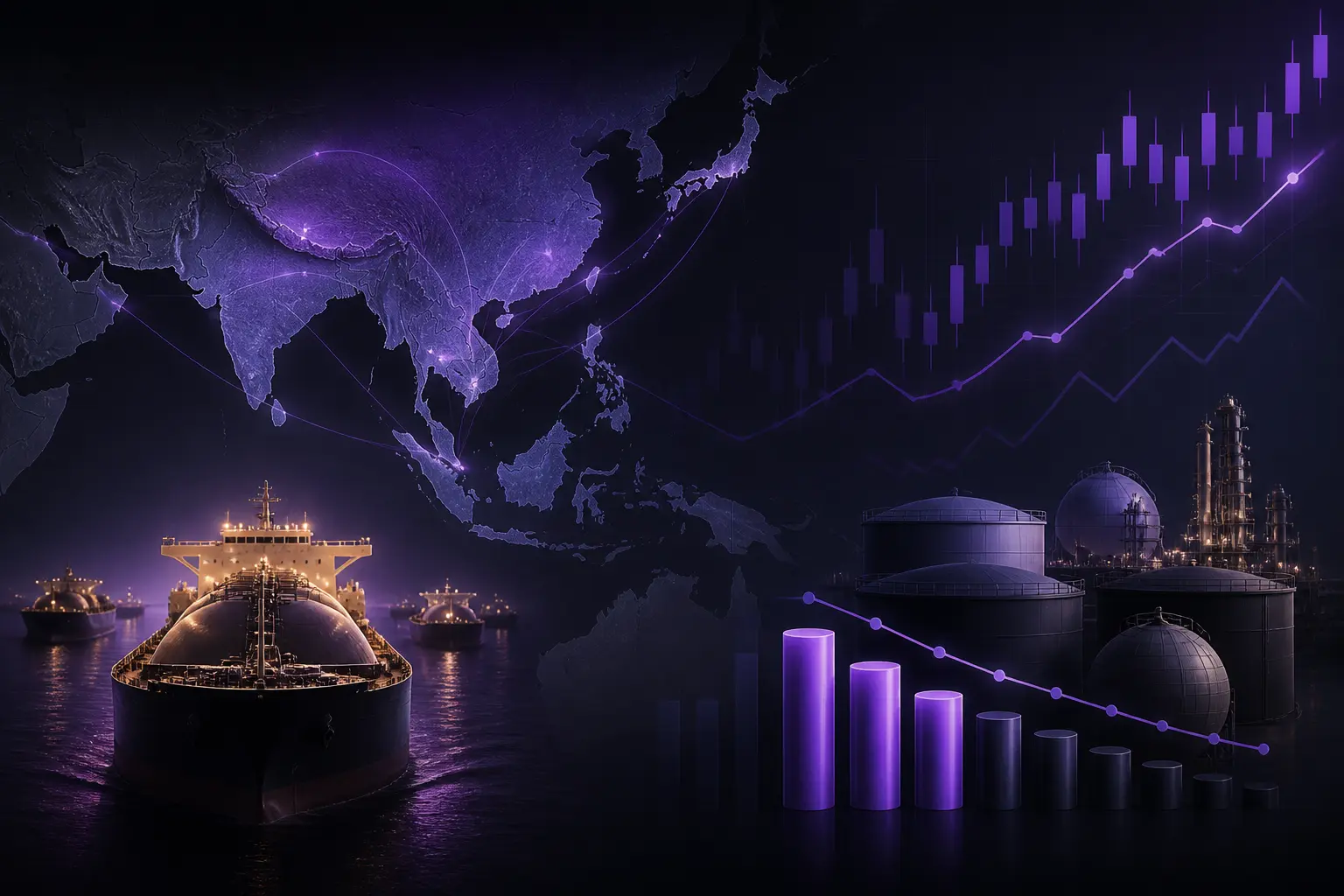
Asia's crude oil imports have climbed back to pre-war levels, but refined product flows remain behind, keeping the regional supply picture uneven.
VNIX Quick Take
- Asia's crude oil imports have returned to levels seen before the war, signaling a recovery in raw feedstock demand.
- Refined fuel flows are still trailing, leaving a gap between crude intake and downstream product availability.
- The divergence matters for crack spreads, refinery margins and the shape of the regional supply chain.
Asia's Crude Imports Climb Back to Pre-War Baseline
Asia's crude oil imports have recovered to the levels recorded before the war, according to commentary on regional trade flows. The rebound suggests that the region's refiners have largely restored their raw feedstock purchasing after a period of disruption and uncertainty.
Crude imports are the first link in the supply chain: they reflect what refiners expect to process in the weeks ahead. A return to pre-war volumes implies that buyers have re-engaged with international suppliers and that logistics, shipping and payment routes have stabilized enough to support normal flows.
For traders, this is a meaningful signal. Crude intake data often leads physical market tightness or looseness by several weeks, so a recovery here can ripple through pricing for benchmarks and regional grades. It also matters for anyone tracking energy prices as a macro input.
Why Refined Fuels Are Trailing Crude's Recovery
Downstream bottlenecks keep product flows behind feedstock
The recovery in crude imports has not been matched by refined fuel flows, which remain below pre-war levels. That gap points to constraints further down the supply chain — refining capacity, product transport, or the timing lag between importing crude and exporting finished fuels such as gasoline, diesel and jet fuel.
Crude is bought and shipped before it becomes a usable product, so a recovery in raw imports can take weeks or months to show up in refined output. If the downstream segment is still catching up, the market may see a temporary mismatch between feedstock availability and product supply.
Product markets carry their own demand and pricing dynamics
Refined fuels respond to different demand drivers than crude. Industrial activity, transport demand and seasonal consumption patterns shape product markets, and those factors can move independently of crude trade volumes. A lag in refined flows may therefore reflect softer end-user demand as much as supply-side friction.
This distinction matters for refinery margins. When crude is plentiful but products are tight, crack spreads can widen; when both recover, margins tend to normalize. Traders watching spread and momentum indicators can use this divergence as a lens on the refining complex.
Key Levels and Assets to Watch as Flows Normalize
The most direct signal to monitor is the spread between crude benchmarks and refined product prices — the crack spread. A widening spread would suggest products remain scarce relative to feedstock; a narrowing spread would point to downstream normalization. Regional crude grades and product inventories are also worth tracking as confirmation.
Broader energy pricing feeds into inflation expectations and currency moves, so the recovery in crude flows can influence assets well beyond oil. Keeping an eye on cross-asset pricing helps frame how energy normalization transmits into other markets.
How Traders Can Frame the Crude-Product Divergence
The headline tells a two-speed story: raw material flows have healed, but the products made from them have not fully followed. For a trader, the useful question is whether the lag is structural — constrained refining or transport — or simply a timing effect that will close on its own. The answer changes how much weight to give the divergence.
If the gap is timing-related, product flows should converge toward crude over the coming weeks, and the spread trade loses its edge. If the gap reflects a genuine downstream constraint, it could persist and keep product markets tighter than crude alone would suggest. Watching inventory data and refinery run rates can help distinguish the two.
Risk management matters here because energy flows are exposed to geopolitical and logistical shocks that can reverse quickly. Position sizing and scenario planning — rather than a single directional view — are the practical tools. Newer traders can explore educational resources on how supply-chain data feeds into price analysis, and compare ideas with others in the VNIX community.
In VNIX's view
The recovery in Asia's crude imports is a constructive sign that physical supply chains are functioning again, but the lag in refined fuels means the region's energy picture is not yet fully normalized. Traders should treat the crude-product gap as a signal to watch rather than a conclusion, since it can reflect either temporary timing or a more durable downstream constraint. The spread between feedstock and finished product is where this story will resolve.
Educational analysis, not financial advice. Trading involves risk.
เทรดแม่นขึ้นด้วยอินดิเคเตอร์ VNIX
สัญญาณเข้า-ออก-ความเสี่ยงที่ชัดเจน ตรงบนกราฟ TradingView ของคุณ