

Coinbase Touts 99% Cold Storage as Gate Reveals 88% After Binance Hack
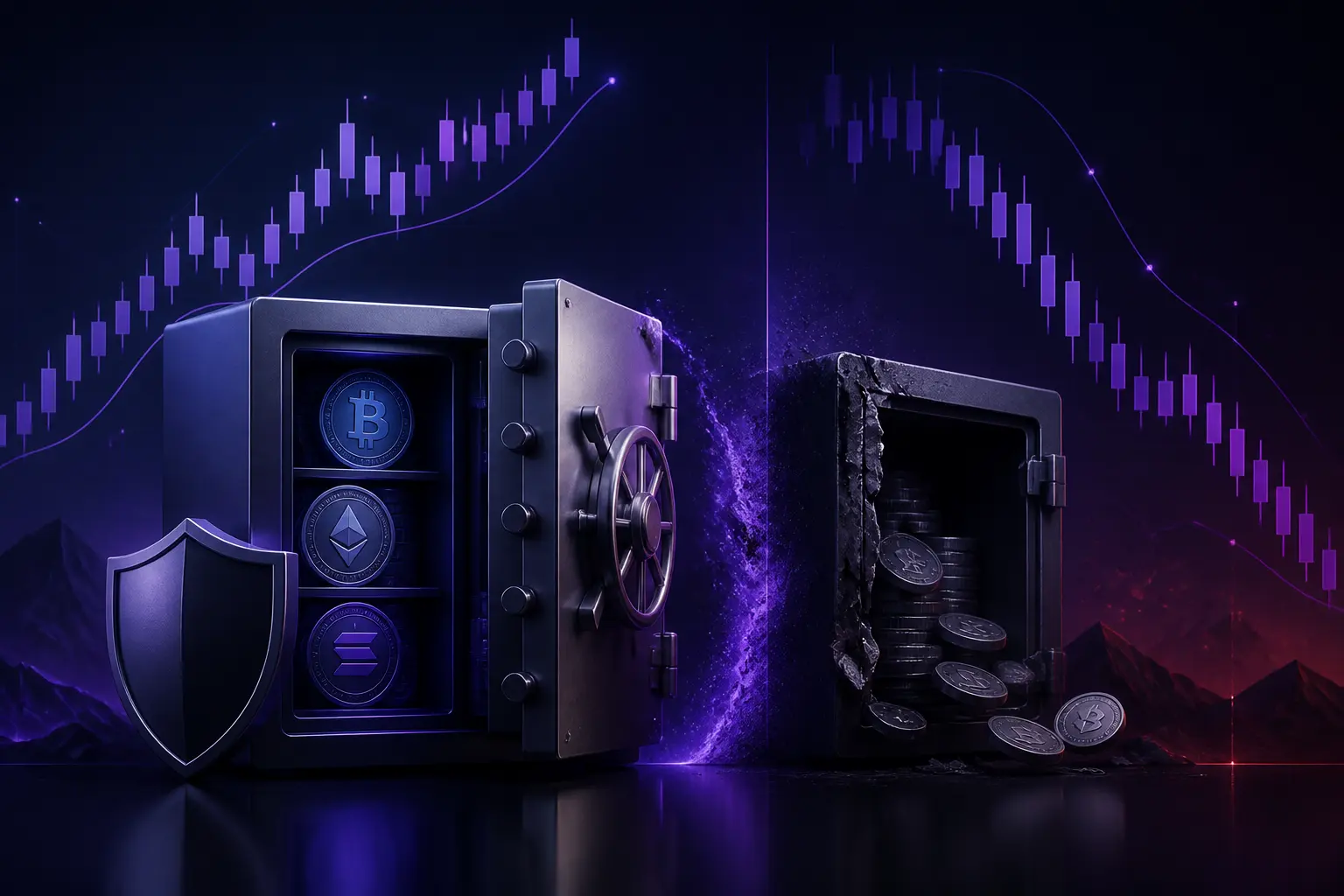
Coinbase says over 99% of customer assets are held offline, while Gate reports 88.26% in cold storage, as exchanges spotlight security after the Binance attack.
VNIX Quick Take
- Coinbase discloses that more than 99% of customer assets sit in cold storage, while Gate reports 88.26% of total assets held offline.
- The disclosures follow a security breach at Binance, prompting exchanges to publicly emphasize custody safeguards.
- Traders are reminded that proof of reserves and storage ratios are only part of the risk picture when holding assets on centralized platforms.
Coinbase and Gate Put Cold-Storage Ratios in the Spotlight After Binance Breach
In the wake of a security incident at Binance, rival cryptocurrency exchanges are moving quickly to reassure users about the safety of their assets. Coinbase stated that it keeps more than 99% of customer assets in cold storage — offline wallets that are not connected to the internet — while Gate reported that 88.26% of its total assets are held in cold storage.
The disclosures are notable because centralized exchanges rarely publish such granular custody figures unless prompted by market anxiety. Cold storage is widely regarded as a best practice for protecting large pools of crypto, as it removes private keys from internet-connected systems that are vulnerable to hacking. However, the exact percentages and the methodology behind them can vary significantly between platforms.
The Binance attack served as a fresh reminder that even the largest exchanges are not immune to security breaches. While the details of the incident remain limited, the immediate response from Coinbase and Gate suggests that transparency around custody arrangements is becoming a competitive differentiator. For traders, the episode underscores the importance of understanding where their assets are held and how they are protected — a topic that extends beyond simple storage ratios.
Why Exchanges Are Racing to Publish Custody Numbers
The Trust Deficit That Follows Every Major Breach
History shows that confidence in centralized exchanges can evaporate quickly after a hack. The collapses of Mt. Gox and FTX left deep scars, and each new incident triggers a wave of withdrawals as users reassess counterparty risk. By voluntarily disclosing cold-storage percentages, exchanges aim to preempt panic and signal that they have robust operational controls in place. Coinbase's 99%-plus figure is particularly striking, as it implies that only a tiny fraction of assets are kept online for liquidity purposes.
Yet the numbers alone do not tell the full story. Cold storage reduces exposure to remote attacks but introduces other risks, such as key-management failures, insider threats, and operational errors during transfers. Moreover, the definition of "cold storage" can differ: some exchanges use multi-signature wallets with air-gapped signing devices, while others rely on third-party custodians. Without standardized auditing, investors must interpret these disclosures with a critical eye.
Gate's 88.26% Figure and the Spectrum of Custody Practices
Gate's reported 88.26% cold-storage ratio is high by industry standards but lower than Coinbase's. The difference may reflect varying business models — exchanges with larger trading volumes or more active withdrawal demands often need a bigger hot-wallet float to ensure smooth operations. It could also stem from different asset compositions or risk-management philosophies. For users, the key takeaway is that "high" cold storage is not a binary badge of safety; it is one data point among many.
Traders should also consider proof-of-reserves audits, insurance coverage, and the exchange's track record during past incidents. A platform that publishes a high cold-storage ratio but lacks independent verification may offer less reassurance than one with a slightly lower ratio but regular third-party attestations. As the market matures, expect more exchanges to face pressure to disclose not just percentages but also the processes behind them.
What to Watch: BTC, ETH, and Exchange Tokens
Security headlines often influence short-term sentiment in major cryptocurrencies like BTC and ETH, as traders gauge whether an incident could trigger broader sell-offs or withdrawals. Exchange tokens may also see volatility, reflecting user confidence in specific platforms. While this article does not offer trade recommendations, monitoring on-chain flows — such as spikes in exchange outflows — can provide clues about how depositors are reacting.
Additionally, keep an eye on how exchanges communicate in the coming weeks. Follow-up statements about audits, insurance funds, and reimbursement policies could either calm nerves or amplify concerns. For those who actively trade, understanding the technical and fundamental context is essential; our indicators section offers tools to help assess market conditions, while signal rooms provide a space to discuss ideas with other traders.
How Traders Can Think About Exchange Risk and Cold Storage
For traders, the Binance attack and the subsequent disclosures are a reminder that holding assets on a centralized exchange carries inherent counterparty risk. Even with 99% cold storage, users are trusting the exchange's internal controls, governance, and operational competence. A prudent approach is to diversify custody — keeping only active trading balances on exchanges and storing long-term holdings in self-custody wallets where possible. This is not a call to action but a risk-management principle that many experienced traders follow.
It is also worth considering how security events can affect market liquidity and volatility. If confidence in a major exchange wanes, we could see temporary dislocations in order books and wider spreads, creating both risks and opportunities. Newer traders might benefit from learning how to evaluate such situations; our quiz and classroom resources can help build foundational knowledge. Before trading on any platform, ensure you have a thorough understanding of the broker or exchange you use, including its fee structure, security features, and regulatory status.
Finally, remember that transparency is a moving target. Exchanges may tout cold-storage ratios, but the real test is how they respond to crises over time. Consistent communication, independent audits, and a strong security culture matter more than a single headline number. As the industry evolves, traders who stay informed and prioritize risk management will be better equipped to navigate the next inevitable security scare.
In VNIX's view
The rush by Coinbase and Gate to publicize cold-storage ratios reflects a broader shift toward transparency in crypto custody, but it also highlights how fragmented standards remain. While high offline storage is a positive signal, it is not a substitute for comprehensive risk assessment. Traders should view such disclosures as one piece of the puzzle and continue to prioritize self-custody where feasible.
Educational analysis, not financial advice. Trading involves risk.
ยังไม่รู้ว่าเครื่องมือไหนเหมาะกับคุณ?
ทำแบบทดสอบ 2 นาที รับคำแนะนำที่ตรงกับสไตล์การเทรดของคุณ