

ECB Weighs Review of Bank Lending to Data Centers as AI Boom Raises Concern
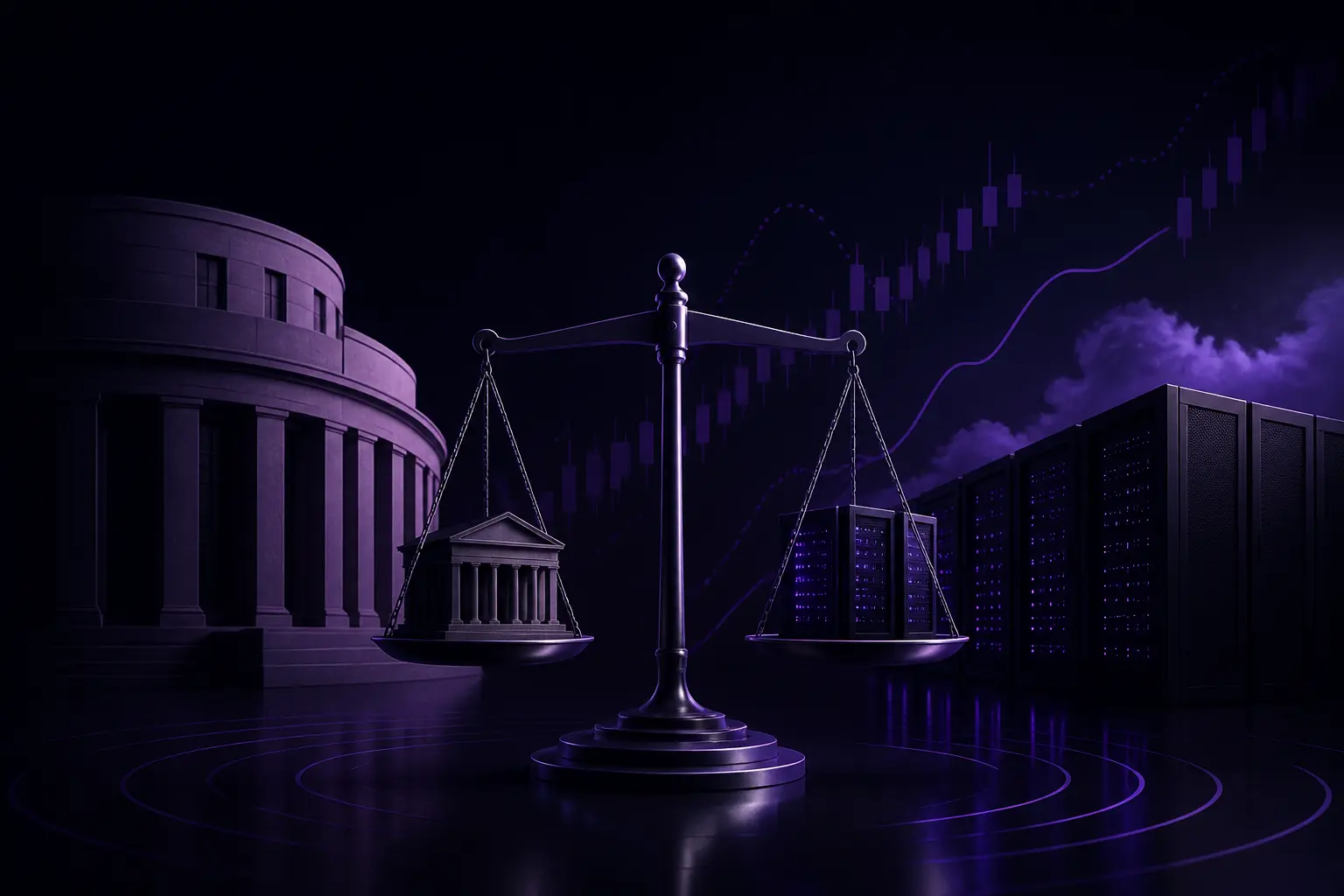
The ECB is reportedly considering a review of how eurozone banks lend to data centers, as the AI infrastructure boom fuels fears of concentrated credit risk.
VNIX Quick Take
- The ECB is reportedly weighing a review of bank exposure to data center financing as AI-driven construction accelerates.
- The concern centers on concentration risk: lenders piling into a single capital-intensive sector tied to a fast-moving technology cycle.
- No policy decision has been announced; the story is about supervisory attention, not new capital rules.
ECB Turns Its Supervisory Lens Toward Data Center Lending
The European Central Bank is reportedly considering a review of how eurozone banks lend to data center operators, a move that reflects growing unease about the scale and concentration of credit flowing into AI-related infrastructure. The story, first reported by financial media, describes supervisory interest rather than a formal rule change — but it signals that regulators are beginning to scrutinize a lending theme that has expanded rapidly over the past two years.
Data centers have become one of the most capital-hungry corners of the economy. Training and running large AI models requires vast quantities of computing power, land, electricity and cooling infrastructure, and much of that buildout is financed with debt. Banks sit at the center of that financing chain, lending to developers, operators and the utilities and real estate groups that support them.
The ECB's concern, as framed in the reporting, is less about any single loan and more about the aggregate picture: whether banks fully understand the risks embedded in a sector whose demand outlook is tied to the durability of the AI investment cycle. For traders, the headline matters because bank credit is a transmission channel between technology enthusiasm and the broader financial system.
The Forces Pushing Regulators to Look Closer at AI Infrastructure Debt
Concentration Risk in a Single Fast-Moving Theme
When a sector attracts capital quickly, lending standards can loosen and portfolios can become lopsided. A review would likely examine whether individual banks have built outsized exposures to data center projects, and whether those exposures are properly reflected in risk models. Concentration is the classic vulnerability: if several lenders fund the same theme, a slowdown in demand or a jump in construction costs could hit multiple balance sheets at once.
There is also a valuation dimension. Data center assets are often valued on assumptions about future utilization and pricing power. If those assumptions shift — because of oversupply, cheaper hardware, or a pause in AI spending — collateral values could move quickly. Supervisors tend to ask questions about such assumptions before problems surface, not after.
The AI Capex Cycle and Its Dependence on Cheap Financing
The second driver is the financing cycle itself. The AI buildout has been powered by a combination of strong equity markets and readily available credit. If borrowing costs rise or lenders become more selective, the pace of construction could slow — and that feedback loop runs both ways. Banks that have lent heavily to the theme are exposed not just to their borrowers but to the broader sentiment cycle around AI.
Investors tracking the theme can follow the credit backdrop through instruments such as major equity indices and rate-sensitive assets, since bank lending conditions and rate expectations tend to move together. A supervisory review alone does not change lending capacity, but it can influence how aggressively banks price and structure new deals.
What to Watch: Bank Credit Metrics and the Cost of Capital
The practical signals to monitor are bank disclosure on commercial real estate and corporate lending, commentary from eurozone lenders on their project finance pipelines, and any shift in the pricing of syndicated loans tied to infrastructure. If a formal review proceeds, expect questions in supervisory dialogues and potentially more granular disclosure requirements — both of which can affect how the market prices bank equities.
On the macro side, the cost of capital remains the key variable. Traders can use rate and credit indicators to gauge whether financing conditions are tightening for capital-intensive sectors. A widening in credit spreads alongside softer AI-related earnings guidance would be a more meaningful signal than the review headline on its own.
How Traders Should Frame a Supervisory Story Like This
First, distinguish between supervision and regulation. A review is an information-gathering exercise; it does not automatically translate into higher capital requirements or lending caps. Markets often overreact to such headlines before the scope and timing become clear, which is why the initial move in bank shares or credit spreads may not persist.
Second, think in terms of second-order effects. If banks become more cautious about data center lending, the impact could show up in construction timelines, in the earnings of equipment suppliers, and in electricity demand forecasts — not just in bank stocks. Traders who map these linkages through community trade ideas can build a more complete picture than those watching a single ticker.
Third, keep position sizing and risk controls in proportion to the uncertainty. Stories based on unnamed sources and early-stage deliberations carry high headline risk in both directions. A disciplined approach — defined invalidation levels, awareness of event risk, and a clear view of which assets are genuinely exposed — matters more than trying to predict the review's outcome. Newer traders building that framework can start with the educational resources before committing capital through a broker account.
In VNIX's view
The ECB's interest in data center lending is a reminder that the AI trade has a credit dimension that rarely makes headlines until it does. A supervisory review is not a warning of imminent stress, but it does flag where the financial system's exposure to a single theme is growing fastest. For traders, the takeaway is to watch bank credit conditions and financing costs as leading indicators for the infrastructure buildout, rather than reacting to the headline alone.
Educational analysis, not financial advice. Trading involves risk.
เทรดแม่นขึ้นด้วยอินดิเคเตอร์ VNIX
สัญญาณเข้า-ออก-ความเสี่ยงที่ชัดเจน ตรงบนกราฟ TradingView ของคุณ