

Oil Climbs After Report of US Strike on Iran's Qeshm Island
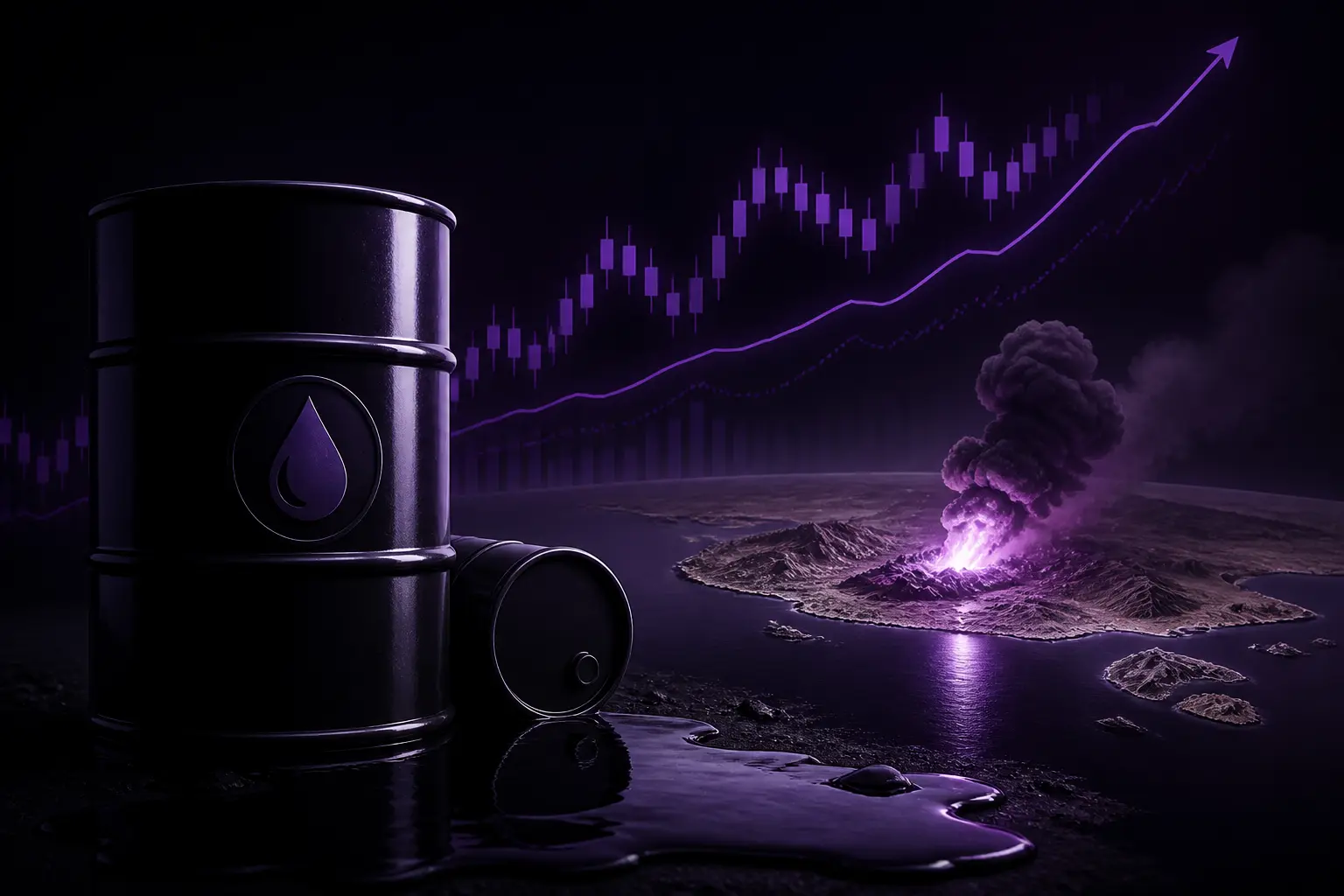
Crude prices rose following reports of a US strike on Iran's Qeshm Island, reviving supply-risk premiums as traders weigh potential disruptions to Gulf exports.
VNIX Quick Take
- Oil prices rose after a report of a US strike on Iran's Qeshm Island, a location near key Gulf shipping lanes.
- Markets are repricing geopolitical risk, with the focus on whether the incident threatens Strait of Hormuz transit.
- Traders watch crude benchmarks, volatility gauges, and energy equities for confirmation of sustained risk.
Crude Rises as Qeshm Island Strike Report Shifts Supply Calculus
Oil prices moved higher on Tuesday following a report that the United States carried out a strike on Iran's Qeshm Island. The island sits near the Strait of Hormuz, a chokepoint through which a significant share of global seaborne crude passes. The headline alone was enough to lift crude benchmarks, as traders added a geopolitical risk premium to a market that had been largely focused on demand-side concerns and OPEC+ supply policy.
Qeshm Island is strategically located just off the Iranian coast, close to the narrowest sections of the Strait of Hormuz. While the immediate physical impact on oil flows was not confirmed by the source, the market's reaction reflects a familiar pattern: any military incident involving Iran or the Gulf raises the probability that shipping lanes could be disrupted, even if only temporarily. Crude oil is highly sensitive to such headlines because supply is geographically concentrated and transport infrastructure is vulnerable to conflict.
The move higher in oil was not accompanied by detailed damage assessments or confirmed supply losses. Instead, the price action reflected a rapid reassessment of tail risks. In the current environment, where spare production capacity is limited and inventories are not overly high, even a modest perceived threat to Gulf exports can trigger outsized price swings. Traders can monitor real-time crude pricing on VNIX's price page to track how the risk premium evolves.
Geopolitical Risk and Shipping Lanes Drive the Oil Bid
Strait of Hormuz Remains the Key Chokepoint for Crude Flows
The Strait of Hormuz is the world's most important oil transit chokepoint, with daily flows of around 20 million barrels of crude, condensate, and refined products. Any military activity near the strait raises concerns about shipping safety, insurance costs, and potential interruptions. Qeshm Island's proximity to the strait makes the reported strike particularly market-moving, as traders immediately consider scenarios ranging from a brief escalation to a sustained disruption.
Historically, oil markets have reacted sharply to Gulf tensions, but the durability of the risk premium often depends on whether physical supplies are actually affected. In this case, the source report did not specify damage to oil infrastructure or shipping. That leaves the market in a wait-and-see mode, with prices likely to remain sensitive to follow-up headlines. For a broader view of how geopolitical events fit into market analysis, see VNIX's educational resources.
Market Sentiment Shifts from Demand Worries to Supply Fears
Prior to the report, oil prices had been under pressure from concerns about slowing global demand, particularly in China, and expectations of adequate supply from OPEC+ producers. The strike report shifted the narrative temporarily, prompting short sellers to cover positions and adding a fresh bid to crude. Sentiment can flip quickly in oil markets, and such headlines often act as catalysts for trend reversals or accelerations.
Volatility in oil tends to rise during geopolitical flare-ups, and traders often turn to options or volatility products to manage risk. The CBOE Crude Oil Volatility Index (OVX) is one gauge to watch. For those interested in technical analysis of crude, VNIX's indicators section offers tools to assess momentum and overbought conditions.
Key Levels and Assets to Watch as Oil Reacts to Gulf Tensions
Traders will be watching key technical levels on crude benchmarks such as WTI and Brent. Recent price action may have left gaps or resistance zones that could cap gains if the risk premium fades. Monitoring volume and open interest can help gauge conviction behind the move. Additionally, energy equities, the US dollar, and inflation-linked bonds may provide cross-asset confirmation of whether the market expects a prolonged disruption.
Beyond crude, attention will be on shipping rates, insurance premiums for tankers, and any official statements from Iran or the US. A measured response from both sides could quickly deflate the risk premium, while further escalation would likely extend the rally. Traders can use VNIX's signal rooms to share ideas and track community sentiment on oil and related assets.
How Traders Can Think About Geopolitical Risk in Oil Markets
Geopolitical events are notoriously difficult to trade because they are binary and unpredictable. The initial reaction is often driven by algorithms and short-term momentum, but the longer-term impact depends on whether supply is genuinely disrupted. Traders should distinguish between headline risk and fundamental risk. A strike that does not affect oil infrastructure may have a fleeting effect, while any damage to export terminals or tanker traffic could lead to a sustained price shift.
Risk management is critical in such environments. Position sizing, stop-loss orders, and diversification can help mitigate the impact of sudden reversals. It's also important to consider the broader macroeconomic context: if the global economy is slowing, a supply-driven oil spike could exacerbate inflationary pressures and complicate central bank policy. For those new to trading commodities, VNIX's quiz can help identify a suitable trading style.
Finally, traders should avoid chasing headlines and instead wait for confirmation from official sources or physical market data. The oil market's reaction to the Qeshm Island report illustrates how quickly sentiment can shift, but sustainable moves require fundamental backing. Keeping a trading journal and reviewing how similar events played out historically can improve decision-making over time.
In VNIX's view
The reported strike on Qeshm Island introduces a fresh geopolitical risk premium into oil, but without confirmed supply disruptions, the rally may be vulnerable to retracement. Traders should focus on official confirmations and physical market indicators before assuming a sustained uptrend. This is a classic reminder that headline-driven volatility requires disciplined risk management and a clear understanding of the underlying fundamentals.
Educational analysis, not financial advice. Trading involves risk.
รับสัญญาณเทรดเรียลไทม์
จุดเข้า เป้าหมาย และจุดตัดขาดทุน สำหรับทองคำ คริปโต และฟอเร็กซ์ คัดสรรโดยทีมงาน