

Ripple Valuation Split: One Fund Sees $90, Another $300 Per Share
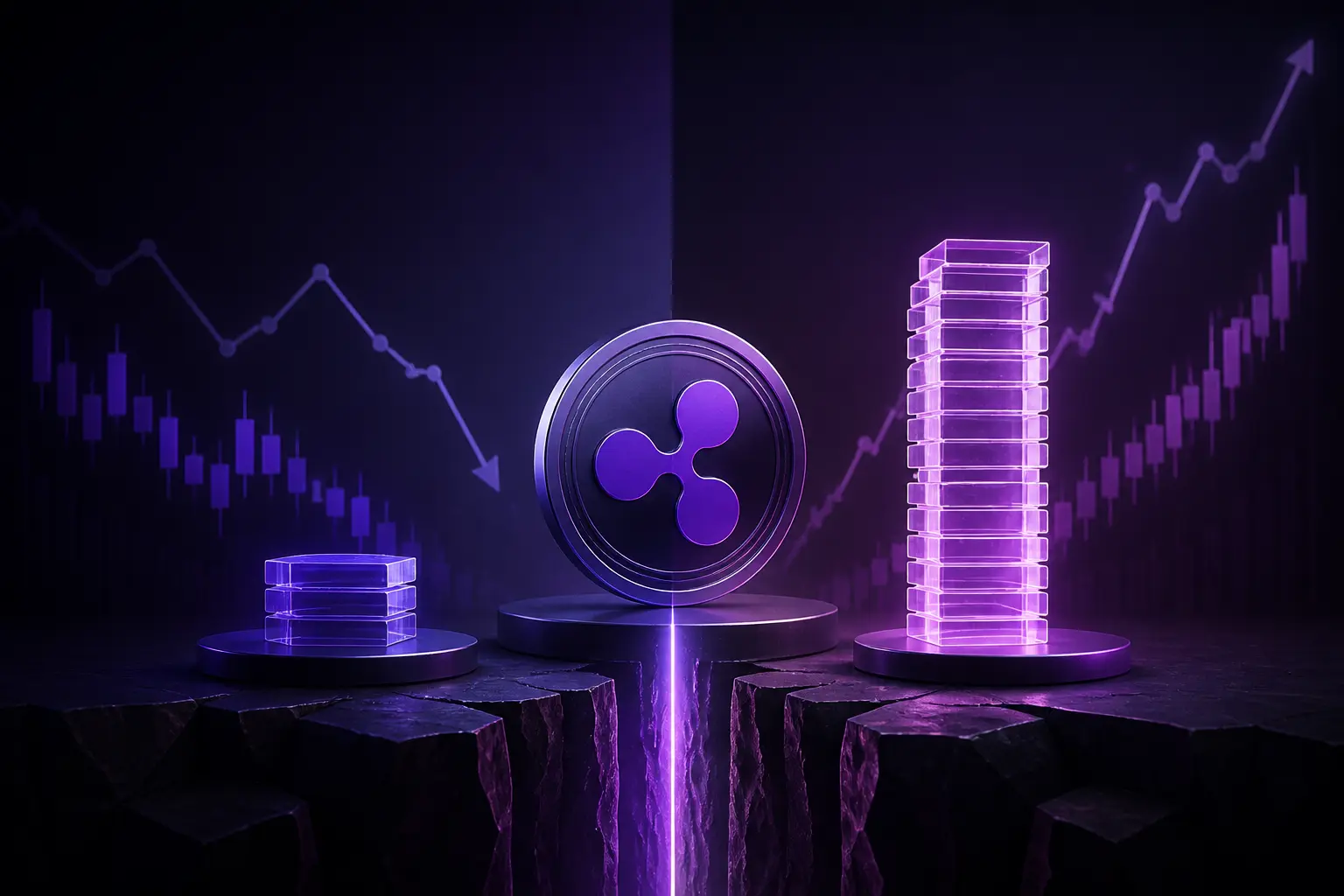
Two SEC-registered funds value Ripple stock 70% apart, with the lower mark barely above 2018 levels. What this means for traders.
VNIX Quick Take
- Two SEC-registered funds open to retail investors marked Ripple stock at $90 and $300 per share on Sept. 30, a 70% gap.
- The lower valuation sits just above the price one fund paid in 2018, highlighting how thinly traded private shares can diverge.
- For traders, the disparity underscores the lack of a unified benchmark for Ripple's equity and the risks of relying on single-fund marks.
Ripple's $90 vs $300 Split: A 70% Valuation Chasm in SEC Filings
Two SEC-registered funds that are accessible to ordinary investors reported wildly different valuations for Ripple stock on September 30, according to recent SEC filings. One fund marked its Ripple shares at $90 per share, while the other valued them at $300 per share—a 70% discrepancy. The lower mark is particularly striking because it sits barely above the price the other fund paid for its stake back in 2018.
Ripple, the blockchain payments company behind XRP, remains a private company, meaning its shares are not publicly traded on an exchange. Instead, valuations are determined by periodic marks from funds that hold the stock. These marks are typically based on recent funding rounds, secondary transactions, or internal models, and they can vary widely depending on the methodology and timing. The 70% gap between the two funds illustrates just how subjective private-market valuations can be.
The filings do not disclose the size of each fund's position or the exact methodology used. However, the fact that both funds are SEC-registered and open to retail investors means these valuations are now visible to a broad audience—including traders who may be looking for signals about Ripple's financial health and the broader crypto market.
Behind the Discrepancy: Why Ripple's Private Shares Command Such Different Marks
Timing and Transaction Basis
One key driver of the valuation gap is the timing and basis of the marks. The fund that valued Ripple at $90 may be using a conservative approach, possibly anchored to an older transaction or a discounted cash flow model that accounts for regulatory overhang. The $300 mark, on the other hand, could reflect a more recent funding round or a bullish assessment of Ripple's prospects, including its legal victories against the SEC and expansion in cross-border payments.
Private company valuations are often sticky and can lag public market sentiment. For instance, if one fund last updated its mark during a period of pessimism, it might not have adjusted upward as quickly as another fund that marked its shares after positive news. This lag can create significant disparities, especially in volatile sectors like crypto.
Regulatory and Market Context
Ripple's ongoing legal battle with the SEC has been a major overhang. Although Ripple secured a partial victory in 2023 when a judge ruled that XRP is not a security when sold on exchanges, the case continues to cast a shadow. Funds may weigh this risk differently, leading to divergent valuations. Additionally, the market for private shares is illiquid, and transactions can occur at prices that don't reflect broader fundamentals. For traders, this means that any single valuation should be taken with a grain of salt.
Moreover, the crypto market's overall sentiment can influence how funds mark their holdings. During bull markets, marks tend to rise; during bear markets, they fall. The 70% gap suggests that one fund may be significantly more optimistic about Ripple's future than the other, or that they are using different benchmarks.
What to Watch: XRP Price and Private Market Signals
While Ripple's private shares are not directly tradable by most investors, the company's fortunes are closely tied to XRP, which is publicly traded. Traders can monitor XRP's price action on platforms like VNIX Price Now to gauge market sentiment. Any news regarding Ripple's legal case or business developments could impact XRP and, by extension, the perceived value of Ripple's equity.
Additionally, keep an eye on future SEC filings from these funds. If the valuations converge—or diverge further—it could signal changing expectations. For those interested in tracking volatility and trends, tools like technical indicators can help identify potential entry and exit points. And for those looking to trade XRP or other cryptos, having a reliable broker is essential.
Trader Takeaways: Navigating the Valuation Maze
First, recognize that private company valuations are inherently uncertain. The 70% gap between two SEC-registered funds is a stark reminder that there is no single "true" price for Ripple's stock. Traders should avoid over-relying on any one fund's mark and instead consider a range of data points, including XRP's market price, Ripple's business developments, and broader crypto trends.
Second, understand the illiquidity risk. Private shares can't be easily bought or sold, and valuations may not reflect what a buyer would actually pay. For retail traders, exposure to Ripple is typically through XRP, which is liquid and transparent. If you're considering trading XRP, start by finding your trading style and educating yourself on the risks.
Third, use this information as part of a broader analysis. The valuation disparity could be a signal that some funds are more bullish on Ripple's prospects, but it could also be an artifact of outdated marks. Engage with the community in VNIX Signal Rooms to discuss different perspectives and stay informed.
Finally, remember that regulatory developments remain a key risk. Any adverse ruling in the SEC case could negatively impact Ripple and XRP, while a favorable outcome could boost both. Stay updated on news and be prepared for volatility.
In VNIX's view
The stark 70% valuation gap for Ripple's private stock highlights the challenges of pricing illiquid assets in a rapidly evolving sector. While the $300 mark suggests optimism, the $90 mark—barely above 2018 levels—serves as a cautionary tale about the risks of holding private shares through regulatory uncertainty. For traders, XRP remains the most accessible proxy, but it's crucial to approach it with a clear understanding of the underlying fundamentals and market dynamics.
Educational analysis, not financial advice. Trading involves risk.
รับสัญญาณเทรดเรียลไทม์
จุดเข้า เป้าหมาย และจุดตัดขาดทุน สำหรับทองคำ คริปโต และฟอเร็กซ์ คัดสรรโดยทีมงาน