

WTI Crude Hits Cycle Low as Middle East Risk Premium Fades
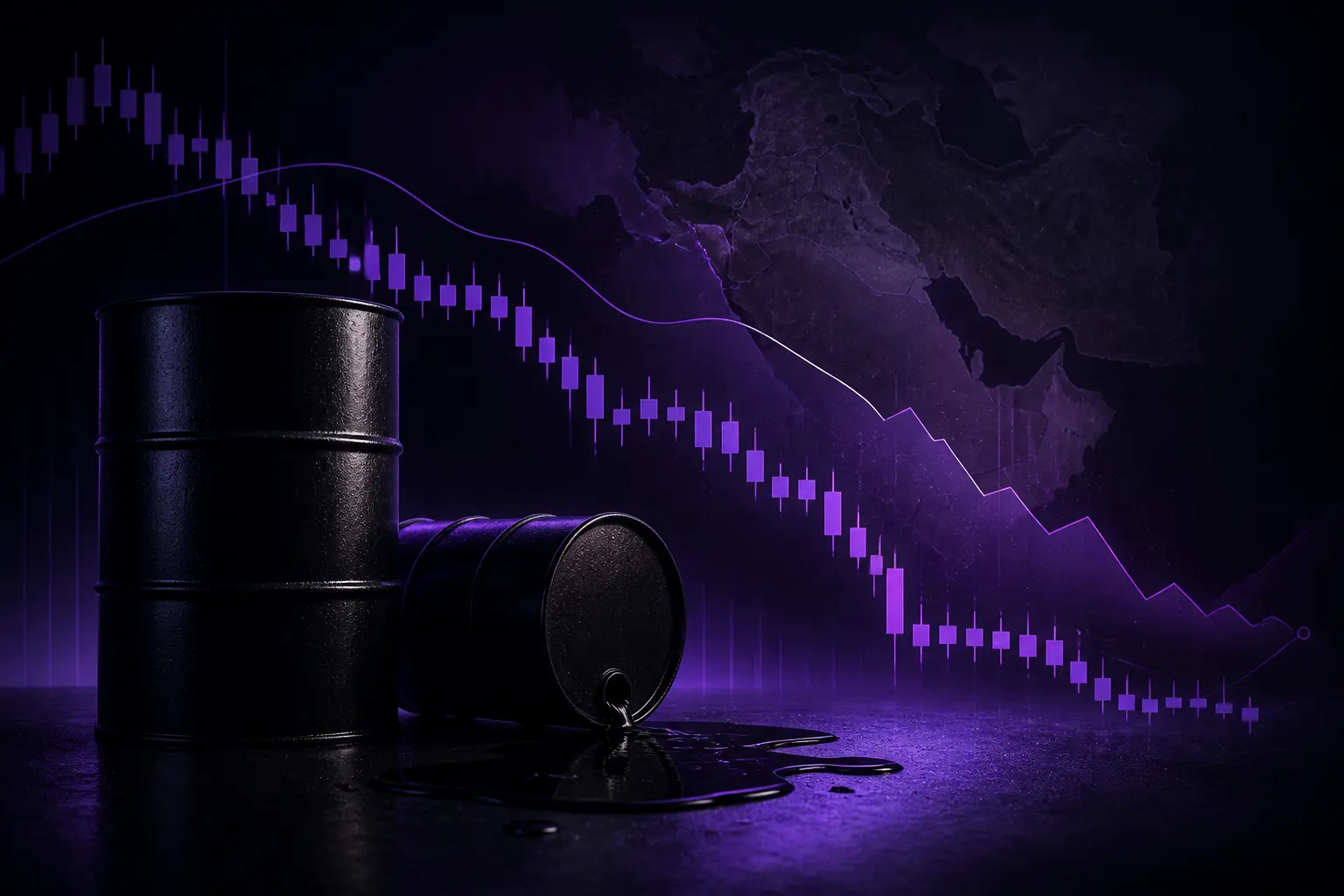
WTI crude futures fell to a cycle low as easing Middle East tensions removed the geopolitical risk premium, shifting focus back to supply and demand fundamentals.
VNIX Quick Take
- WTI crude futures have dropped to their lowest level of the current cycle as the geopolitical risk premium from Middle East tensions unwinds.
- The move highlights how quickly markets can reprice when a supply-disruption threat recedes, even if the underlying physical market remains tight.
- Traders are now refocusing on demand signals, OPEC+ policy, and inventory data for the next directional catalyst.
WTI Crude Slides to Cycle Low as Geopolitical Premium Evaporates
West Texas Intermediate (WTI) crude oil futures have fallen to a cycle low, according to market reports, as the risk premium linked to Middle East tensions has eased. The move marks a notable shift in sentiment for the global benchmark, which had earlier been supported by fears of supply disruptions from the oil-rich region.
When geopolitical risk rises, crude prices often embed a premium — an extra cushion that reflects the possibility of lost barrels. As those fears subside, that premium can deflate rapidly, dragging futures lower even if physical supply and demand haven’t materially changed. This appears to be the dynamic currently playing out in WTI.
The decline to a cycle low suggests that traders are increasingly confident that near-term supply flows will remain uninterrupted. It also underscores how sensitive oil prices are to headlines, particularly when speculative positioning has been skewed by geopolitical events.
What’s Driving the Retreat in Crude Prices
Unwinding the Middle East Risk Premium
The primary driver behind the drop is the removal of the risk premium that had built up during periods of heightened Middle East tensions. Markets had priced in a higher probability of supply disruptions, but as the immediate threat receded, those fears were priced out. This is a common pattern in commodity markets: when the tail risk of a conflict fails to materialize, the associated premium tends to erode quickly.
For traders, this serves as a reminder that geopolitical events often create volatility without necessarily altering the underlying supply-demand balance. The premium is essentially an insurance cost that traders pay during uncertain times — and when the perceived risk falls, so does that cost.
Fundamentals Reassert Their Grip
With the geopolitical noise fading, the market’s attention is shifting back to fundamentals. While the source article does not provide specific inventory or demand figures, the move to a cycle low implies that traders are reassessing the balance between supply and demand. Factors such as OPEC+ production policy, U.S. shale output, and global demand trends — particularly from major consumers like China — will likely determine the next leg for crude.
It’s also worth noting that the decline may have been amplified by technical selling. As prices broke through key support levels, trend-following strategies and stop-loss orders could have accelerated the move. For those interested in how technical levels interact with news, our guide on technical indicators can provide useful context.
Key Levels and Assets to Watch in the Oil Market
With WTI at a cycle low, traders will be monitoring whether the price can find support or if further downside lies ahead. The previous cycle low itself becomes a psychological level; a sustained break below it could signal deeper weakness, while a bounce could indicate that sellers are exhausted. Additionally, the spread between WTI and Brent — the international benchmark — can offer clues about regional supply dynamics.
Beyond crude itself, related assets such as energy equities and the U.S. dollar also warrant attention. A stronger dollar tends to weigh on dollar-denominated commodities like oil, while energy stocks may react to the profitability outlook for producers. For real-time prices of key assets, visit our price now page.
How Traders Can Interpret the Shift in Oil Sentiment
The return to a cycle low is more than just a number — it reflects a change in market psychology. When a risk premium unwinds, it often leads to a period of heightened volatility as traders reassess their positions. For those trading crude, it’s crucial to distinguish between moves driven by headlines and those driven by structural changes in supply and demand. The former can reverse quickly, while the latter tends to have more lasting effects.
Risk management becomes especially important in such environments. Sudden shifts in geopolitical sentiment can lead to gap risks, making stop-loss orders less reliable. Traders may consider reducing position sizes or using options to define risk. For those new to commodities, our classroom offers foundational resources on trading volatile markets.
Additionally, it’s worth watching how other traders are positioning. Sentiment can be a contrarian indicator at extremes, and the cycle low may attract bargain hunters or prompt further selling if bearish momentum persists. Sharing ideas and analysis with a community can provide valuable perspective — our signal rooms are a place to exchange views with fellow traders.
Finally, consider the broader economic context. Oil is sensitive to global growth expectations, and any signs of slowing demand could exacerbate the current move. Conversely, if demand holds up or supply surprises to the downside, the market could quickly reverse. Keeping an eye on upcoming economic data and OPEC+ meetings will be essential.
In VNIX's view
The drop in WTI to a cycle low is a textbook example of a risk premium unwinding. While the immediate catalyst is geopolitical de-escalation, the market’s reaction highlights how fragile sentiment can be when prices are supported by fear rather than fundamentals. Traders should remain agile, as the same headlines that drove the premium up can return to push it back.
Looking ahead, the focus will shift to whether physical market tightness can provide a floor. Without a clear supply shock, crude may struggle to regain its previous highs unless demand surprises to the upside. As always, position sizing and risk management are paramount in such a headline-driven environment.
Educational analysis, not financial advice. Trading involves risk.
ยังไม่รู้ว่าเครื่องมือไหนเหมาะกับคุณ?
ทำแบบทดสอบ 2 นาที รับคำแนะนำที่ตรงกับสไตล์การเทรดของคุณ