

XRP Plunges to November 2024 Low as ETF Outflows and Stablecoin Drain Hit Crypto
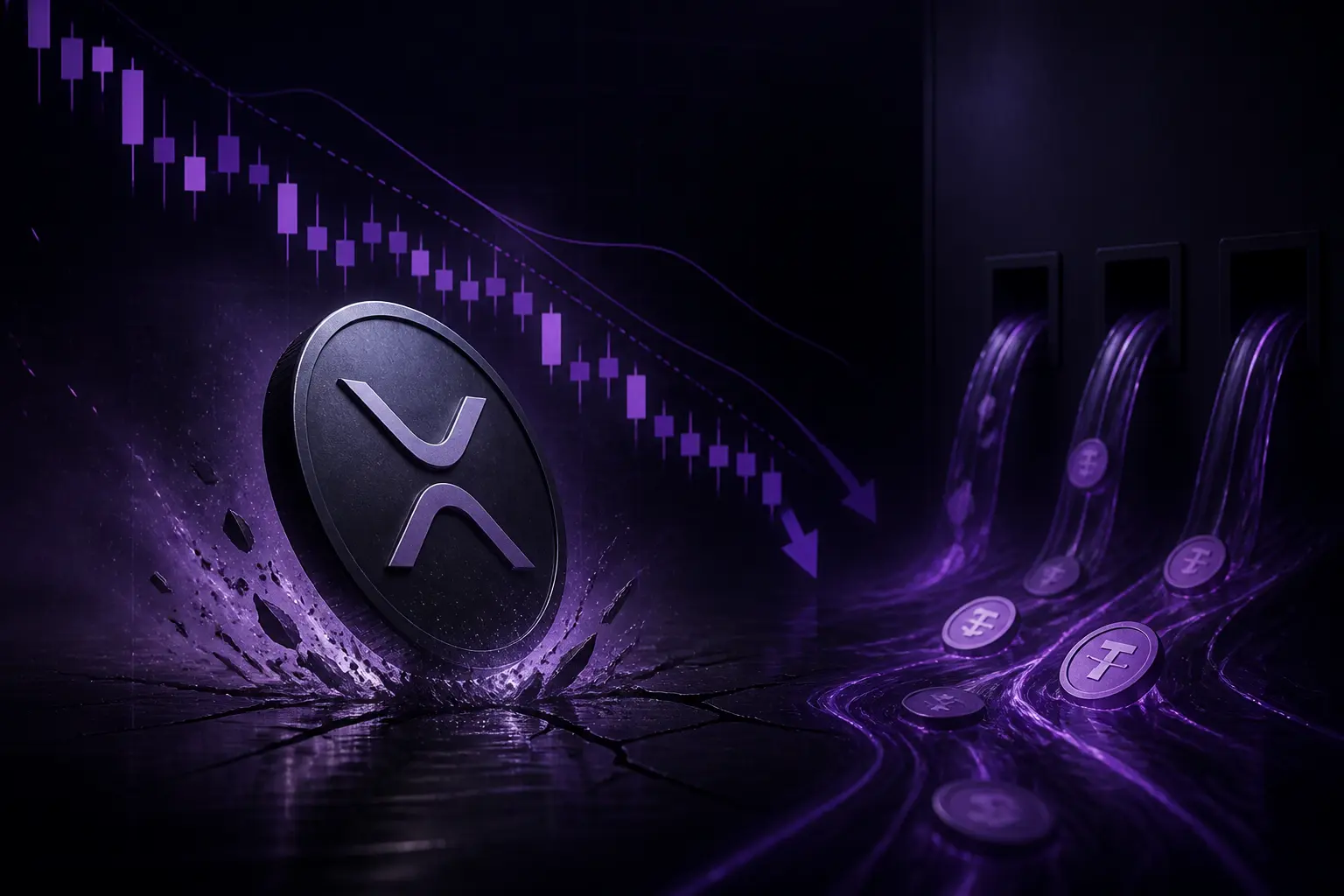
XRP fell to its lowest since November 2024, pressured by ETF outflows and a shrinking stablecoin supply, signaling broader crypto market stress.
VNIX Quick Take
- XRP dropped to its lowest level since November 2024 as ETF outflows and a contracting stablecoin supply weighed on crypto markets.
- The dual pressure suggests capital is leaving the digital-asset space, not just rotating within it.
- Traders are watching key support levels and derivatives data for signs of stabilization or further downside.
XRP Sinks to November 2024 Low as Crypto Capital Retreats
XRP has tumbled to its weakest level since November 2024, extending a downturn that has erased a significant portion of its earlier gains. The move comes as exchange-traded fund (ETF) outflows and a shrinking stablecoin supply add to the selling pressure across cryptocurrency markets.
While the exact price level was not disclosed in the source, the milestone marks a psychological blow for holders who had hoped the token's rally would sustain. The decline is not isolated to XRP; it reflects a broader risk-off tone in digital assets, where liquidity is drying up and investors are reducing exposure.
The combination of ETF redemptions and a falling stablecoin supply is particularly concerning because it suggests that capital is exiting the crypto ecosystem altogether, rather than simply rotating from one token to another. Stablecoins, often used as a proxy for dry powder on the sidelines, have seen their aggregate supply contract—a signal that traders are cashing out rather than preparing to buy the dip.
Why ETF Outflows and Stablecoin Supply Are Weighing on XRP
ETF Redemptions Signal Institutional Caution
Outflows from crypto-related ETFs indicate that institutional investors are pulling back. These products, which gained popularity as a regulated way to gain exposure to digital assets, can amplify price moves when flows reverse. Sustained redemptions often force fund managers to sell underlying assets, adding downward pressure.
For XRP specifically, the absence of a dedicated spot ETF in major markets means the token is more sensitive to broader crypto ETF trends. When investors flee crypto ETFs, the entire asset class feels the chill, and altcoins like XRP—which typically exhibit higher beta than Bitcoin—are hit hardest.
Stablecoin Contraction: Dry Powder Dwindles
Stablecoin supply is a key gauge of available liquidity in crypto markets. When it shrinks, it means fewer dollars are parked in stablecoins waiting to be deployed. This can happen when investors redeem stablecoins for fiat or when they move capital out of the crypto space entirely.
A declining stablecoin supply reduces buying power and can exacerbate sell-offs, as there is less capital to absorb selling pressure. For traders, monitoring stablecoin supply trends can provide early clues about market direction. You can track such metrics and more using our technical indicators.
Key Levels and Assets to Watch as XRP Tests Support
With XRP at its lowest since November 2024, all eyes are on whether it can hold above the psychological support that defined its previous consolidation zone. A break below could open the door to further losses, while a bounce might signal temporary exhaustion of sellers.
Traders should also watch the broader crypto market, particularly Bitcoin and Ethereum, as they often lead altcoin movements. Additionally, keeping an eye on stablecoin supply and ETF flow data can provide context for XRP's next move. For real-time price action, visit our price now page.
How Traders Can Navigate XRP's Slide
In times of market-wide stress, risk management becomes paramount. XRP's high volatility means position sizing and stop-loss placement are critical. Traders should avoid catching a falling knife without clear signs of stabilization, such as a shift in market structure or a surge in buying volume.
It's also important to differentiate between short-term noise and longer-term trends. While the current downturn is driven by liquidity outflows, the fundamental adoption of XRP and its underlying technology may not have changed. However, price is driven by supply and demand, and right now, demand is weak.
For those looking to trade or invest, having a reliable broker is essential. Compare options on our brokers page. And if you're new to crypto trading, consider taking our quiz to find your trading style.
Lastly, keep an eye on sentiment and community insights. Sometimes, extreme pessimism can mark a bottom, but confirmation is needed. Our signal rooms offer a place to discuss ideas with fellow traders.
In VNIX's view
The combination of ETF outflows and stablecoin contraction suggests that the crypto market is facing a liquidity crunch, which could prolong the pain for XRP and its peers. While oversold bounces are possible, a sustained recovery likely requires a reversal in these capital flow trends. Traders should remain cautious and focus on risk management until clearer signals emerge.
Educational analysis, not financial advice. Trading involves risk.
ยังไม่รู้ว่าเครื่องมือไหนเหมาะกับคุณ?
ทำแบบทดสอบ 2 นาที รับคำแนะนำที่ตรงกับสไตล์การเทรดของคุณ