

Saylor and Back Reject BIP-110: Ordinals Debate Heats Up
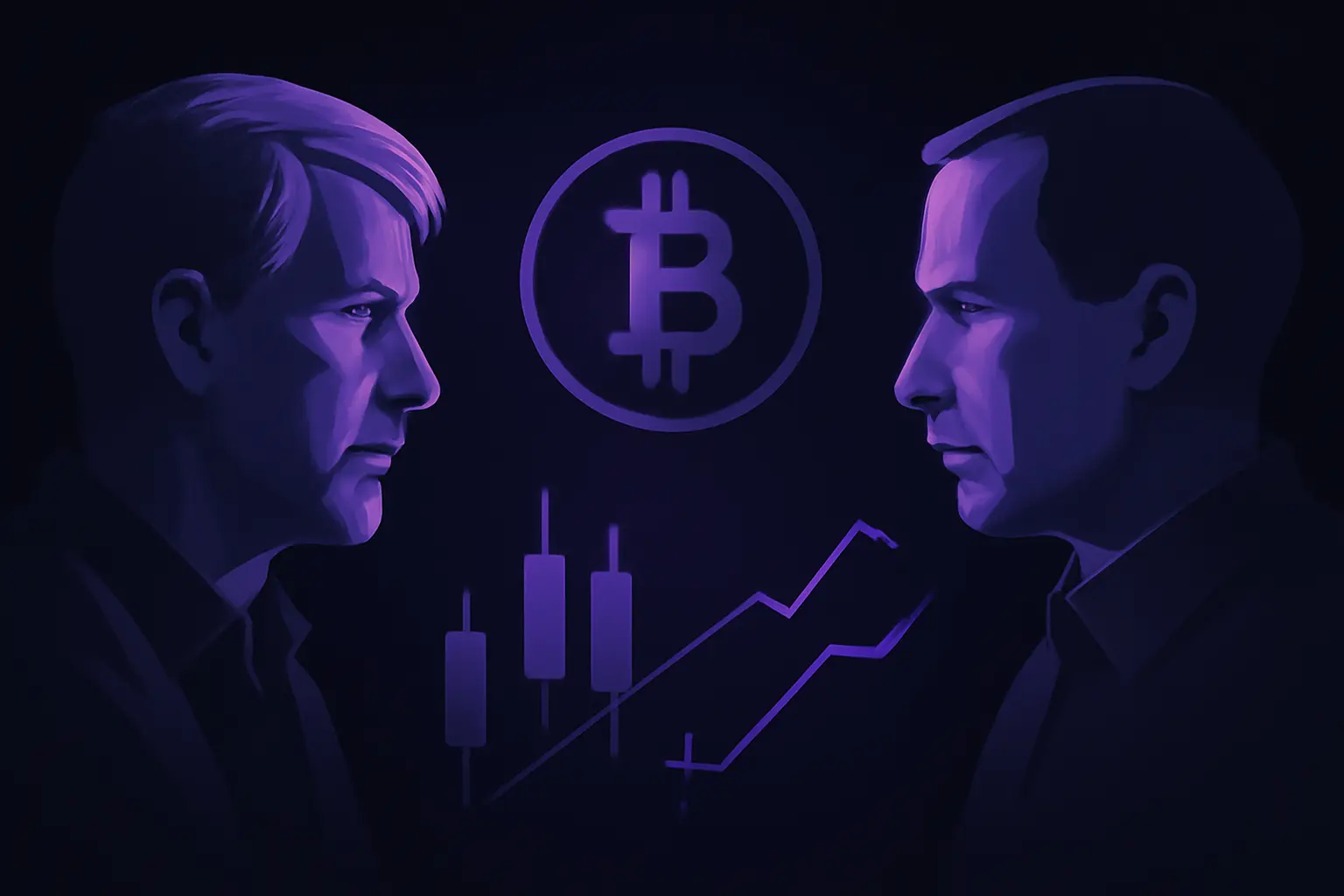
Bitcoin heavyweights Michael Saylor and Adam Back publicly oppose the BIP-110 proposal targeting Ordinals, reigniting a contentious debate despite declining transaction activity.
VNIX Quick Take
- Michael Saylor and Adam Back have voiced strong opposition to BIP-110, a proposal aimed at restricting Ordinals inscriptions on Bitcoin.
- The debate persists even as Ordinals transaction volumes have dropped significantly over the past two years.
- Critics argue BIP-110 could undermine Bitcoin's censorship resistance, while proponents claim it's needed to reduce network congestion.
Bitcoin Heavyweights Push Back on Ordinals Proposal
Michael Saylor, executive chairman of MicroStrategy, and Adam Back, CEO of Blockstream, have publicly criticized BIP-110, a Bitcoin Improvement Proposal that seeks to limit or eliminate Ordinals inscriptions. Both figures are prominent advocates for Bitcoin and hold significant influence in the crypto community.
The proposal has sparked a heated debate, with supporters arguing that Ordinals—which allow data like images to be embedded on the blockchain—are clogging the network and driving up fees. Opponents, including Saylor and Back, contend that any attempt to filter or block transactions violates Bitcoin's core principle of permissionless innovation.
Why the Opposition? Core Principles at Stake
Censorship Resistance vs. Network Efficiency
Saylor and Back frame their opposition as a defense of Bitcoin's foundational ethos. Saylor stated that "censoring" transactions, even those deemed frivolous, sets a dangerous precedent. Back echoed this, warning that BIP-110 could open the door to more invasive controls. Both argue that the market—not developers—should decide which transactions have value through fee prioritization.
Market Activity Refutes Urgency
Data shows that Ordinals-related transaction activity has fallen sharply from its peak in early 2023. Daily inscription counts have dropped over 80%, suggesting the network congestion issue is self-correcting. Critics of BIP-110 point to this decline as evidence that no protocol-level intervention is necessary.
Key Levels and Assets to Watch
While the debate is ideological, it has practical implications for Bitcoin's scalability and fee market. Traders monitoring on-chain data should watch Bitcoin price reactions to any formal BIP-110 development, as uncertainty could weigh on sentiment. Additionally, the mempool size and average fee rate are key indicators of actual congestion.
If BIP-110 gains traction, it could lead to a fork in community opinion, potentially impacting miner revenue from inscriptions. Conversely, its rejection would reinforce the status quo, keeping Bitcoin's base layer unchanged.
What This Means for Traders
This debate highlights a recurring tension in Bitcoin governance: how to balance innovation with network integrity. For traders, the outcome is less about immediate price moves and more about long-term protocol direction. A move toward censorship could alienate a portion of the user base, while inaction may lead to continued fee volatility.
Understanding these dynamics helps traders contextualize market sentiment. Those interested in deeper analysis can explore Bitcoin's governance process and how proposals like BIP-110 are debated. For real-time community reactions, signal rooms provide a pulse on trader sentiment.
Ultimately, the Ordinals saga underscores that Bitcoin is not just a store of value but a living network subject to political and technical evolution. Traders should stay informed but avoid overreacting to early-stage proposals.
In VNIX's view
The opposition from Saylor and Back carries weight and likely stalls BIP-110's progress. However, the underlying tension between scalability and permissionless use will persist. Traders should monitor for any official proposal updates but recognize that the market has already priced in the declining Ordinals activity.
Educational analysis, not financial advice. Trading involves risk.
Chưa biết công cụ nào phù hợp?
Làm bài test 2 phút để nhận gợi ý phù hợp với phong cách giao dịch của bạn.