

Crude Oil Falls as AI Stock Rout Spreads; Hormuz Ship Attacks Limit Losses
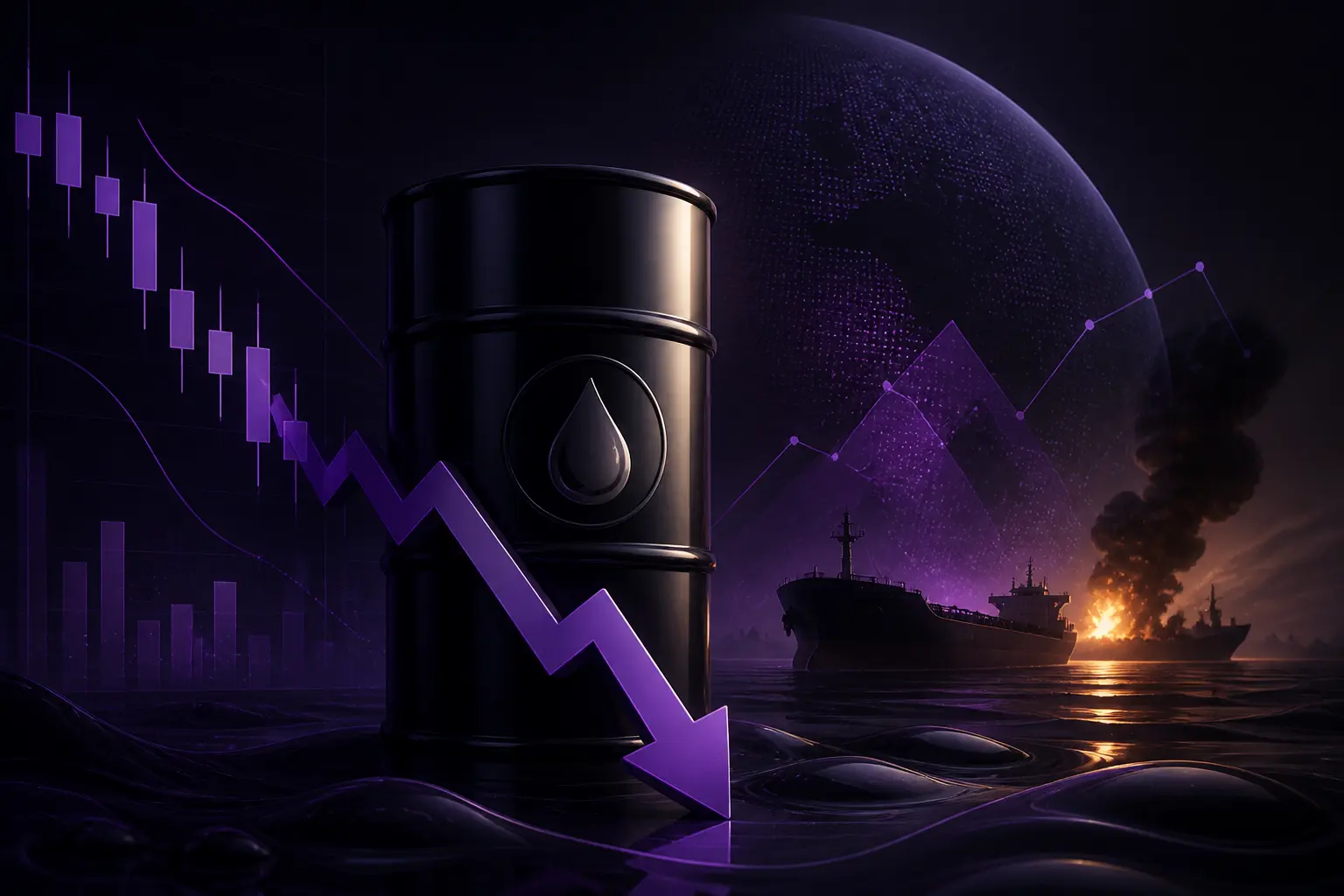
Oil futures extended losses as an AI-driven equity selloff hit risk appetite, though attacks on ships near the Strait of Hormuz provided a floor.
VNIX Quick Take
- Crude oil futures extended losses as a selloff in AI-related equities spilled into broader risk assets, pressuring energy prices.
- Attacks on ships near the Strait of Hormuz added a geopolitical risk premium, limiting the downside for crude.
- Traders are weighing demand concerns from the tech-led equity rout against supply disruption risks in the Middle East.
Oil Prices Slip as AI Stock Rout Weighs on Risk Appetite
Crude oil futures moved lower on [date], extending recent losses as a sharp selloff in artificial intelligence (AI) stocks spread to the wider equity market. The risk-off tone weighed on commodities, with oil joining the broader retreat as investors reduced exposure to growth-sensitive assets.
The AI-led equity selloff, which began with profit-taking in major technology names, quickly broadened into a wider de-risking move. Oil, often sensitive to shifts in global risk appetite, felt the spillover as traders trimmed positions amid growing uncertainty about the economic outlook.
Front-month crude futures settled lower, though the decline was partially offset by supply concerns linked to attacks on commercial ships near the Strait of Hormuz. The dual forces—demand fears from the equity selloff and supply risks from geopolitical tensions—created a tug-of-war that kept oil within a relatively narrow range.
Two Forces Pulling Crude in Opposite Directions
AI Selloff Stokes Demand Worries
The equity rout, driven by a reassessment of AI-related valuations, raised questions about the sustainability of the tech-driven economic boom. When high-flying technology stocks fall sharply, it can signal a broader shift in risk sentiment, prompting investors to reduce exposure to cyclical assets like oil. The selloff also fueled concerns that a potential slowdown in tech investment could ripple through the economy, dampening energy demand.
In this environment, crude prices often act as a barometer of global growth expectations. The recent weakness in oil suggests that traders are pricing in softer demand, at least in the near term, as the equity market adjusts to a less exuberant outlook for AI spending.
Hormuz Ship Attacks Add Geopolitical Premium
Meanwhile, attacks on ships near the Strait of Hormuz—a critical chokepoint for global oil shipments—provided a counterweight. The strait is the world's most important oil transit route, with a significant portion of seaborne crude passing through daily. Any disruption there can quickly tighten supply and push prices higher.
The attacks introduced a risk premium into the market, limiting the downside for crude. Traders are monitoring the situation closely, as an escalation could lead to supply disruptions and a sharp spike in prices. For now, the geopolitical risk has acted as a partial offset to the demand-side concerns stemming from the equity selloff.
Key Levels and Assets to Watch
With oil caught between demand worries and supply risks, traders are focusing on key technical levels. The front-month contract has been oscillating around recent lows, with support near the lower end of its recent range and resistance at the upper bound. A break below support could open the door to further losses, while a sustained move above resistance would signal that geopolitical risks are outweighing demand concerns.
In addition to price action, market participants are watching the US dollar, which often moves inversely to crude. A stronger dollar, driven by safe-haven flows during the equity selloff, can weigh on oil prices by making it more expensive for holders of other currencies. For those tracking these dynamics, our live price page offers real-time updates on crude and other major assets.
What This Means for Traders
The current environment presents a classic dilemma for oil traders: balancing macroeconomic headwinds against geopolitical supply risks. The AI-driven equity selloff is a demand-side concern, while the Hormuz attacks are a supply-side risk. How these forces evolve will likely determine the next directional move in crude.
From an educational perspective, this is a good example of how cross-asset correlations can influence commodity prices. Oil is not traded in isolation; it responds to shifts in risk sentiment, currency movements, and global growth expectations. Traders who monitor equity markets, the dollar, and geopolitical headlines can gain a more complete picture of the forces driving oil.
Risk management is crucial in such uncertain conditions. Volatility can spike unexpectedly, and positions can be quickly tested. Using technical tools like moving averages and support/resistance levels can help identify potential entry and exit points, but no indicator is foolproof. Our indicators guide explains how to use these tools effectively. Additionally, sharing ideas with other traders in our signal rooms can provide valuable perspective, though always remember that trading involves risk and past performance is not indicative of future results.
In VNIX's view
The tug-of-war between demand fears from the AI selloff and supply risks from the Hormuz attacks is likely to keep crude volatile in the near term. While the equity rout has pressured prices, the geopolitical premium is a reminder that supply disruptions can quickly shift the balance. Traders should stay nimble and watch for signs of escalation in the Middle East or a stabilization in equity markets, as either could break the current stalemate.
Educational analysis, not financial advice. Trading involves risk.