

Crude Oil Weekly Outlook: Houthi Attacks vs. a Double Top?
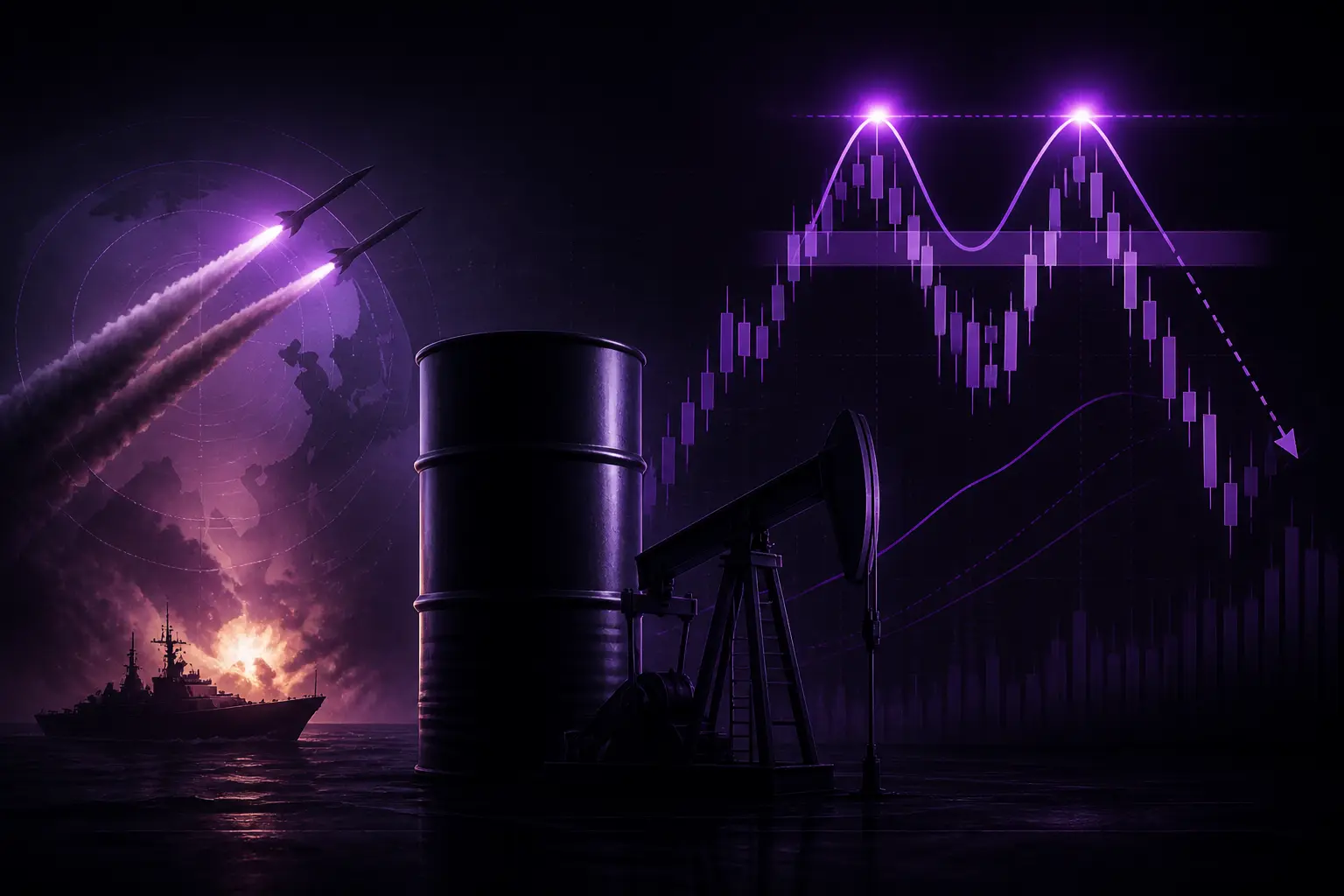
Oil faces a tug-of-war: Houthi attacks support prices, but a double top looms. Key levels and scenarios for traders.
VNIX Quick Take
- Crude oil is caught between geopolitical risk from Houthi attacks and a bearish double-top pattern.
- Supply disruption fears support prices, but technicals suggest a potential reversal.
- Traders watch key levels: resistance at the double top and support at recent lows.
Crude Oil at a Crossroads: Houthi Attacks vs. Double Top
Crude oil prices are at a critical juncture as two opposing forces vie for control: escalating geopolitical tensions from Houthi attacks in the Red Sea, which threaten supply routes, and a bearish double-top pattern on the charts that signals a potential reversal. This week, traders will be watching closely to see which force prevails.
The Houthi attacks have targeted commercial shipping in the Red Sea, a vital conduit for global oil trade. While the attacks have not directly disrupted oil production, they have raised the risk premium on crude, as markets fear potential supply chain disruptions. Meanwhile, technical analysts point to a double-top formation on the daily chart, a pattern that often precedes a downtrend. The clash between these fundamental and technical signals creates a volatile environment for oil traders.
Adding to the complexity, broader economic factors such as demand expectations from China and the trajectory of the US dollar are also in play. As always, the interplay of geopolitics and technicals makes for a challenging but potentially rewarding trading landscape. For those looking to navigate these waters, understanding both the fundamental and technical aspects is key.
Geopolitical Risk Premium vs. Technical Reversal Signals
Houthi Attacks and the Supply Risk Premium
The Houthi attacks in the Red Sea have injected a fresh geopolitical risk premium into oil markets. The Red Sea is a critical chokepoint for global oil shipments, with a significant portion of seaborne crude passing through the Bab el-Mandeb strait. Any disruption here could tighten supplies, especially for European and Asian refiners. While the attacks have not yet caused a physical shortage, the market's perception of risk has increased, supporting prices.
Historically, geopolitical events have a mixed record in sustaining oil price rallies. The duration and severity of the risk premium depend on whether the attacks escalate or are contained. Traders should monitor news flow for any signs of escalation, such as attacks on oil tankers or military responses that could further disrupt shipping. For a deeper understanding of how geopolitical risks affect oil, see our educational resources.
The Double Top: A Technical Warning
On the technical side, crude oil has formed a double-top pattern, which occurs when the price hits a resistance level twice without breaking through, indicating a potential bearish reversal. The pattern is typically confirmed when the price breaks below the neckline, which is the support level between the two peaks. If confirmed, it could signal a significant downturn. However, technical patterns are not foolproof; they can be invalidated by strong fundamental catalysts.
Traders often use indicators like the Relative Strength Index (RSI) or moving averages to confirm such patterns. For example, a bearish divergence on the RSI, where price makes a higher high but RSI makes a lower high, can strengthen the case for a reversal. To learn more about these tools, visit our indicators page. The double top is particularly significant because it has formed after a sustained uptrend, making it a potential trend reversal signal.
Key Levels to Watch: Resistance at the Double Top and Support at the Neckline
The double top's resistance level is the critical barrier that oil bulls need to overcome to invalidate the bearish pattern. This level, which marks the peak of both tops, is likely to act as strong resistance. A break above it could trigger a short squeeze and push prices higher, especially if geopolitical tensions escalate. Conversely, the neckline support is the line in the sand for the double top; a break below it would confirm the pattern and could accelerate selling.
Other levels to watch include the recent swing lows and the psychological round numbers. For instance, if oil is trading around $80, the $80 level itself becomes a psychological support. Traders should also watch the 50-day and 200-day moving averages, which can provide dynamic support or resistance. For real-time price levels, check our price now page.
How Traders Can Navigate the Crude Oil Conundrum
In this environment, traders must weigh the fundamental and technical signals carefully. The geopolitical risk premium could keep a floor under prices, but if the double top is confirmed, it might overpower the geopolitical support. A prudent approach is to wait for confirmation: either a break above resistance or below support, before committing to a directional bias. Risk management is crucial; setting stop-loss orders near key levels can help limit losses if the market moves against you.
Additionally, diversification and position sizing are important. Given the high volatility, traders should avoid overleveraging. Keeping an eye on the news flow is essential, as headlines about Houthi attacks can cause sudden spikes. For those looking to share ideas and see how others are trading, our signal rooms offer a community of traders. Remember, no pattern or news event guarantees a certain outcome; the market is always uncertain.
Another factor to consider is the broader context of oil demand. If global economic data, especially from China, shows weakness, it could add to bearish pressure. Conversely, if OPEC+ signals production cuts, it could support prices. The interplay of these factors means that traders should stay flexible and adapt to evolving information. For beginners, understanding these dynamics is part of the learning curve; our quiz can help you identify your trading style.
In VNIX's view
The tug-of-war between Houthi attacks and the double top creates a classic battle between fundamentals and technicals. While the geopolitical risk premium may provide temporary support, the technical pattern suggests caution. Traders should focus on key levels and wait for confirmation before taking a stance. The market's reaction to news and technical breaks will be telling.
Educational analysis, not financial advice. Trading involves risk.
Theo dõi mọi thị trường trong một nơi
Giá vàng, tiền điện tử, forex và cổ phiếu Mỹ trực tiếp kèm bản đồ nhiệt.