

Oil climbs as Trump threatens sanctions on Iran partners
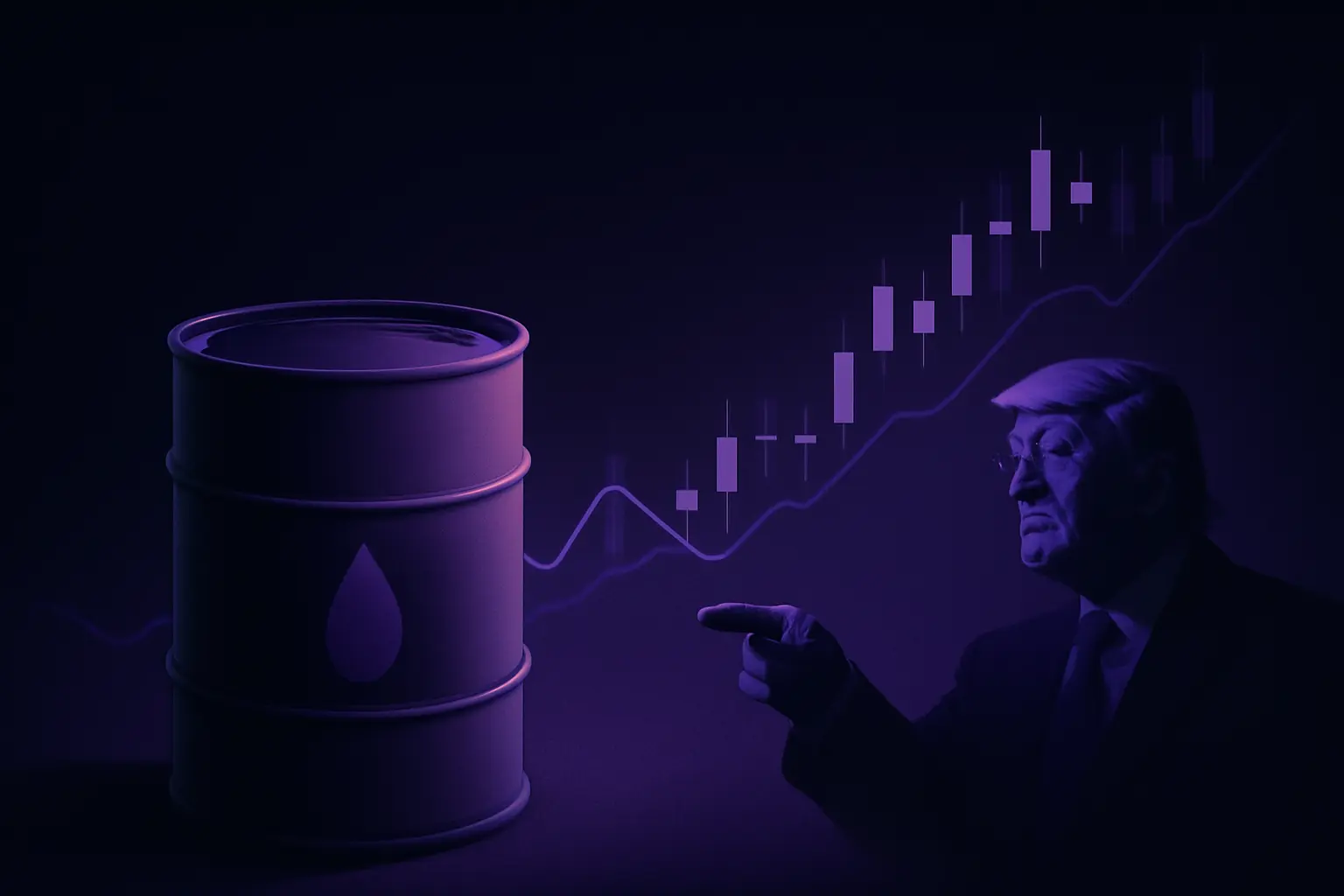
Oil prices rose after Trump warned of sanctions on countries trading with Iran, tightening supply outlook.
VNIX Quick Take
- Oil prices ticked higher after President Trump threatened sanctions on nations that trade with Iran.
- The move reflects renewed geopolitical risk premium in crude markets.
- Traders are watching for supply disruptions and possible OPEC+ responses.
Oil edges up as Trump warns of secondary sanctions on Iran buyers
Crude oil futures rose in early trading after U.S. President Donald Trump threatened to impose sanctions on countries that purchase Iranian oil. The warning, delivered via a social media post, reignited concerns about tighter global supply, especially with Iran's exports already under pressure from existing U.S. sanctions.
The threat comes at a time when the oil market is balancing supply expectations from OPEC+ and demand signals from major economies. Any reduction in Iranian barrels could tighten the market, supporting prices in the short term.
What's driving the move: Geopolitical risk and supply math
Iran sanctions: A familiar lever with new teeth
Trump's latest statement suggests a more aggressive enforcement of sanctions aimed at Iran's oil revenue. Secondary sanctions, which target third-party buyers, could force countries like China and India to cut imports, removing significant volumes from the market. This is not a new tactic, but the timing adds to existing supply uncertainties.
Iran exports roughly 1.5 million barrels per day, and a full enforcement could erase a meaningful chunk of global supply. However, the market has seen similar threats before, and actual implementation often lags rhetoric.
OPEC+ spare capacity and the balancing act
OPEC+ has been gradually unwinding its production cuts, but spare capacity remains limited, mainly in Saudi Arabia and the UAE. If Iranian barrels are removed, the group may need to accelerate output increases to fill the gap. Yet, OPEC+ decisions are often slow and political, leaving the market vulnerable to short-term spikes.
Traders are also watching U.S. shale output, which has been resilient but not enough to offset a sudden loss of Iranian supply.
Key levels to watch: Crude's next technical battleground
With prices rising, traders are eyeing resistance levels on the daily chart. For WTI crude, the $70–$72 zone is a key area, while Brent faces resistance near $75. A break above these levels could trigger further momentum, but failure may lead to a pullback.
Support sits around $65 for WTI and $70 for Brent, where buyers have stepped in recently. Using technical indicators like moving averages and RSI can help traders gauge the strength of the move.
How traders can think about this: Risk, headlines, and positioning
Headline-driven moves in oil are common, but they often fade unless followed by concrete actions. Traders should monitor for official announcements from the U.S. Treasury or State Department, which would signal actual enforcement. Also, watch for responses from China and India, the largest buyers of Iranian crude.
Volatility is likely to remain elevated, making position sizing crucial. For those new to commodities, understanding the interplay between geopolitics and supply-demand is essential. Consider using community signal rooms to see how experienced traders navigate such news.
Ultimately, this development adds a bullish bias in the short term, but the medium-term outlook depends on whether sanctions are actually imposed and how OPEC+ reacts. Traders should avoid over-leveraging on headlines alone.
In VNIX's view
The threat of secondary sanctions on Iranian oil buyers injects fresh geopolitical risk into crude markets, but such threats have historically been used as negotiation tools. The real test is whether they translate into policy, and that uncertainty is what traders price.
Educational analysis, not financial advice. Trading involves risk.
Nhận tín hiệu giao dịch theo thời gian thực
Điểm vào, mục tiêu và cắt lỗ cho vàng, tiền điện tử và forex — do đội ngũ VNIX chọn lọc.