

Evernorth Writes Down XRP Holdings 60% — And Can't Reverse It
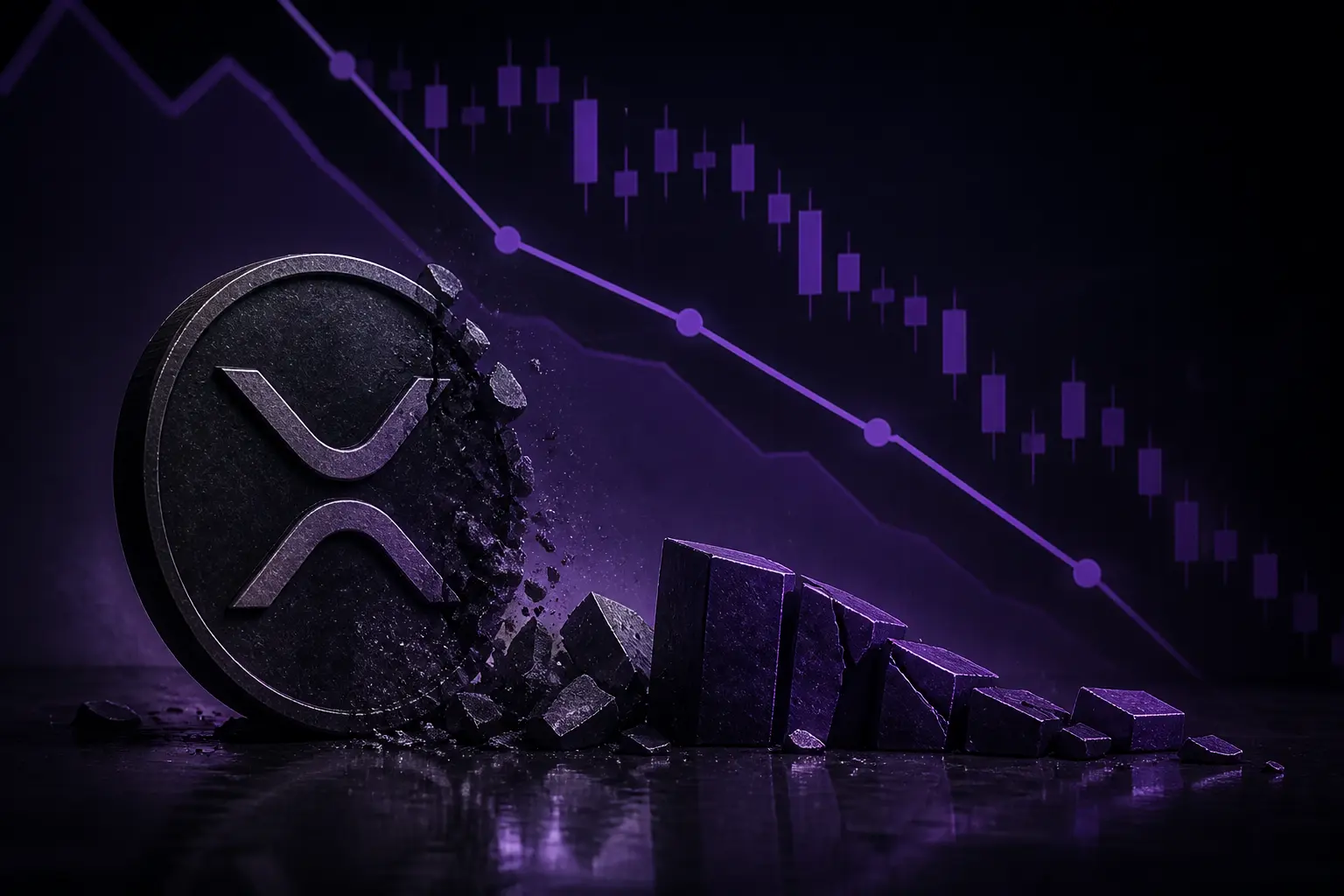
Ripple-backed Evernorth has marked down its pre-listing XRP holdings by 60%, and its accounting policy prevents reversing those write-downs even if the token recovers.
VNIX Quick Take
- Ripple-backed Evernorth has written down its pre-listing XRP holdings by 60%.
- Its accounting policy records price declines but does not reverse them when XRP rebounds.
- The one-way treatment can distort how the balance sheet reads versus real market prices.
Evernorth Marks Down XRP 60% Under Pre-Listing Accounting Rule
Evernorth, a company backed by Ripple, has written down the value of its XRP holdings by 60% ahead of a listing, according to the source report. The write-down applies to tokens the company held before going public, and it reflects the decline in the price of XRP over the relevant period.
The headline number is large, but the mechanism behind it matters more than the percentage itself. A 60% impairment is an accounting adjustment, not a sale. It changes the carrying value of an asset on the books rather than the number of tokens the company actually controls or the market price at which those tokens currently trade.
For readers new to how crypto holdings are reported, this is a useful case study in the gap between book value and market value. A firm can hold the same tokens through a rally and still show a depressed carrying value if its policy only ratchets downward. That distinction is central to interpreting the story correctly.
Why Evernorth's One-Way Write-Down Policy Matters
The Asymmetric Impairment Rule Explained
The company's accounting policy requires it to record price declines but does not permit reversing those write-downs when XRP recovers. In practice, that creates an asymmetric treatment: losses flow through the books when prices fall, but gains from a subsequent rebound are not reflected by writing the asset back up.
This is not unique to crypto. Certain impairment frameworks for intangible and digital assets work similarly, forcing firms to recognize declines while limiting upward revaluation. The result is a carrying value that can lag market reality — sometimes significantly — during recoveries. Traders who read balance sheets should treat such figures as a floor-oriented snapshot rather than a live mark.
Pre-Listing Optics and Investor Perception
Because the write-down comes ahead of a listing, it lands in a period when investors are scrutinizing disclosures closely. A 60% impairment can look alarming at first glance, yet its meaning depends on the policy behind it. A reader who understands the one-way rule will see a conservative accounting choice rather than a fresh trading loss.
The same dynamic plays out across crypto treasury strategies, where firms hold volatile tokens and must decide how to report them. Understanding these conventions helps traders separate accounting noise from genuine changes in a company's position. Those who want to dig into how such disclosures are read can explore the classroom resources on fundamentals.
What to Watch Around XRP and Evernorth's Listing
The key reference point is the market price of XRP itself, since the carrying value on Evernorth's books is now decoupled from it. If the token trades well above the written-down level, the gap between book and market becomes the story. If it trades below, the impairment looks prescient rather than conservative.
Beyond price, watch for any updated disclosures around the listing that clarify the size and composition of the holdings. Traders can track XRP's live moves on the price page and compare them against the accounting narrative. The spread between the two is where mispricing and sentiment often hide.
How Traders Should Read a 60% Crypto Write-Down
First, separate accounting events from market events. A write-down does not force selling, does not change token supply, and does not by itself alter XRP's price. What it changes is how a company's equity and earnings look, which can influence sentiment and, in turn, how the stock or related instruments trade.
Second, consider the asymmetry. Under a one-way policy, future declines get recorded but future gains do not get reversed. That means the reported figure is biased toward pessimism over time. A trader reading the headline at face value could mistake a policy artifact for deteriorating fundamentals.
Third, think about what would change the picture. A policy change, a new disclosure, or a sale of the holdings would all alter the interpretation. So would a sustained move in XRP that makes the carrying value obviously stale. Traders who map these scenarios in advance are better positioned than those reacting to headlines. Tools on the indicators page can help frame such scenarios quantitatively, and community discussion in the signal rooms often surfaces how others are reading the same disclosure.
Frequently Asked Questions
Did Evernorth sell its XRP?
The source describes a write-down of holdings, not a sale. A write-down is an accounting adjustment to carrying value, so the tokens may still be held.
Why can't the write-down be reversed if XRP recovers?
The company's accounting policy records declines but does not allow reversing them when prices rebound, producing an asymmetric, one-way treatment of the asset.
Does this affect XRP's market price?
Not directly. The impairment changes reported book value, not token supply or market pricing, though it can influence sentiment around the listing.
In VNIX's view
The 60% figure will dominate headlines, but the real insight is the accounting asymmetry: Evernorth's books will keep the scar from a decline while ignoring any later recovery. That makes the write-down a poor proxy for the company's actual exposure to XRP. Traders should read it as a disclosure about policy and optics ahead of a listing, not as a verdict on the token.
Educational analysis, not financial advice. Trading involves risk.
Theo dõi mọi thị trường trong một nơi
Giá vàng, tiền điện tử, forex và cổ phiếu Mỹ trực tiếp kèm bản đồ nhiệt.