

Nasdaq Slides as Chip Stocks Wobble; Sandisk and Micron Lead Declines
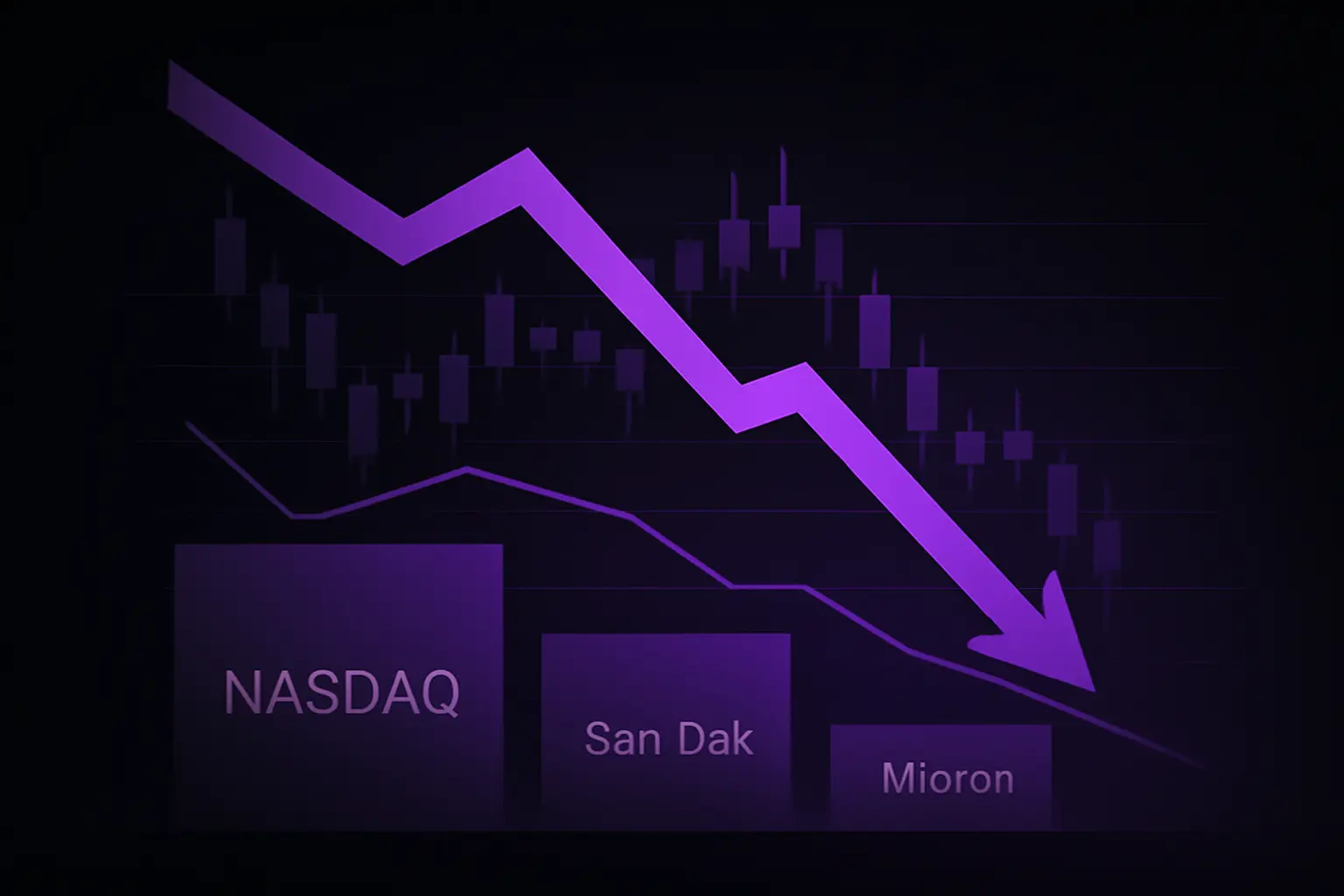
The Nasdaq fell on Friday, dragged by semiconductor names, with Sandisk and Micron suffering steep losses. Investors weighed sector-specific pressures.
VNIX Quick Take
- Nasdaq declines as chip sector weakens, with Sandisk and Micron among the biggest losers.
- Semiconductor stocks under pressure amid concerns over memory-chip pricing and demand.
- Investors monitor key support levels and sector rotation for trading cues.
Nasdaq Slips as Chip Stocks Slide; Sandisk and Micron Take Heavy Hits
US stocks ended lower on Friday, with the Nasdaq leading the decline as semiconductor stocks tumbled. Sandisk and Micron were among the notable losers, each dropping significantly during the session.
The weakness in chip names weighed on the broader tech-heavy index, which had been attempting to stabilize after recent volatility. The move reflects ongoing investor caution toward the semiconductor sector, which has been sensitive to shifts in demand and pricing dynamics.
While the exact percentage declines for Sandisk and Micron were not detailed in the source, the magnitude of the losses was described as substantial, underscoring the market's current risk-off tone toward these names.
What's Behind the Chip Selloff? A Look at Memory Market Pressures
The decline in chip stocks, particularly memory-chip makers like Sandisk and Micron, points to persistent worries about oversupply and softening demand in the memory segment. Analysts have noted that inventory adjustments across the supply chain could pressure pricing in the near term.
Memory Pricing and Demand Concerns Weigh on Sentiment
Memory-chip prices have been under pressure as data-center and consumer-electronics demand normalizes from pandemic-era highs. This has led to cautious guidance from some manufacturers, which in turn dampens investor enthusiasm for stocks like Micron and Sandisk.
Broader Tech Rotation Adds to Nasdaq's Drag
Beyond memory-specific issues, the Nasdaq's decline also reflects a broader rotation out of technology into other sectors. As investors reposition portfolios ahead of economic data and central-bank policy decisions, high-multiple tech names often face selling pressure, amplifying moves like Friday's.
Key Levels to Watch: Support Zones and Sector Breadth
For traders tracking the Nasdaq, the index's ability to hold recent support levels will be crucial. A break below those levels could signal further downside, while a bounce might attract dip-buyers. Similarly, watching the relative strength of semiconductor stocks versus the broader market can offer clues about sector leadership.
Technical tools like moving averages and relative strength index (RSI) can help gauge momentum. For guidance on using these indicators, check our indicators guide.
How Traders Can Interpret This Move and What to Watch Next
The chip selloff underscores the importance of staying nimble in a market that remains sensitive to sector-specific news. For traders, the key is to differentiate between short-term noise and structural shifts. If memory pricing stabilizes and guidance improves, the sector could recover quickly; conversely, prolonged weakness could signal deeper issues.
Risk management becomes critical in such environments. Setting stop-losses and monitoring volume patterns can help traders navigate volatility. For those new to trading, our classroom offers foundational lessons on risk management and market analysis.
Additionally, watching earnings reports and industry data from memory-chip makers will be essential. Any surprises in demand or pricing could trigger sharp moves. For real-time discussions on these stocks, consider joining our signal rooms to see how other traders are positioning.
In VNIX's view
Friday's decline in chip stocks highlights the sector's vulnerability to pricing and demand shifts. While the move is notable, it's part of a broader pattern of volatility in tech. Traders should watch for stabilization in memory prices and broader market support before assuming a trend reversal.
Educational analysis, not financial advice. Trading involves risk.
Nhận tín hiệu giao dịch theo thời gian thực
Điểm vào, mục tiêu và cắt lỗ cho vàng, tiền điện tử và forex — do đội ngũ VNIX chọn lọc.