

WTI Crude Extends Correction Below $100: Key Levels and Drivers
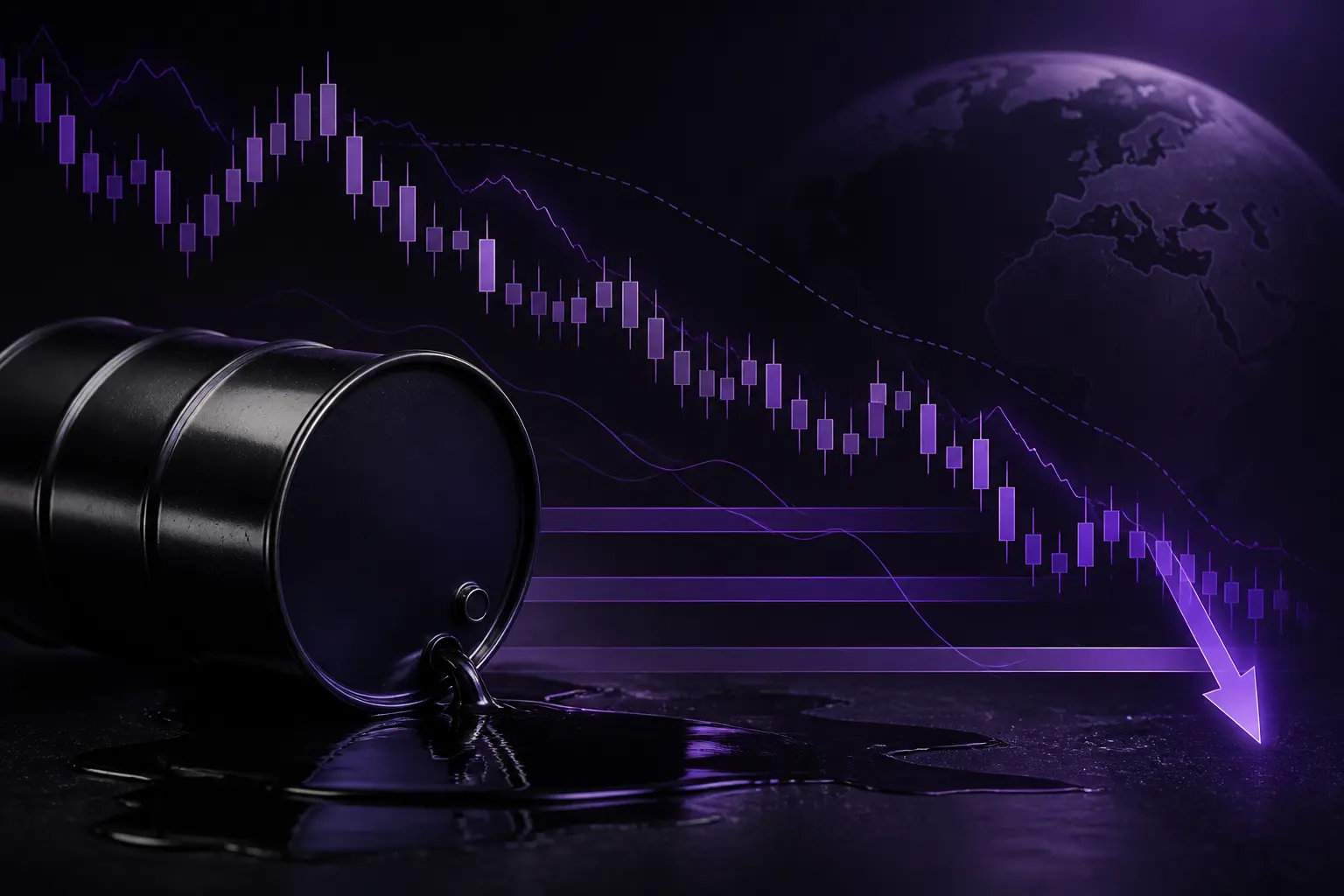
WTI crude extends its correction below the $100 mark. We break down the drivers, key levels to watch, and what it means for traders.
VNIX Quick Take
- WTI crude extends its correction below the psychologically important $100 per barrel level.
- The pullback reflects a mix of profit-taking, demand concerns, and shifting risk sentiment.
- Traders should watch key support zones and upcoming inventory data for directional clues.
WTI Crude Slips Below $100 as Correction Deepens
West Texas Intermediate (WTI) crude oil has extended its correction, trading below the $100 per barrel mark. The move marks a notable shift in momentum for the benchmark, which had previously been supported by supply-side concerns and geopolitical tensions. While the exact catalyst for the latest leg down is multifaceted, the breach of the $100 level is significant from both a technical and psychological standpoint.
Crude oil prices are influenced by a complex interplay of factors, including global supply and demand dynamics, inventory levels, geopolitical events, and broader macroeconomic conditions. The recent correction suggests that some of the bullish drivers may be losing force, or that market participants are reassessing the balance of risks. For traders, understanding the underlying reasons behind such moves is crucial for navigating the volatility.
In this article, we examine the factors contributing to the pullback, identify key technical levels to monitor, and discuss how traders might approach the current environment. You can track real-time WTI price action and other commodity movements on our prices page.
What's Driving the Oil Pullback?
Demand Uncertainty and Macro Headwinds
One of the primary drivers of the correction is growing uncertainty around global oil demand. Concerns about slowing economic growth in major economies, particularly China and Europe, have raised questions about the pace of oil consumption. Additionally, the prospect of further interest rate hikes from central banks to combat inflation could dampen economic activity and, by extension, energy demand.
Macroeconomic data releases, such as manufacturing PMIs and GDP figures, are closely watched by oil traders for signs of demand strength. Weak readings can weigh on prices, while strong data can provide support. The current environment of mixed economic signals has contributed to the volatile price action in crude.
Supply-Side Developments and Profit-Taking
On the supply side, factors such as OPEC+ production decisions, US shale output, and geopolitical risks have been key influences. Any signs of increasing supply or easing geopolitical tensions can pressure prices. Moreover, after a significant rally, profit-taking by speculative traders can accelerate a correction. The Commodity Futures Trading Commission (CFTC) publishes weekly data on speculative positioning, which can offer insights into market sentiment.
It's also worth noting that the oil market is prone to sharp reversals. Traders often use technical indicators to gauge momentum and identify potential turning points. Tools like moving averages and RSI can be found in our indicators section.
Key Levels and Assets to Watch
From a technical perspective, the $100 level was a major psychological barrier. Now that WTI has broken below it, the next support levels might come into focus. Traders often look at previous swing lows, moving averages, and Fibonacci retracement levels to identify potential support zones. The $95 and $90 levels are commonly cited as areas of interest, but it's essential to rely on a combination of factors rather than a single indicator.
In addition to price levels, traders should monitor oil inventory reports from the American Petroleum Institute (API) and the Energy Information Administration (EIA). These weekly releases provide timely data on supply and demand balances and can trigger significant price swings. Also, keep an eye on the US Dollar Index (DXY), as oil is priced in dollars and a stronger dollar can make oil more expensive for holders of other currencies, potentially dampening demand.
Navigating the Correction: What Traders Should Consider
In a correcting market, risk management becomes even more critical. Volatility can increase, and false breakouts are common. Traders should consider adjusting position sizes and using stop-loss orders to protect capital. It's also important to have a clear trading plan that accounts for both bullish and bearish scenarios.
Furthermore, corrections can present opportunities for trend-following traders if the overall uptrend remains intact. However, confirming the trend direction requires analyzing multiple timeframes and incorporating fundamental context. Engaging with a community of traders can provide valuable perspectives; you can join discussions in our signal rooms.
For those new to trading commodities, understanding the unique characteristics of the oil market is essential. Our classroom offers educational resources on trading various asset classes. And if you're ready to trade, you'll need a broker; compare options on our brokers page.
WTI Outlook: Balancing Risks and Opportunities
The correction below $100 serves as a reminder of the oil market's inherent volatility. While the long-term outlook for oil remains debated, the short-term direction will likely be influenced by upcoming economic data, inventory reports, and geopolitical developments. Traders should stay informed and adaptable.
It's also worth considering the broader context: oil is a critical input for the global economy, and its price movements can have far-reaching implications. For traders, this means that correlations with other assets, such as equities and currencies, may shift. Keeping an eye on cross-asset signals can provide additional confirmation for trading decisions.
Ultimately, no one can predict the future with certainty. A disciplined approach, continuous education, and a focus on risk management are the hallmarks of successful trading. Whether you're a seasoned oil trader or just starting, the current environment offers both challenges and learning opportunities.
In VNIX's view
The break below $100 in WTI is a significant technical event that could signal further downside if key support levels fail. However, given the market's sensitivity to supply-side shocks and geopolitical risks, a swift reversal cannot be ruled out. Traders should remain flexible and prioritize risk management.
Educational analysis, not financial advice. Trading involves risk.
Chưa biết công cụ nào phù hợp?
Làm bài test 2 phút để nhận gợi ý phù hợp với phong cách giao dịch của bạn.