

ECB Hopeful Klaas Knot Signals Readiness to Tackle Debt Crisis
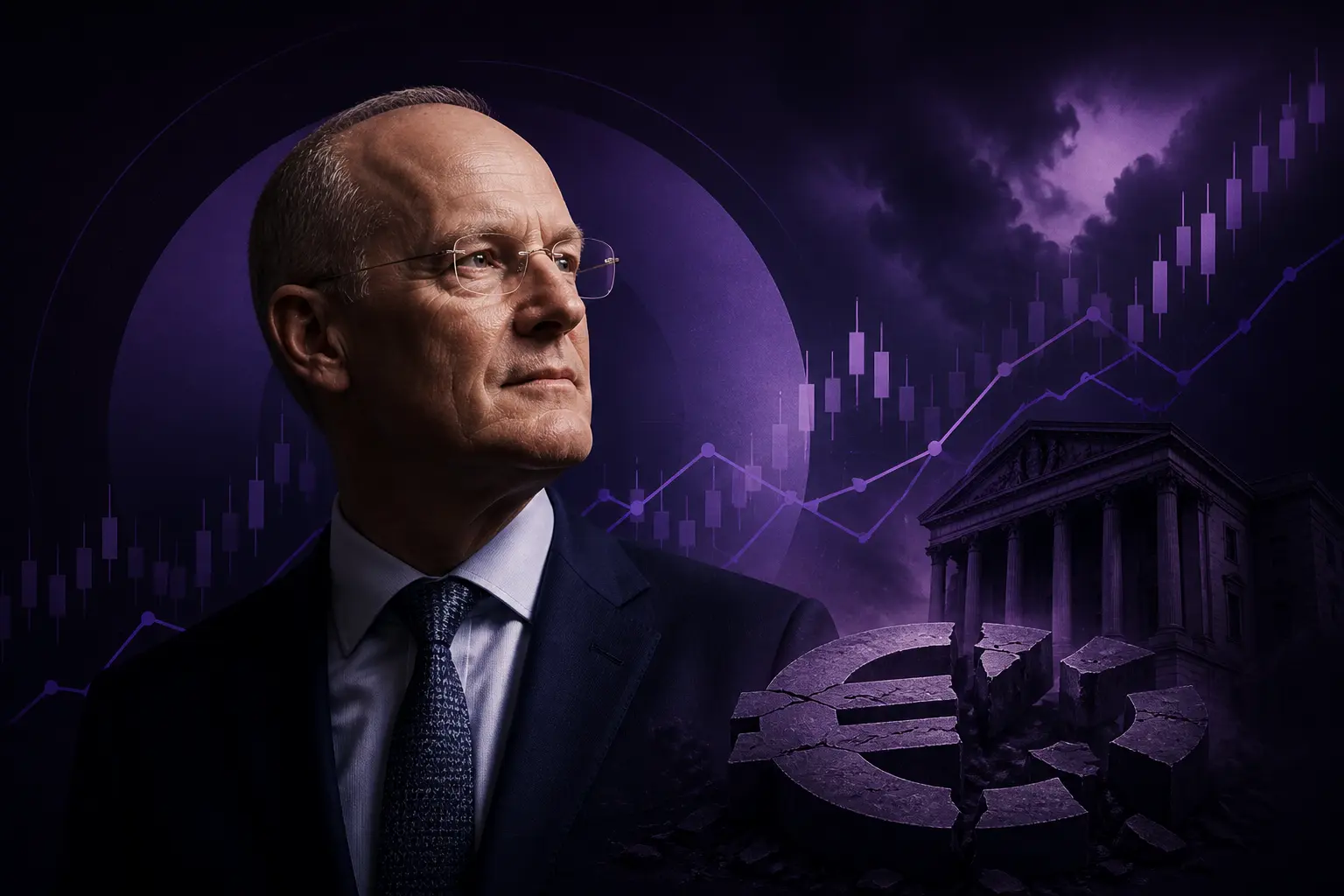
Klaas Knot, a contender for ECB president, says he won't hesitate to act in a debt crisis, highlighting his proactive stance on financial stability.
VNIX Quick Take
- Klaas Knot, a leading candidate to become the next ECB president, has stated he would not hesitate to take action in a debt crisis, underscoring his readiness to use the central bank's tools to preserve financial stability.
- Knot's comments come amid heightened scrutiny of the ECB's crisis-fighting toolkit, including the Transmission Protection Instrument (TPI), which aims to prevent unwarranted spikes in government borrowing costs.
- For traders, Knot's proactive stance could influence expectations around the ECB's policy reaction function, especially if peripheral bond spreads widen, potentially affecting EUR/USD and euro-area bonds.
Klaas Knot's Pledge: No Hesitation in ECB Debt Crisis Response
Klaas Knot, the Dutch central bank chief and a prominent contender for the European Central Bank presidency, has declared that he would not hesitate to act in the event of a debt crisis. In an interview, Knot emphasized his willingness to deploy the ECB's resources to counter destabilizing market dynamics, reinforcing his reputation as a decisive policymaker.
Knot's remarks are particularly relevant as the ECB continues to navigate a challenging environment marked by elevated inflation, tightening financial conditions, and persistent fragmentation risks across the euro area. His statement aligns with the ECB's commitment to use all available instruments to fulfill its mandate, including the Transmission Protection Instrument (TPI), which was introduced in 2022 to prevent disorderly market moves that could impair monetary policy transmission.
The Dutch central banker's stance may also be interpreted as a signal of his policy approach should he succeed Christine Lagarde as ECB president. Knot has previously advocated for a gradual normalization of policy and has been a vocal proponent of fiscal discipline, but his latest comments suggest a pragmatic willingness to intervene when necessary to safeguard financial stability.
Drivers Behind Knot's Debt Crisis Stance
Euro-Area Fragmentation Risks and the TPI
One key driver of Knot's message is the persistent risk of fragmentation within the euro area, where borrowing costs for member states can diverge sharply due to market stress. The ECB's TPI allows the central bank to purchase bonds of countries facing unwarranted spread widening, provided they meet certain fiscal and macroeconomic criteria. Knot's assurance that he would not hesitate to act likely aims to reassure markets that the ECB stands ready to deploy such tools if needed.
However, the TPI has never been used, and its activation would require a unanimous vote by the ECB's Governing Council. Knot's comments may be an attempt to bolster confidence in the instrument's credibility, especially as investors test the ECB's resolve during periods of market volatility. For traders, any hint of activation could influence bond yield spreads and the euro's exchange rate.
Leadership Transition and Policy Continuity
Another factor is the impending leadership transition at the ECB. With Christine Lagarde's term set to end in 2027, speculation about her successor is mounting. Knot is widely considered a top candidate, alongside other national central bank governors. His remarks may be part of a broader effort to project a steady hand and continuity in the ECB's crisis-fighting framework, which could shape market expectations for future policy.
Knot's track record includes a stint as chair of the Financial Stability Board and a reputation for hawkish views on inflation. Yet his willingness to act decisively in a crisis underscores that he would prioritize financial stability, potentially balancing his inflation-fighting instincts with a pragmatic approach to market stress. This duality could affect how traders price ECB risk, particularly in euro-area government bonds.
Key Levels and Assets to Watch
Traders should monitor the spread between Italian and German 10-year government bonds (BTP-Bund spread), a common gauge of fragmentation risk. A widening beyond recent ranges could test the ECB's willingness to intervene, making Knot's comments more salient. Additionally, the euro's exchange rate versus the dollar and other major currencies may react to any perceived shift in the ECB's crisis response posture.
In the event of renewed market stress, the ECB's communication and any hints of TPI activation could lead to volatility in EUR/USD and peripheral bond markets. Keeping an eye on these indicators can help traders assess the ECB's reaction function and adjust their strategies accordingly.
What Knot's Stance Means for Traders
Knot's comments serve as a reminder that the ECB retains a crisis toolkit, but the threshold for using it remains high. Traders should consider the conditions under which the ECB might activate the TPI, such as a sharp, disorderly rise in yields that threatens monetary policy transmission. Understanding these triggers can help anticipate potential market interventions and their impact on asset prices.
Moreover, Knot's potential leadership could bring a mix of hawkish inflation-fighting and pragmatic crisis management. This combination might lead to a policy approach that is less predictable than under Lagarde, requiring traders to stay agile and informed. Monitoring ECB speeches and policy signals will be crucial in gauging the central bank's direction.
Finally, while Knot's willingness to act is reassuring for financial stability, it also raises questions about moral hazard and fiscal discipline. Traders should assess whether the ECB's crisis response could inadvertently encourage risk-taking or delay necessary fiscal adjustments. Balancing these considerations is key to navigating the euro-area markets.
In VNIX's view
Klaas Knot's readiness to act in a debt crisis reinforces the ECB's commitment to preserving financial stability, but the actual deployment of tools like the TPI remains contingent on strict conditions. Traders should focus on fragmentation metrics and ECB communication for clues on potential interventions.
As the leadership race unfolds, Knot's stance may shape expectations for ECB policy, but it is essential to separate rhetoric from action. The ECB's response will ultimately depend on the severity of market stress and the Governing Council's consensus.
Educational analysis, not financial advice. Trading involves risk.
Nhận tín hiệu giao dịch theo thời gian thực
Điểm vào, mục tiêu và cắt lỗ cho vàng, tiền điện tử và forex — do đội ngũ VNIX chọn lọc.