

France Backs Spain's De Guindos for ECB President, Shifting Race Dynamics
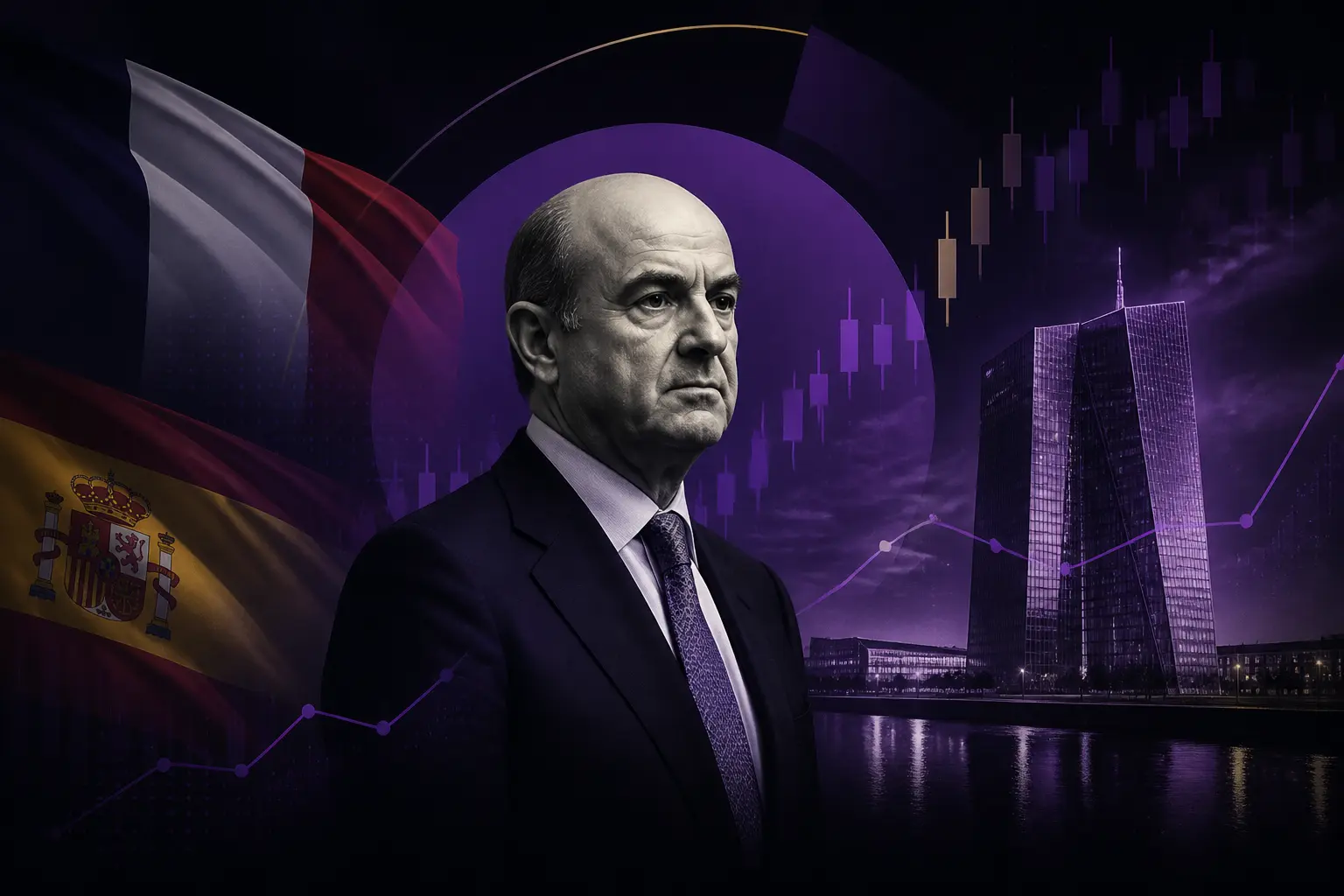
France signals support for Spanish candidate Luis de Guindos to lead the ECB, potentially reshaping the succession race and monetary policy outlook.
VNIX Quick Take
- France has signaled support for Spain's ECB presidential candidate, Luis de Guindos, according to reports.
- The endorsement could shift the balance in the race to succeed Christine Lagarde as ECB President.
- Traders should monitor how a potential leadership change might influence ECB policy direction and euro volatility.
France Endorses Spain's De Guindos for ECB Presidency
France has signaled its support for Spain's candidate to become the next President of the European Central Bank (ECB), according to a news report. The candidate, Luis de Guindos, is currently the ECB Vice-President and a former Spanish economy minister. The endorsement from France, a key player in EU decision-making, could significantly boost de Guindos's chances of succeeding Christine Lagarde when her term ends.
The ECB presidency is one of the most influential positions in global finance, responsible for setting interest rates for the euro area. The succession process is closely watched by markets for clues about future monetary policy direction. France's support adds weight to de Guindos's candidacy, although the final decision rests with the European Council, which must consult the European Parliament and ECB Governing Council.
De Guindos has been ECB Vice-President since 2018 and has been a steady hand during a period of significant policy tightening to combat inflation. His potential elevation to the presidency could imply continuity in the ECB's approach, but the political dynamics of the appointment process may also introduce new considerations for traders.
Political Maneuvering and Policy Continuity: The Forces Behind the ECB Succession
France's Strategic Endorsement of De Guindos
France's backing of de Guindos is a strategic move that reflects the complex power balance within the eurozone. Historically, the ECB presidency has been subject to geopolitical considerations, with larger member states often seeking to place their preferred candidates. By supporting Spain's candidate, France may be aiming to build alliances or secure influence over future policy decisions. This endorsement could also signal a desire for continuity in the ECB's leadership style, given de Guindos's experience within the institution.
For traders, the political maneuvering adds a layer of uncertainty to the ECB's future. While de Guindos is seen as a continuity candidate, his stance on key issues such as inflation targeting and balance sheet policy will be scrutinized. Any hint of a shift in policy bias could impact the euro and European bond markets.
De Guindos's Policy Stance and Market Implications
As ECB Vice-President, de Guindos has generally aligned with the consensus on maintaining price stability and gradual policy normalization. However, his background as a Spanish economy minister may bring a nuanced perspective on regional economic disparities. Markets will be watching for any signals that his leadership could lead to a more dovish or hawkish tilt. For instance, his views on the pace of interest rate cuts or the use of unconventional tools could influence technical indicators and market sentiment.
Given the current economic environment, with inflation easing but still above target, the ECB's next moves are critical. A de Guindos presidency might prioritize a balanced approach, but traders should remain alert to any rhetorical shifts that could affect rate expectations.
Key Levels and Assets to Watch as ECB Race Unfolds
The euro (EUR/USD) is likely to be the most direct beneficiary or victim of news regarding the ECB leadership. Traders should monitor key technical levels such as the 1.0800 and 1.1000 against the dollar, as these could act as support or resistance depending on the flow of news. Additionally, European government bond yields, particularly German Bunds, may react to perceived changes in policy direction. A candidate seen as more hawkish could push yields higher, while a dovish candidate might have the opposite effect.
Beyond currencies, equity markets in Europe could also respond, especially sectors sensitive to interest rates like banks and real estate. The VNIX community often discusses such macro themes, and traders can share their ideas there. It's essential to keep an eye on official announcements and comments from EU leaders for confirmation of the support and any other endorsements.
How Traders Can Navigate the ECB Leadership Uncertainty
Leadership changes at central banks can introduce volatility, but they also create opportunities for informed traders. The key is to focus on the likely policy implications rather than the political horse-trading. De Guindos is perceived as a continuity candidate, so the immediate market impact might be muted. However, if his candidacy gains momentum, markets may start to price in a smoother transition, reducing uncertainty.
Traders should consider how different candidates might approach the ECB's mandate. For example, a candidate with a more hawkish history might be expected to keep rates higher for longer, supporting the euro but potentially weighing on growth-sensitive assets. Conversely, a dovish candidate could weaken the currency but boost equities. Understanding these dynamics is part of educational analysis that can help traders anticipate moves.
It's also crucial to manage risk around news events. The succession process will likely involve several stages, including formal nominations and hearings, each of which could produce headlines. Using technical analysis to identify key levels and setting appropriate stop-losses can help mitigate unexpected swings. For those looking to trade, having a broker account with reliable execution is essential.
In VNIX's view
France's support for de Guindos adds a significant endorsement to his candidacy, but the race is far from over. The ultimate decision will hinge on broader EU negotiations, and other candidates may still emerge. For traders, the focus should remain on the policy implications rather than the politics. A de Guindos-led ECB would likely maintain the current policy framework, but any deviation could create trading opportunities.
As the process unfolds, expect periodic bouts of volatility in the euro and European assets. Staying informed and using sound risk management is key.
Educational analysis, not financial advice. Trading involves risk.
Chưa biết công cụ nào phù hợp?
Làm bài test 2 phút để nhận gợi ý phù hợp với phong cách giao dịch của bạn.