

Fed 2025 Rate Hike Debate: Divided Economists Split on Policy Path
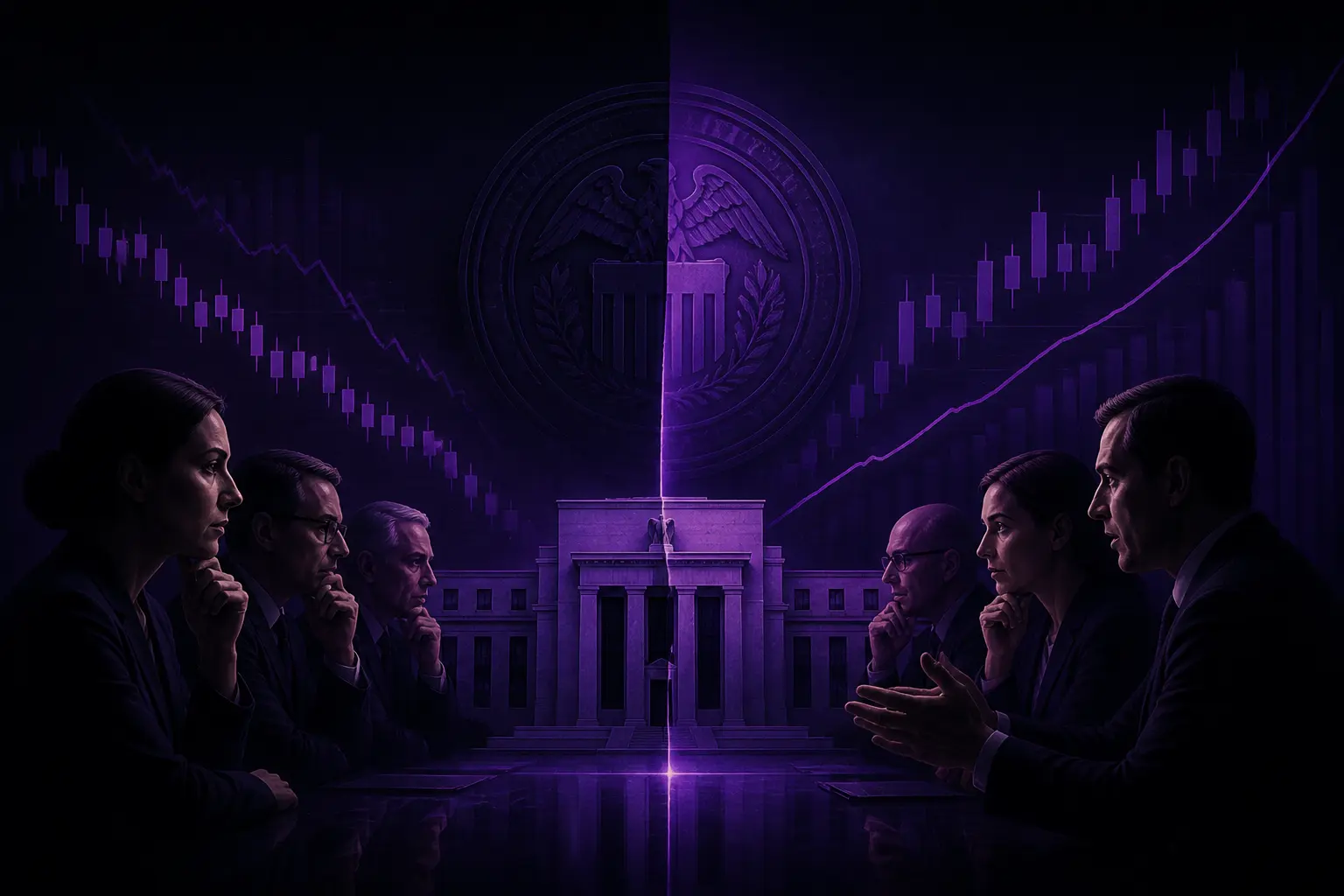
Economists are split on whether the Fed will raise rates this year, with some expecting hikes and others seeing a hold. Traders weigh the conflicting signals.
Fed pause / no change
Typical directional bias by asset when this plays out — from the VNIX macro impact model. Educational, not financial advice.
VNIX Quick Take
- Economists are divided on whether the Federal Reserve will raise interest rates this year, reflecting deep uncertainty about the policy path.
- The debate hinges on conflicting views on inflation persistence, labor market strength, and the need for further tightening.
- Traders should monitor upcoming data and Fed communications for clues, as the outcome will impact all asset classes.
Fed Rate Hike Debate: Economists Split on 2025 Policy Direction
A survey of economists shows a sharp divide on whether the Federal Reserve will raise interest rates this year, underscoring the uncertainty facing markets as they try to anticipate the central bank's next move. Some economists argue that persistent inflation and a resilient economy will force the Fed to hike again, while others believe rates have peaked and the next move will be a cut.
The split reflects the complexity of the current economic environment, where data has sent mixed signals. Inflation has cooled from its peak but remains above the Fed's 2% target, while the labor market has shown signs of cooling but remains relatively tight. This has left policymakers and market participants grappling with conflicting narratives.
For traders, the lack of consensus means that market pricing for Fed policy is likely to remain volatile, with each data release and Fed speech potentially shifting expectations. The debate also highlights the importance of staying informed and adaptable in the face of uncertainty.
Behind the Divide: Inflation Persistence vs. Economic Slowdown
Inflation Fears Keep Hike Option Alive
Those expecting a rate hike point to sticky inflation, particularly in services and housing, which could keep the Fed from declaring victory. They argue that the economy's resilience, evidenced by strong consumer spending and a low unemployment rate, may require further tightening to bring inflation sustainably back to target. Some also worry that easing too soon could undo the progress made so far.
This camp believes that the Fed's job is not done and that a hike may be necessary if inflation data does not continue to improve. They often cite the risk of inflation expectations becoming unanchored, which would make the Fed's task even harder.
Slowdown Signals Support a Hold or Cut
On the other side, economists who expect the Fed to hold or cut rates argue that the cumulative effect of past hikes is still working through the economy and will eventually slow growth and inflation. They point to signs of cooling in the labor market, such as slower wage growth and fewer job openings, as evidence that the economy is rebalancing.
This group also highlights risks to the financial system, including tighter credit conditions and potential stress in commercial real estate, which could prompt the Fed to be more cautious. They believe that the Fed has already reached a sufficiently restrictive stance and that further hikes could tip the economy into recession.
Key Levels and Assets to Watch as the Fed Debate Unfolds
Traders should keep an eye on key assets that are sensitive to Fed policy expectations. The US dollar often reacts to rate expectations, strengthening when hike odds rise and weakening when cuts are priced in. Similarly, Treasury yields, especially the 10-year yield, reflect market views on the path of rates and inflation.
Equities, particularly growth stocks, are also sensitive to rate expectations, as higher rates can compress valuations. Gold, which pays no interest, tends to benefit from a dovish Fed and suffer from a hawkish one. Using technical indicators such as moving averages and RSI can help traders gauge momentum and potential turning points in these assets.
Navigating the Uncertainty: How Traders Can Position for the Fed Debate
Given the divided views, traders should avoid making large directional bets based on a single narrative. Instead, they might consider strategies that benefit from volatility or range-bound trading, such as options strategies or scaling into positions. It's also crucial to stay updated on economic data releases and Fed communications, as these will provide clues about the likely path of policy.
Risk management is paramount. With the Fed's next move uncertain, unexpected data could lead to sharp market moves. Traders should use stop-loss orders and size positions appropriately. Engaging with the VNIX community can provide additional perspectives and help in assessing the consensus view.
Finally, traders should remember that the Fed itself is data-dependent and does not pre-commit to a path. The debate among economists mirrors the debate within the FOMC, and the outcome will depend on how the data evolve. Being flexible and open to changing views is essential in this environment.
In VNIX's view
The lack of consensus among economists is a reminder that the Fed's path is not predetermined. Traders should focus on the data and the Fed's reaction function rather than getting anchored to one view. This environment favors active management and risk control over passive positioning.
Educational analysis, not financial advice. Trading involves risk.
Nhận tín hiệu giao dịch theo thời gian thực
Điểm vào, mục tiêu và cắt lỗ cho vàng, tiền điện tử và forex — do đội ngũ VNIX chọn lọc.